









6 October 2026 - 7:00am
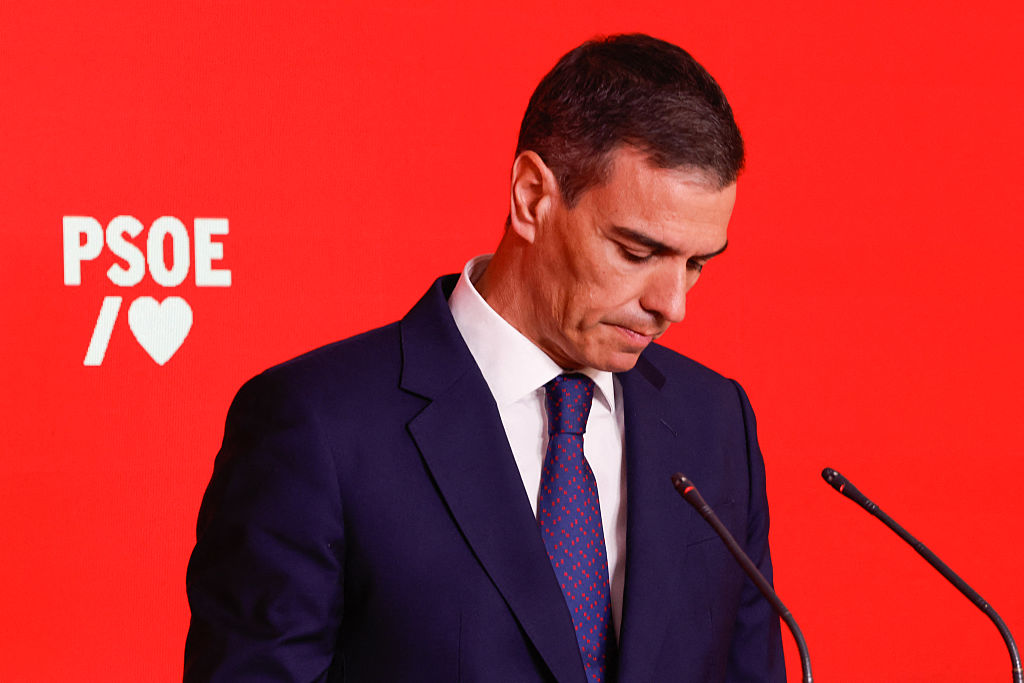
Pedro Sánchez, Spain’s Socialist Prime Minister, bowed to weeks of pressure on Monday by calling a snap election for 29 November. Protests over the country’s housing crisis were the final blow to a flimsy minority government which has proved largely unable to govern and increasingly ideologically isolated on the European stage.
Sánchez called on his supporters to “mobilise and ensure that parliament provides us with a much broader progressive majority”. Yet his failure this month to pass legislation aimed at boosting renters’ rights has demonstrated his impotence on an issue tailor-made for his supporters. A spokeswoman for the Spanish Tenants’ Union said that Sánchez has “no track record to boast about” on housing and derided the Socialist Party as “a party of landlords”. The reaction of the centre-right People’s Party, which leads the polls by a wide margin, was even more succinct about the snap election announcement: “AT LAST.”
Nationwide protests following the eviction of an 87-year-old woman from her Madrid apartment instigated the decision to call a snap election — Sánchez still thinks he can turn the housing issue to his advantage — but the Socialists’ malaise stretches back further. The party’s reputation, and that of Sánchez himself, was tarnished by an extraordinary litany of corruption scandals. In April, the Prime Minister’s wife, who has held senior positions in Spanish higher education, was charged with embezzlement, influence peddling, corruption in business dealings and misappropriation of funds. In May, the Socialists’ headquarters were raided by police during an investigation into misinformation aimed at impeding legal cases involving the party. The following month, Sánchez’s former transport minister was jailed for 24 years over corruption during the Covid pandemic; in July, the PM’s brother was convicted of administrative misconduct and barred from public office.
With friends like these, who needs enemies? It is astounding that the Socialists did not have the good grace to address this dismal record by putting their leadership to a popular vote sooner.
Yet Sánchez’s government has been sustained beyond its natural lifespan by an all-conquering self-regard. The PM revelled in short-lived international adulation earlier this year as Donald Trump’s progressive nemesis in Europe; Politico memorably labelled him the continent’s “moral leader” when he condemned Washington’s Iran campaign. Given that Sánchez’s interventions on the Middle East have also included calling Israel a “genocidal state”, Europe’s Jews are unlikely to concur.
More significantly, from a domestic political standpoint, Sánchez’s government has also been one of the few major EU forces still pursuing an openly pro-migration agenda. The move to legalise half a million undocumented migrants this spring — described by Sánchez as an “act of justice” that would help “build the rich, open and diverse Spain that we are and to which we aspire” — was followed by one of Europe’s worst ever migration crises in Ceuta, the effects of which are still being felt in the Spanish exclave.
The Ceuta crisis illustrated how hopelessly out of touch the romanticised view of mass migration espoused by Sánchez is with the tragic reality on the EU’s external borders. When horrified Right-wing EU leaders ganged up on Spain over Ceuta, led by Italy’s Giorgia Meloni, the contradiction between Sánchez’s approach to migration and the wider European sentiment was painfully clear.
As such, expected defeat for Spain’s Socialists in November would have ramifications reaching far beyond the country’s borders. Hot on the heels of Ceuta, it could also be the death knell for a moralising approach to migration which, given the alarm felt by voters and the rise of anti-migration forces throughout Europe, appears more antiquated with each passing crisis.
Those opposing the rise of the populist Right elsewhere would do well to pay attention — especially in France, where momentum is building behind pro-migration, socialist politician Jean-Luc Mélenchon as a potential alternative to Marine Le Pen. With Spain’s snap election holding out more chance of humiliation than redemption for Sánchez, his brand of ideologically charged Left-wing politics appears seriously out of date.