









25 July 2026 - 1:00pm
Three months ago, gunshots brought the White House Correspondents’ Dinner to an abrupt end. Donald Trump was rushed from the ballroom, journalists ducked beneath their tables, and a Secret Service officer was struck in his ballistic vest. Trump, never a man to let mortal danger interfere with good programming, quickly announced that he wanted to “LET THE SHOW GO ON.”
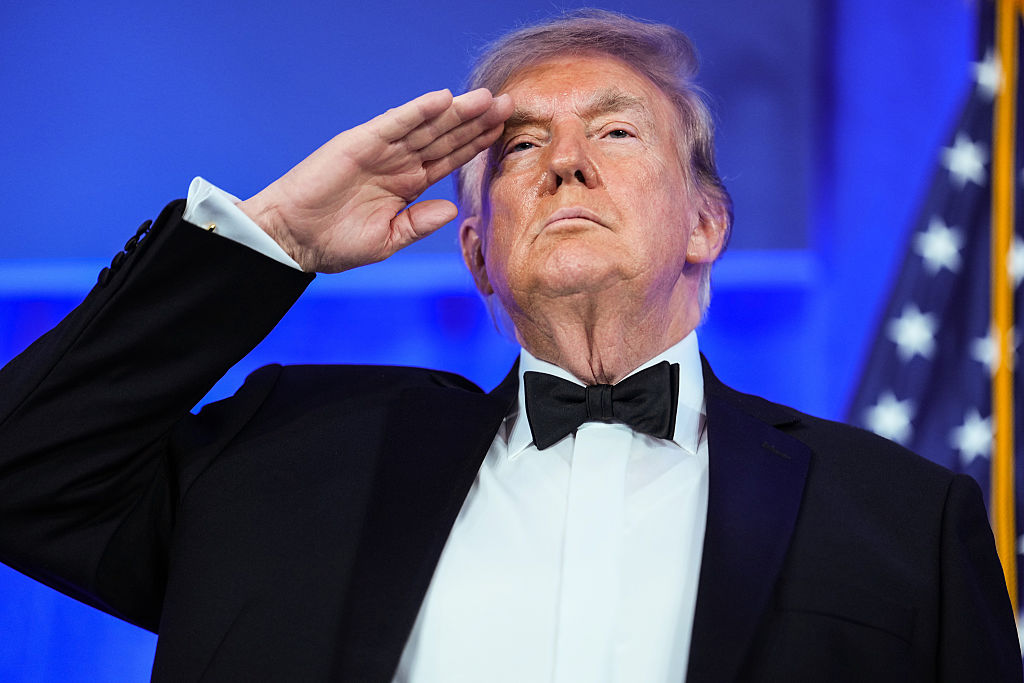
Last night, it finally did. The rescheduled dinner was smaller and more subdued than usual: around 700 guests instead of 2,600, no red carpet, fewer parties, and much tighter security. It was also relocated from the Washington Hilton to the Waldorf Astoria, the former Trump International Hotel. Even when Trump no longer owns the building, it remains his room.
“As I said three months ago, the show must go on,” the President told the crowd. He returned to the phrase several times over his rambling, hour-long speech, referencing the UFC spectacle on the White House lawn and the rain-threatened Fourth of July celebration. It is something close to the operating principle of his presidency: storms may gather, wars may escalate, and bullets may fly, but the cameras need to keep rolling.
At first, Trump appeared almost chastened by the unique circumstances of the night. He thanked Weijia Jiang, the outgoing president of the White House Correspondents’ Association, for her “beautiful” introduction. He praised the journalists in the ballroom for doing an “amazing job” and said he had planned to deliver some “rather nasty statements” before deciding that perhaps tonight was not the night. He spoke movingly enough about the Secret Service and Victor Gonzales, the officer who confronted the gunman in April, and helped lead the room in an ovation. For a few minutes, it seemed possible that the shooting had produced the unlikeliest event of the Trump era: a truce between the President and the press.
The awards ceremony had already demonstrated how strange such a truce was. Reporters were honoured for work produced by news organisations Trump has sued, subpoenaed, punished or threatened. The room applauded the Pentagon press corps without dwelling on the fact that Defense Secretary Pete Hegseth, sitting among the guests, had pushed reporters out of the Pentagon during a new war in the Middle East. Tyler Pager, one of the New York Times reporters recently targeted by Justice Department subpoenas in a leak investigation, shook the President’s hand.
Then came the Wall Street Journal team honoured for its reporting on Trump’s relationship with Jeffrey Epstein. The same reporting prompted the President to sue the newspaper and temporarily eject it from Air Force One. When the award was announced, he threw up his hands theatrically, laughed with the room, and stood to congratulate the reporters. This was presented as one of the evening’s heartwarming moments. It was also the entire Trump-media relationship condensed into a handshake: the President attacks a news organisation, the news organisation turns the attack into a story, the confrontation generates attention for both sides, and everyone wins.
But Trump couldn’t keep up the warm smiles for too long. What began as begrudging admiration for the free press curdled into something between a roast and a MAGA rally, then one of those sprawling late-period Trump speeches. He aired ancient grievances about the 2011 dinner where Barack Obama filleted him over the conspiracies that the former Democratic president was not born in the US. “I have watched this clip thousands of times,” Trump said, insisting — a little too hard — that it was not the night he decided to run for president.
“I hate some people,” he announced, before working through Rosie O’Donnell, Alexandria Ocasio-Cortez, Elizabeth Warren and the other figures who populate the extended Trump cinematic universe. He even invoked “Lyin’ Ted” Cruz before pulling back, saying, “I don’t talk about my past conquests,” which was possibly the most dishonest thing he said all night. He even took potshots at the very reporters being given awards a few feet from his podium — Kaitlan Collins among them.
But the press was not merely his captive audience. Trump and the national media remain locked in one of America’s most poisonous and profitable codependencies. He needs the press as villain, amplifier and Greek chorus. The press needs Trump as an inexhaustible source of conflict and content. He calls reporters enemies of the people, then takes their calls. They warn that he represents an unprecedented danger to journalism, then provide rolling coverage of his jokes about Chris Christie’s weight.
No wonder Trump helped make this night happen after all. His deepest instinct, formed across decades of casinos, beauty pageants and reality television, is that the worst outcome is not danger or death but a dark marquee. Cancelling is for losers: whatever happens, do not cancel the show.
