









8 September 2026 - 7:00am
Birmingham
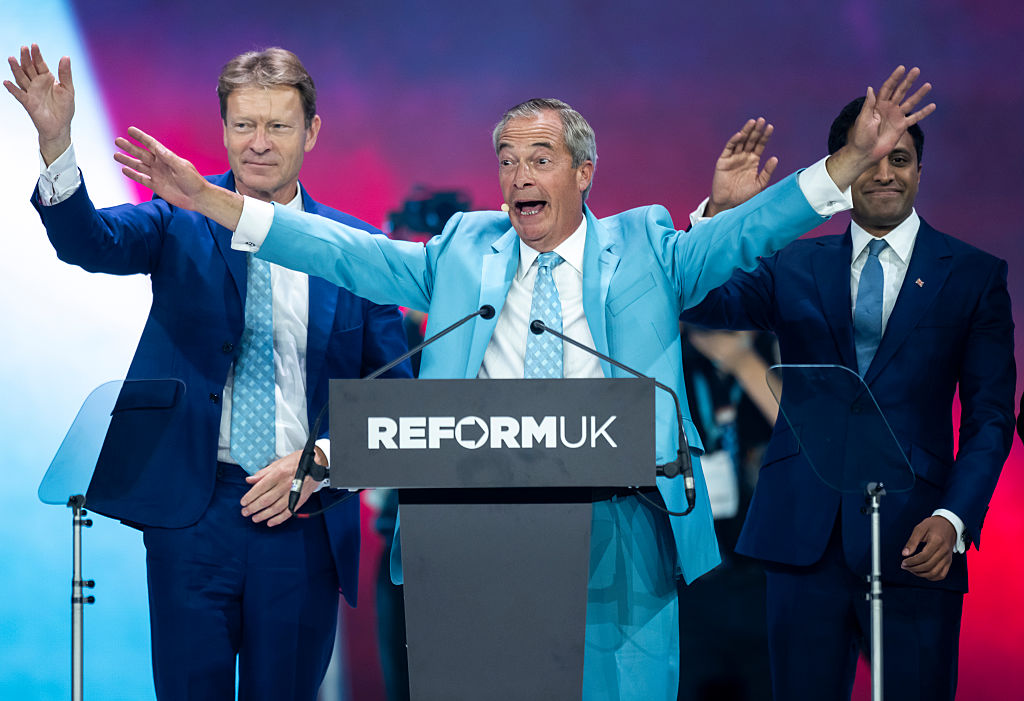
Amid all the accusations of sleaze circulating at this weekend’s Reform UK party conference, there was another topic on the agenda: young men and boys. The party dedicated two panels to the topic, while other speeches made clear that Reform is devoting special attention to young men and boys. Whether the party actually has a fixed plan on how to tackle Britain’s crisis in masculinity is less obvious.
There is an advantage for Nigel Farage’s party in addressing masculinity. Despite multiple articles pointing to Reform’s success with young men, the party actually polls poorly among this demographic. A YouGov survey from the beginning of this year found that Reform has the joint-lowest support among men aged 18-24. Another poll by the National Centre for Social Research found that 18% of men aged 18-34 supported the party, leaving it in third place behind Labour and the Greens.
At this weekend’s conference, the party sought to address the problem. One panel, titled “Breaking the Cycle”, focused on how young white men have found themselves disadvantaged in British society. Suella Braverman, Reform’s education spokesperson, said that members of this group are the victims of a “stubborn tale of underachievement” and that a focus on DEI in the workplace has led to a “gross waste of human talent”. In particular, the Equality Act of 2010, brought in under Labour and then upheld by the Conservatives, has “institutionalised anti-white racism” against these young men, she claimed. Braverman pointed to MI5 and the RAF as examples of institutions whose DEI programmes have overlooked young white men.
Her proposed solution for this problem was more jobs. Braverman cited the need for more vocational opportunities, which is included in party policy, and called for an eradication of “welfare dependency” among young men.
This theme echoed through much of the rest of the conference. In a video played just before his speech, Ashfield MP Lee Anderson spoke wistfully from the now-closed Silverhill Colliery, where his father had worked, about the manufacturing jobs that once made up the workforce. Malcolm Offord, Reform’s leader north of the border, spoke of the 16,000 shipyard jobs present in Scotland when he was growing up in the Seventies, now replaced by baristas with humanities degrees who “make £30,000 if they’re lucky”. He added: “Everyone’s got a degree in sociology or Harry Potter, but we need more welders.” The crisis of meaning among young men, in this telling, is fundamentally a crisis of British jobs.
Labour, meanwhile, has approached the issue quite differently, establishing a cross-party group during Keir Starmer’s premiership which seeks to understand why young men feel alienated from society, arguing that politicians should offer them “pride, purpose, belonging, and trust”. The Government has also created a Men’s Health Strategy, specifically proposing measures around suicide prevention.
Earlier this year, Braverman used similar language when she said that young men need “opportunity, purpose and pride”. She went further in arguing that masculinity is being “demonised”, while Farage has said that young men are being “feminised” by modern society, allowing figures such as Andrew Tate to become role models.
But can this crisis really be solved by jobs alone? For all the Reform rhetoric on show over the weekend, precise policies were harder to gauge. In a document shared with journalists after the conference’s conclusion, there was not a single policy dedicated specifically to young men, nor had leaders made any specific pledges in their keynote speeches. If Reform is to win the votes of this demographic and make progress in tackling the broader crisis of masculinity, it will have to deliver on its promises.