




(Oli Scarff/Getty)





“This James thing is fucked,” were the first words I heard on the train. It was the 8:10 to Birmingham International, and a clutch of young men wearing blue suits, brown shoes and bright turquoise ties were en route to Reform conference. The boys were back in town, gearing up to take on the blob.
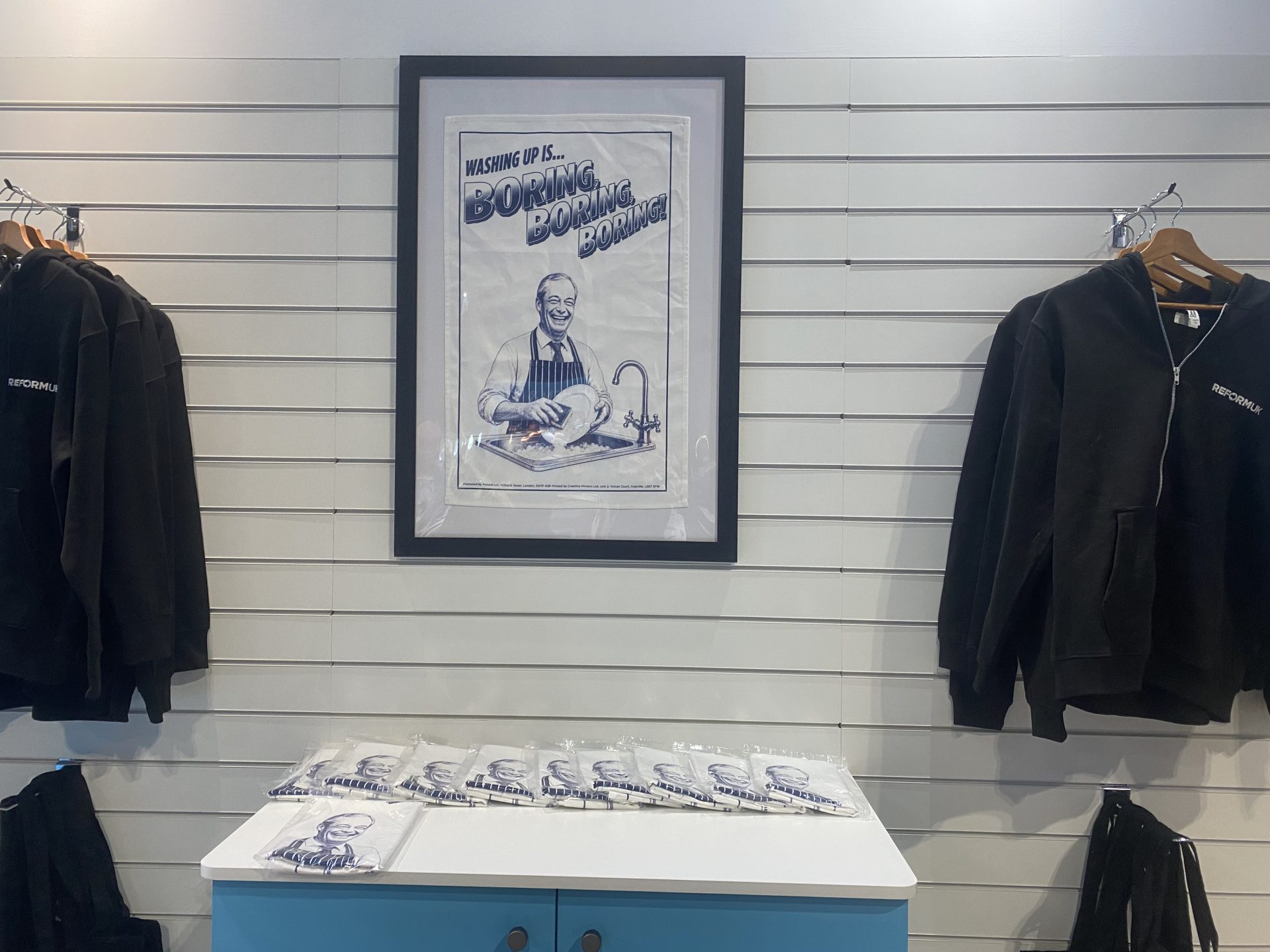
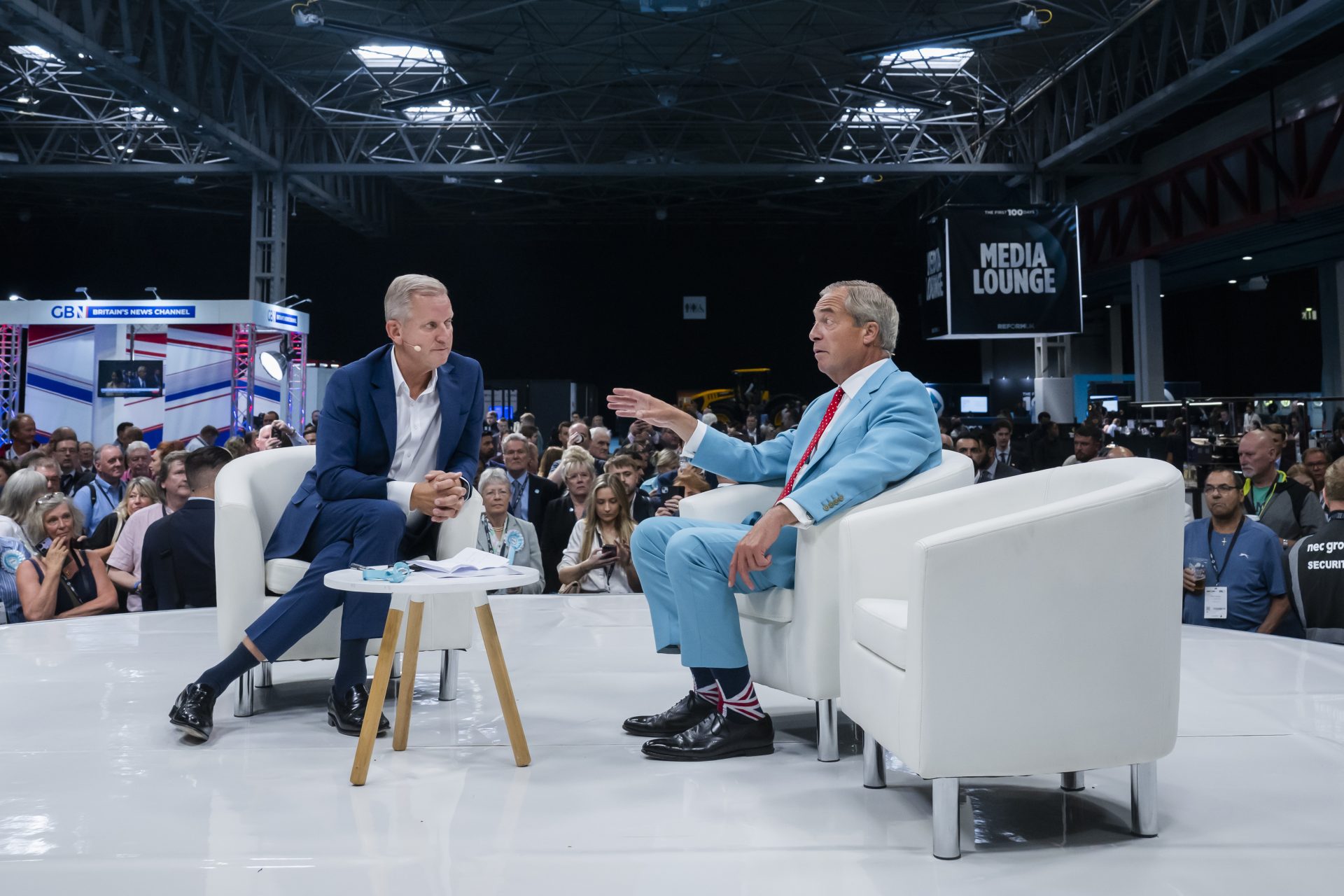
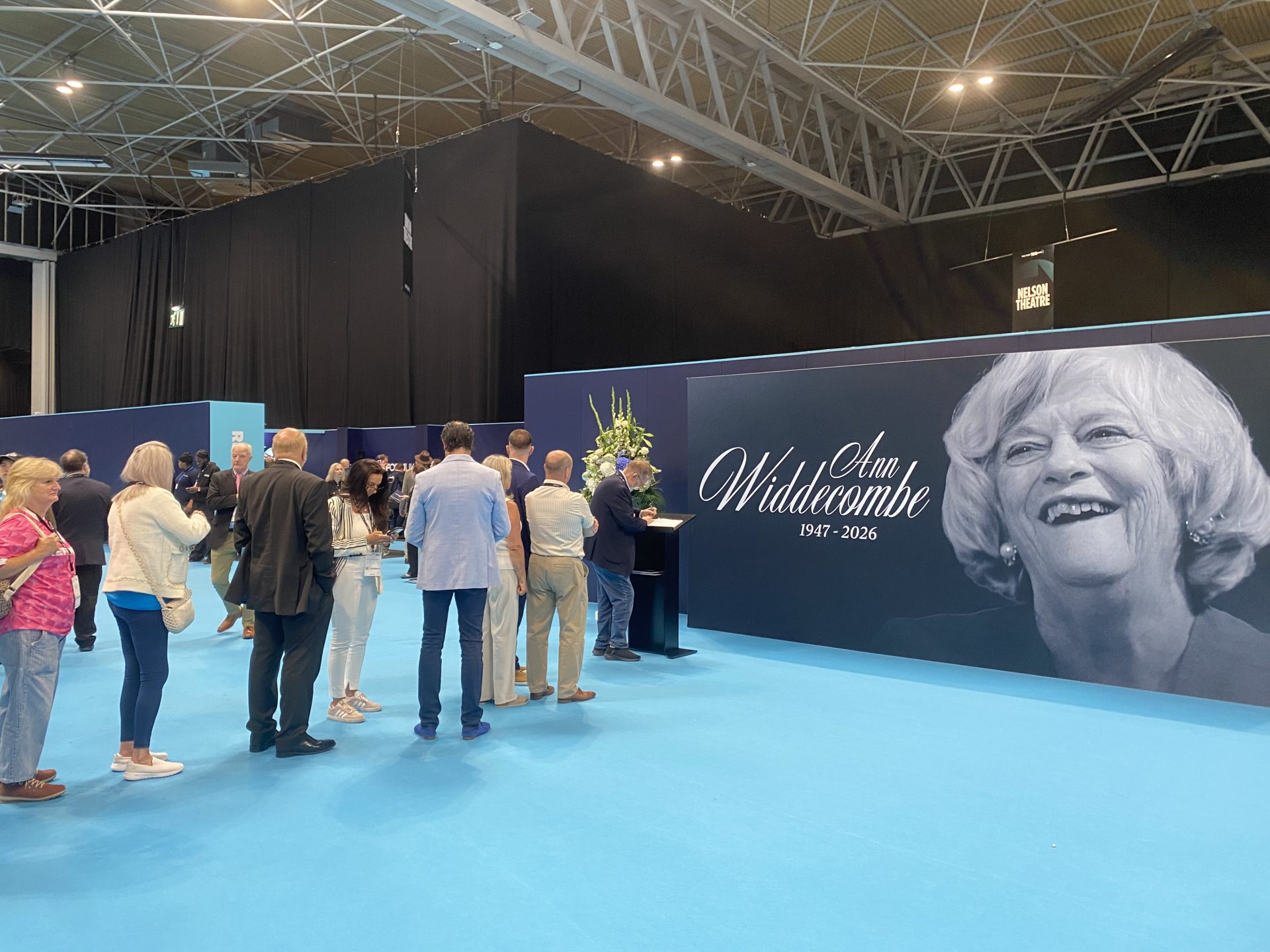
They would soon be gathering at a cavernous venue on the fringe of Britain’s troubled second city. Inside, their party had built a turquoise fantasia to welcome them. There were tractors and buses to climb aboard. George Finch, the laddish young leader of Warwickshire County Council, was striding about with a camera crew buttonholing attendees. Jeremy Kyle was seated on a circular dais, broadcasting a show live to the jumbotrons above our heads. You could buy some roast hog or fly a helicopter simulator or sign a book of condolences for Ann Widdecombe. On sale were pens and mugs and tea towels that showed Nigel Farage doing the dishes and proclaiming: “Washing up is… boring, boring, boring.”
Conference was supposed to be a chance for “normal people” to gather — and for party leaders to unveil their serious plan for power, ready to be implemented on day one of a Reform government. Certainly, a change in conversation feels especially urgent for the party now. An embarrassing by-election, and a series of rows over funding, had driven Nigel Farage away from the spotlight and stalled his momentum. Restore were leeching votes from the Right, while just a few days before the faithful were due to gather, a poll had put Reform third, behind the Conservatives. It was the party’s lowest rating in 18 months.
But if Farage’s inner circle hoped Conference would now be a chance to reset after a torrid summer, there was the “James thing”. With key lieutenants James Orr and Dan Jukes caught on camera discussing a legally dubious funding operation in garish detail, and Farage filmed ordering oysters in the Essex sunshine, and insisting “it’s all above board”, it seemed Reform’s bid to fix itself was floundering already. The blob was fighting back.
Reform has since been reported to the Metropolitan Police by Labour and the Liberal Democrats, both keen to twist the knife. As for Farage himself, he told Laura Kuenssberg he was simply not paying attention. “I am not a compliance officer,” he complained. “I was in the middle of canvassing in the Clacton by-election. I turn up. I frankly wasn’t even listening.”
The ongoing project to professionalize Reform looked, then, to be a work in progress. There were other signs. On Friday, the first panel of the day featured a spread of Christians talking about freedom of speech. When the discussion was opened to the floor, the first comment was on the “gay issue”. While there had always been gay people, a woman mused from the front row, it felt as if there were now be more of them than ever. Had the panel considered the physical implications of hormone-disrupting chemicals? The panel did not wish to consider such things. With the microphone returned, they hastily moved back to freedom of speech.
More significant was the party’s struggle to develop its relationship with big business. Reform has always had a strong element of petit-bourgeois support — “normal people” running normal companies seemed well represented among the delegates. For the blue chips, though, associating with an insurgent political movement is not without danger. Why risk tying yourself to a Guardian exposé on racist language? Just think of the ESG rating. But despite this, and Reform’s rolling donation crisis, British industry has begun to shift. Slap bang in the center of the conference hall was a lounge sponsored by Heathrow. Major firms, including NatWest and Serco, attended the business dinner.
The morning after, though, the rumors were that it had not gone to plan; Farage is said to have mocked NatWest for debanking him and Serco for profiting from the asylum crisis. There were other frustrations too. Nick Marley, whose supply-chain management consultancy paid £6,000 for a booth, told me he was disappointed “senior folk” from the party hadn’t dropped by his stand for a chat.
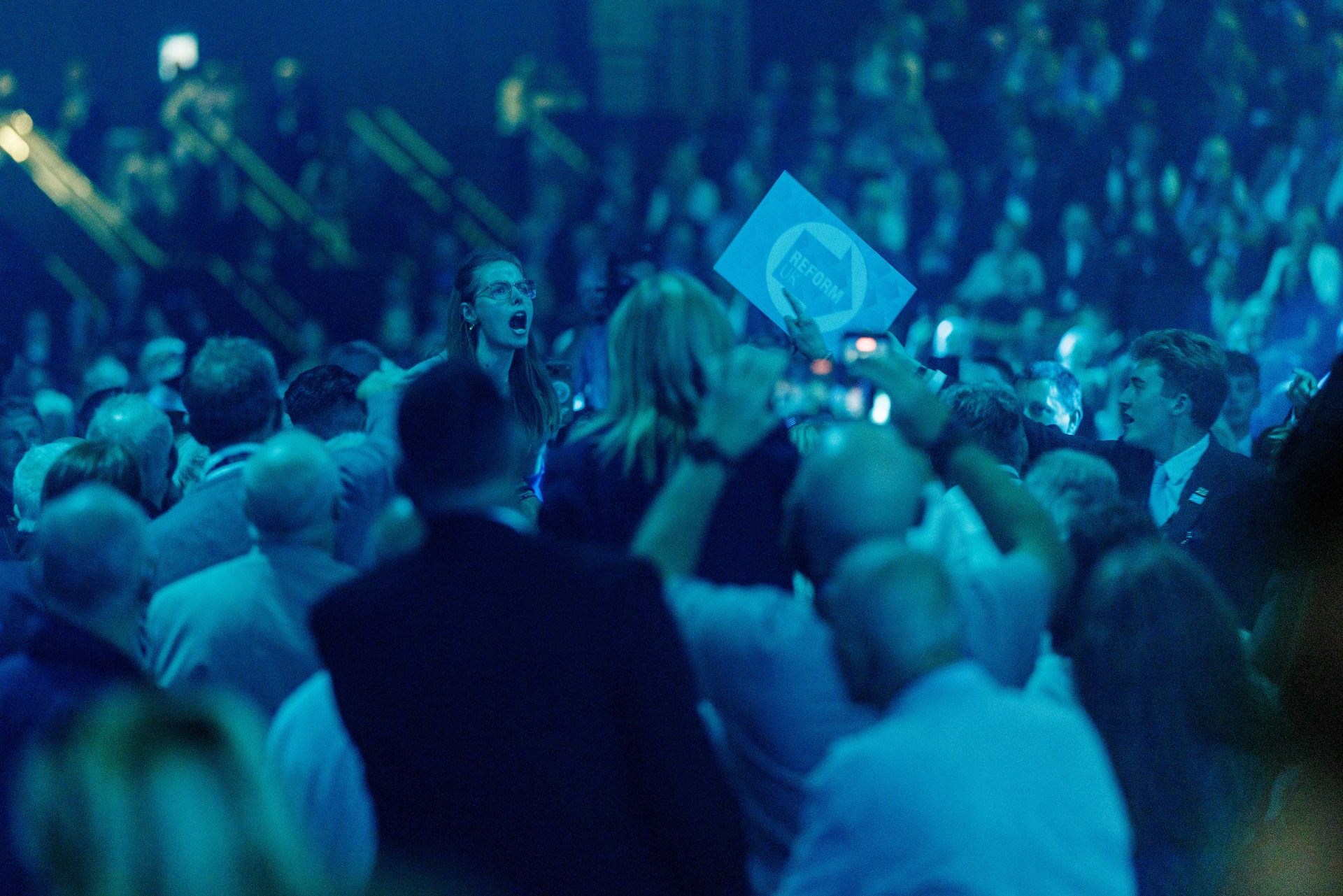
Among the membership, there were far fewer doubts. Talk to almost any rank-and-file member and they will tell you the same thing: the establishment is trying to stitch up Nigel; they will use any trick in the book; if we have made any errors they have been made 10 times over by the uniparty before us.
Two young councilors from Salford were bullish. Their local party group chat had barely mentioned the exposé; it seemed destined to slide away, to be forgotten alongside other SW1 gossip. When one of the men asked for my view, I suggested that the drip, drip nature of financial misconduct claims would eventually become a problem. But the lads were not worried: we were at a reception, drinking for free, and Boney M. would be on soon. If Andy Burnham were to call a snap election, they both agreed, Reform would likely leapfrog the Tories to become the official opposition.
When I spoke to a Reform insider about Channel 4’s revelations, however, they were far less sanguine. The atmosphere the evening before, they said, had been “febrile” as the news broke. “This reflects a pattern of unprofessional behavior that was starting to be addressed but now needs to be supercharged”.
The appointment of Zia Yusuf, who served as Reform’s chair from 2024 to 2025 before abruptly quitting, had been meant to bring the organization into line. But when I asked about his performance, my source was contemptuous. Yusuf had not helped, and indeed had perhaps made things worse.
After the evening’s entertainment had wound down inside the hall, attendees decamped to a nearby shopping center, where a dim casino served drinks until 5am and slot machines flashed neon-bright. Here, a certain anxiety seemed to be germinating through the party cadre. A Reform press officer, glassy-eyed, insisted that he simply did not care anymore. He did not care about anything.
Another functionary was eager to tell me that he had known and been deceived by William Lockwood, the undercover reporter from the Centre for Climate Reporting responsible for the Channel 4 sting. The Reformer pulled out his phone and began scrolling through dozens upon dozens of WhatsApp messages between the pair. “If I had a birthday party and invited 100 people he would be one of them”. He seemed wounded by the experience, on the edge of a nervous collapse.
The next morning, a small band of protesters gathered outside the conference. Separated from attendees by the police, they held a banner that read “Brum Youth Give Racists the Boot” and chanted, “Say it loud, say it clear: refugees are welcome here!” Many were wearing surgical facemasks.
Inside, Danny Kruger was delivering a talk about how to reform the state. Danny Kruger always seemed to be delivering talks on how to reform the state. Each day of Conference, he popped up at events throughout the hall, proscribing civil-service reforms and constitutional restoration and cost-cutting measures. On this occasion, he was in conversation with Mark Littlewood, the Liz Truss ally and director of Popular Conservatism, as he set out Reform’s preparations for power.
The party had intended for the conference to focus on such plans. Everywhere, the hoardings declared Farage’s team was ready for “The First 100 Days”. On stage, spokespeople were making policy commitments. But, in the wake of Channel 4’s report, nobody other than the party hardcore seemed to care.
In Kruger’s case, that was a shame, because his ideas are both serious and radical. Reform, he declared, would have to launch an “institutional intifada”. “I want Reform to be a radical insurgent party. A revolutionary spirit in the English tradition of revolutions, which is restorative, which is why restore is such a good word, annoyingly. Actually, we are about restoration not revolution but there is a radical spirit to that restoration that’s going to require some breaking of the furniture.”
Kruger and Littlewood agreed that the power of quangos would have to be severely curtailed. How many even were there? According to Truss, Littlewood said, there were 444. But he wished it might have been 666, given the demonic implications. Kruger, who is in charge of Reform’s preparations for government, working under Orr until the latter’s resignation, began throwing out policy on the hoof. He would like to abolish His Majesty’s Prison and Probation Service, he said, and was sure Yusuf would agree if he raised it. But, he conceded, “that’s a big job”.
For Kruger, and an increasing number of others on the Right, Britain’s modern ills can be traced back to 1997 and the election of New Labour. According to this theory, Tony Blair’s constitutional reforms started a process of political neutering, removing power from elected officials — and, by extension, the public — and placing it into the hands of an unaccountable bureaucracy. Electing a conservative government would therefore achieve little unless such vested interests were taken on. Following this line of argument, populism can be viewed merely as a means of re-establishing popular control of the state.
While the ostensible theme of the conference was demonstrating that Reform was ready to take office, that actually seemed to undersell its importance. For if the party is truly prepared to follow through on Kruger’s proposals, it will mean a vast and complex remaking of the British state. The constitution would be revised, the House of Lords faced down, the machinery of government re-tooled to conduct mass deportations. Such plans will face huge and sustained opposition. That the party’s own conference had been overshadowed by a Channel 4 exposé said little good for its chances of succeeding.
After Kruger’s talk ended, I spoke to David Starkey, who had been sitting in the front row and whose arguments regarding Blair’s malign constitutional influence have become influential in these circles. There were still several big question marks, he told me. “How far is Farage himself committed? How far is Farage capable of communicating these ideas? And finally, how far have they really done the preparatory work?” The effort required would dwarf the voluminous preparations made by Trump’s team in advance of his second term, Starkey said, while he could see no signs that key legislation was being prepared ahead of time.
In its clashing moments of frivolity and seriousness, the conference seemed to mirror something of Farage’s own internal divide. Is he a hard-drinking outsider, giving voice to a slice of the nation — but whose indiscipline and laziness will ultimately doom him? Or is he ready to move into No. 10 and transform the country in the twilight of his career? The question of whether Reform can now break past its core vote share largely depends on how the public answers those questions.
Then there’s the damage inside the party machine. Jukes, who started campaigning for UKIP at 18, is said to be like a son to him; Orr has deep ties to JD Vance and European conservative networks, and brought a much-needed intellectual ballast to the party. Farage’s relatives, the leader himself told Robert Peston, had been begging him to quit politics. “When your own family starts to turn on you because of what you do, [there are] some very thoughtful moments,” he said. “Very, very thoughtful moments.”
One insider described the events of the past 48 hours to me as “sub-optimal”. Jukes and Orr had wanted “to show something shiny to the boss” — they had not considered the diligence required. Such problems, however, would help Reform in one respect. “External pressure keeps everything tight,” they said. “The cracks don’t show.”
Farage, the insider claimed, had come out of the summer in a much better place than before. “He’s much more chipper. He likes campaigning… yes, he’s a politician — he likes the sound of his own voice but he always listens.” In this telling, the Clacton by-election was not so much a busted flush as a period of rejuvenation, the Faragist equivalent of a yoga retreat in the Balearic Islands.
Another source insisted the conference had been great and the “hit job” from the press had been dealt with effectively: nobody wanted to hear from murky groups looking for gotcha moments. Jukes was a “generational talent”, they said, and one of the most loyal people in Farage’s circle. “To lose them to a fucking net-zero sting would be awful.”
As we spoke, Farage strode past in a turquoise suit, surrounded by a phalanx of security guards in black. “Andrew Breitbart… just used to say ‘walk towards the fire,’” the source said as we watched Farage head into the arena. “Whenever there’s a scandal or a hit job or whatever, I just think you have to walk towards that fire. You can’t be afraid, you can’t run away from it. And yet, there’ll probably be more. That’s the nature of life. You win some, you lose some.”
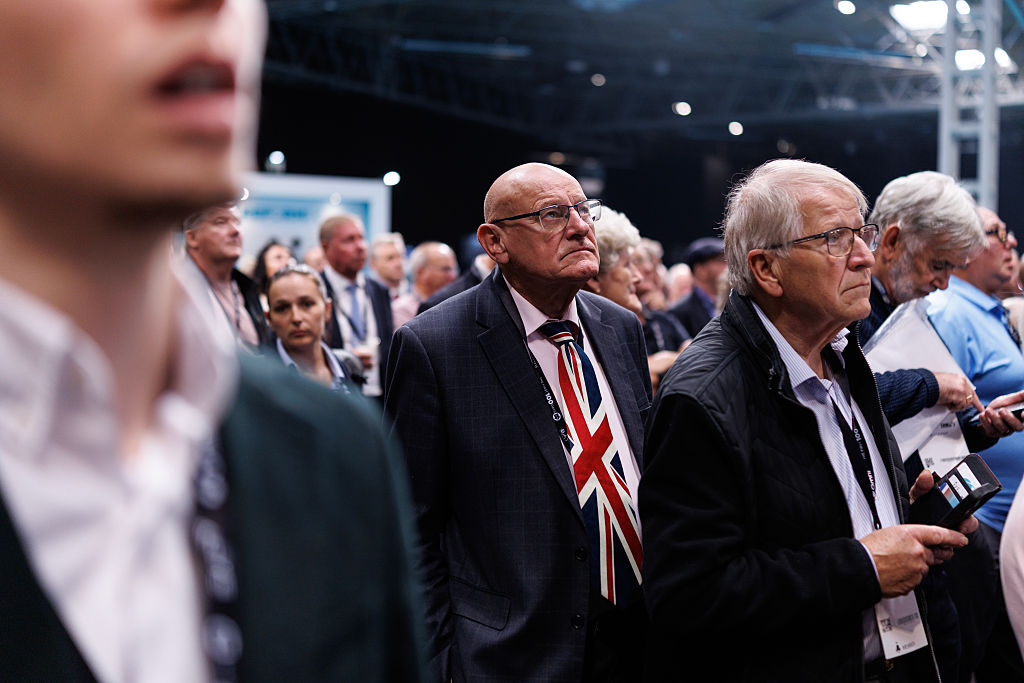
To end the conference, the leader appeared on stage for a final time. He seemed to be in an ebullient mood. “If it’s not fun then it’s not worth doing anyway, is it?” he asked. This had been the biggest and most fun conference they had undertaken. Did he really mean it? “My people’s army,” he continued, “I’m proud to lead you. Once again, I love you all.”
For the faithful in the hall, it was a moment of inspiration. “Farage is back to his best,” Peter Faultless, a wizened party member from near Walsall told me, as we walked away from the stage and back towards the real world. “He clearly wants to lead us.” For Faultless, as with so many other Reform members, there is no alternative. Yusuf is great and Jenrick smart, but Farage is the boss. “Reform is not going to win the election without him,” he added. “Without him — we’re not the same.”
