









4 September 2026 - 1:30pm
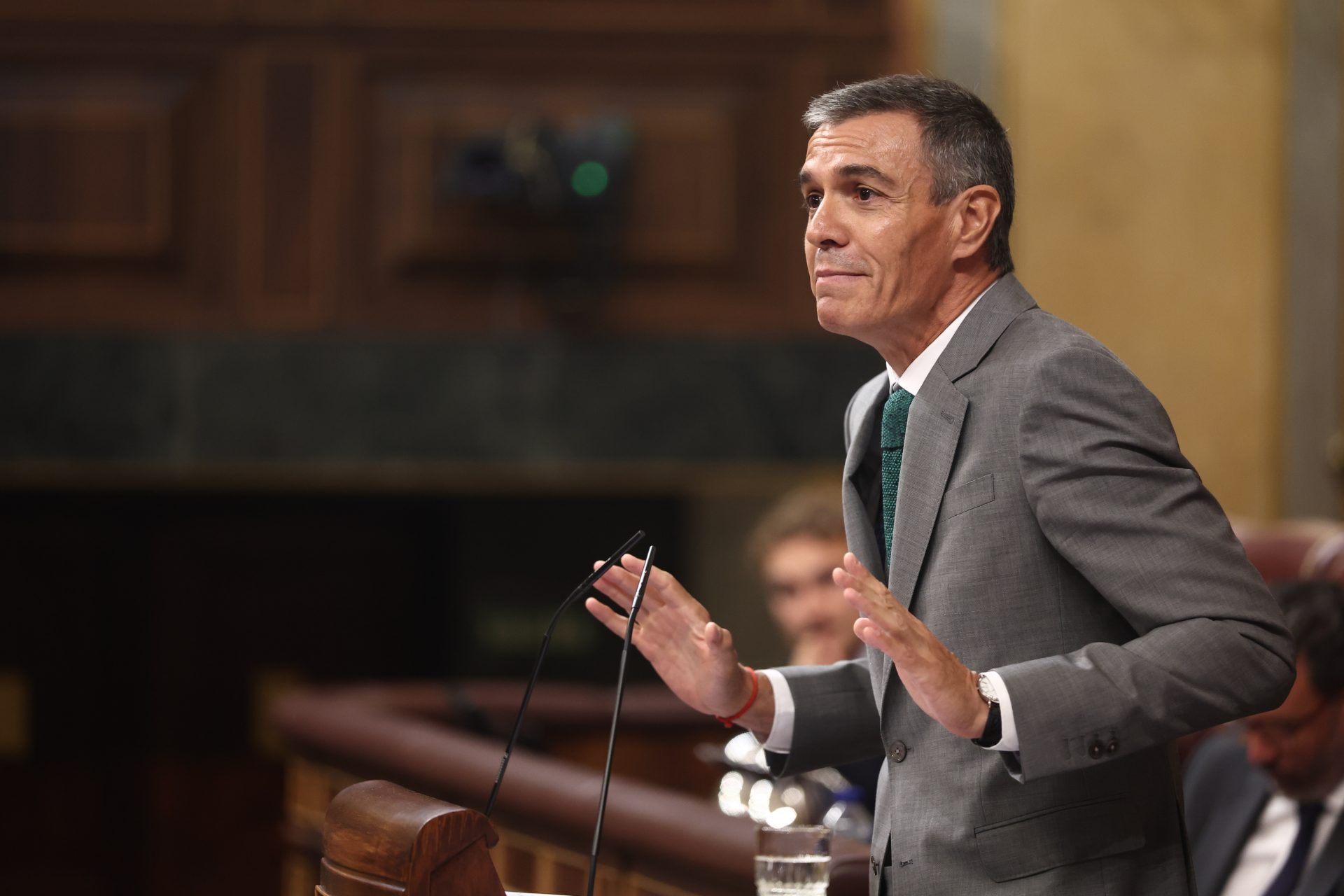
Pedro Sánchez’s government is facing widespread protests across Spain for its handling of the crisis in Ceuta. Five weeks ago, the Spanish city in North Africa faced a record-breaking illegal border crossing of more than 70,000 people from Morocco. The Socialist Party (PSOE) government has thus far presented itself as an international champion of migration, and is now doubling down on that commitment, despite marches across Spain — and in Ceuta itself — demanding Sánchez’s resignation.
In his eight years in office, Sánchez has arguably survived more political crises than any other contemporary European leader. But Ceuta threatens to hit him harder as the crisis foments the perception of a loss of state control.
The impact of the crossings are visible on the streets of Ceuta. The city’s chief prosecutor Silvia Rojas stated that there had been an exponential increase in sexual offences since the mass crossing, with almost one sexual assault a day alongside increases in violent robbery and a widespread perception of a lack of safety. Despite initial assurances that “virtually all” the migrants had been returned from the city, government estimates recently suggested that as many as 5,000 minors and potential asylum seekers remain and may qualify to be brought to the mainland.
Feeling abandoned by the central government, Ceuta’s citizens are taking matters into their own hands. Protesters have attempted to block Red Cross volunteers from distributing food to the migrants encamped around the city, while another group descended on a migrant camp, dismantling and burning part of it before riot police intervened. Ceuta seems to be escaping authorities’ control.
That is a problem for Spain, since Ceuta is not simply another European border city struggling to accommodate migrants. It is Spanish territory on the African coast, claimed by Morocco, and its border is therefore one of the country’s most sensitive geopolitical hotspots. In Ceuta, the Socialist government finds itself struggling on two fronts: to demonstrate control over its external border, and to restore discipline among its own population.
So far, Sánchez has refrained from blaming Morocco for the crisis, which has generated contradictory narratives between his government and the security apparatus. A National Police report concluded that the mass crossing was “planned” rather than spontaneous. The report stopped short of establishing that the Moroccan government itself ordered the operation, but described an extraordinary degree of permissiveness by Moroccan security forces.
Sánchez, by contrast, told parliament there was no evidence “whatsoever” that Morocco had designed or executed the operation. Meanwhile, his government has claimed to possess evidence that Russian and Israeli-linked online networks amplified the crisis in an effort to polarise Spain and Europe.
Sánchez has been able to survive previous crises thanks to the strength of his supporting coalition. Nevertheless, this time his allies on the Left, including coalition partner Sumar, have criticised the government’s handling of the issue, arguing that exonerating Morocco is not credible. So far, Sánchez still appears capable of weathering the storm. Recent internal polling from the Right-wing Vox party produced disappointing results for the opposition: although Sánchez has been damaged, many of his voters are willing to continue backing him.
Sánchez may avoid a government collapse, but the political damage lies in the crisis of confidence building around the Spanish state itself. Events in Ceuta will feed those who feel abandoned by the government, while intensifying conflict between the native population and migrants will only further harm the state’s capacity to maintain order.
Miquel Vila is a political and geopolitical risk consultant focusing on industrial strategy, critical infrastructure and global supply chains.
 miquelvilam