









11 June 2026 - 6:00pm
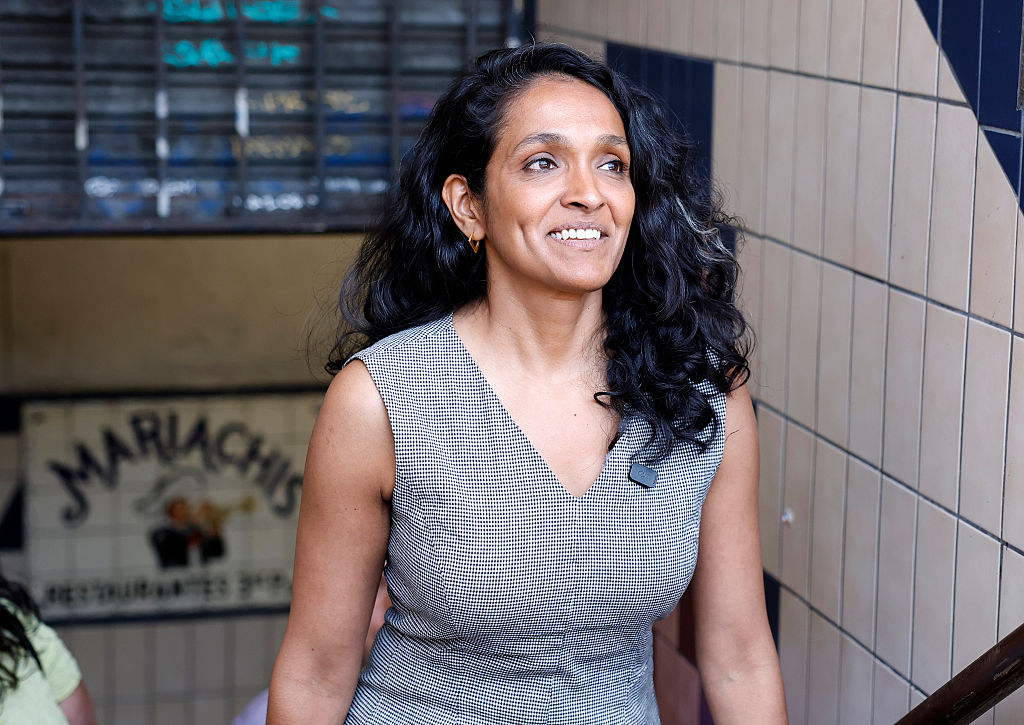
Nithya Raman’s come-from-behind victory represents a challenge from the Left to an LA establishment that also regards itself as progressive.
Such conflicts are becoming more common as coastal cities evolve into de facto one-party systems, split between establishment Democrats and a newer, generally younger cohort of socialists. Even moderate Democrats — and Republicans, including Spencer Pratt, whose much-hyped effort ultimately failed — are increasingly outliers in their own cities.
Raman, a council member representing a diverse district with a large middle-class electorate, could benefit from the shortcomings of her fellow progressives. Angelenos across political lines are increasingly frustrated with the condition of the city; public services are strained while concerns persist over crime and homelessness.
As one campaign adviser to Raman tells me, Mayor Karen Bass is not widely popular, with nearly two-thirds of Angelenos voting for other candidates. This allows Raman to position herself as a “change candidate” against Bass, who is more closely associated with the city’s status quo power structures, particularly municipal unions.
Raman’s most significant challenge is likely to come from those same unions, which dominate fundraising and ground operations in city politics. She also carries the baggage of her earlier progressive positions on policing, Israel, and particularly homelessness, which opponents may seek to use against her.
According to Tim Campbell, a longtime Angeleno and former government auditor, Raman’s record on homelessness is “worse than Bass — if that is possible”. She has opposed encampment clearing and has been accused of being linked to dodgy NGOs. “She’s incompetent and arrogant, which is a fatal combination,” he concludes.
To be sure, the progressive label may thrill Raman’s core supporters in LA’s version of New York’s “commie corridor” — progressive communities such as Echo Park, Silver Lake, parts of Hollywood, and less affluent areas of the Westside form her natural base. But it may not be the hipster Left that ultimately decides the race; instead, it could be Pratt voters — around 25% of the electorate — who prove pivotal.
Winning over voters who did not participate or who previously supported Pratt will be central to Raman’s prospects. However, the Pratt constituency, already suspicious of what it sees as machine influence over electoral processes, is unlikely to respond positively to her characterisation of Pratt as a fascist. The prospect of an LA version of New York’s Zohran Mamdani may also sit uneasily with parts of the electorate, including segments of the city’s large Jewish community.
Raman, a close adviser suggests, can emphasise her efforts to rein in what she sees as excessive public-sector pay increases, as well as large allocations to projects such as the city’s Convention Center, which critics have long described as inefficient or wasteful. In this framing, her lack of backing from the unions and from the three other DSA members — widely seen as aligned with Bass and their union backers — on the council gives her room to present herself as a steward of a strained municipal budget. “The most important issue is the budget,” one of her top aides tells me. “If the focus is on competence, Karen becomes the defender of a failed status quo.”
Given the internecine nature of the race, much may come down to the ground game. Raman has built a strong grassroots organisation and brings an energy that reflects her age and political style. Bass, while far from doddering, is 72 and appears to belong to an earlier political era.
All of this suggests that, even without the media-savvy Pratt in the race, Angelenos can expect plenty of fireworks in this Left versus Left contest. With relatively little disagreement on issues such as Trump and ICE, the candidates are likely to compete instead on personal attributes, which are always fertile ground for a hard-fought and often acrimonious campaign season.
“It’s going to be one of the ugliest campaigns ever,” says Dave Gershwin, a longtime city council aide and now a Democratic political consultant. “It’s Karen’s race to lose but Raman is not to be underestimated.”
Joel Kotkin is a Presidential Fellow in Urban Futures at Chapman University and a Senior Research Fellow at the Civitas Institute, the University of Texas at Austin.
 joelkotkin