









16 August 2026 - 4:00pm
For the Trump administration, fighting to keep the supremacy of the dollar in the world’s financial system has been a top priority. Amid the geopolitical turmoil wrought by Trump’s presidency, not least with the confusing start-stop saga of the Iran war, many countries have grown cautious of Treasury paper as a safe and reliable asset, and sought alternatives. And earlier this week, JPMorgan CEO Jamie Dimon warned: “If we’re not the strongest military in 25 years and the strongest economy, we won’t be the reserve currency either.”
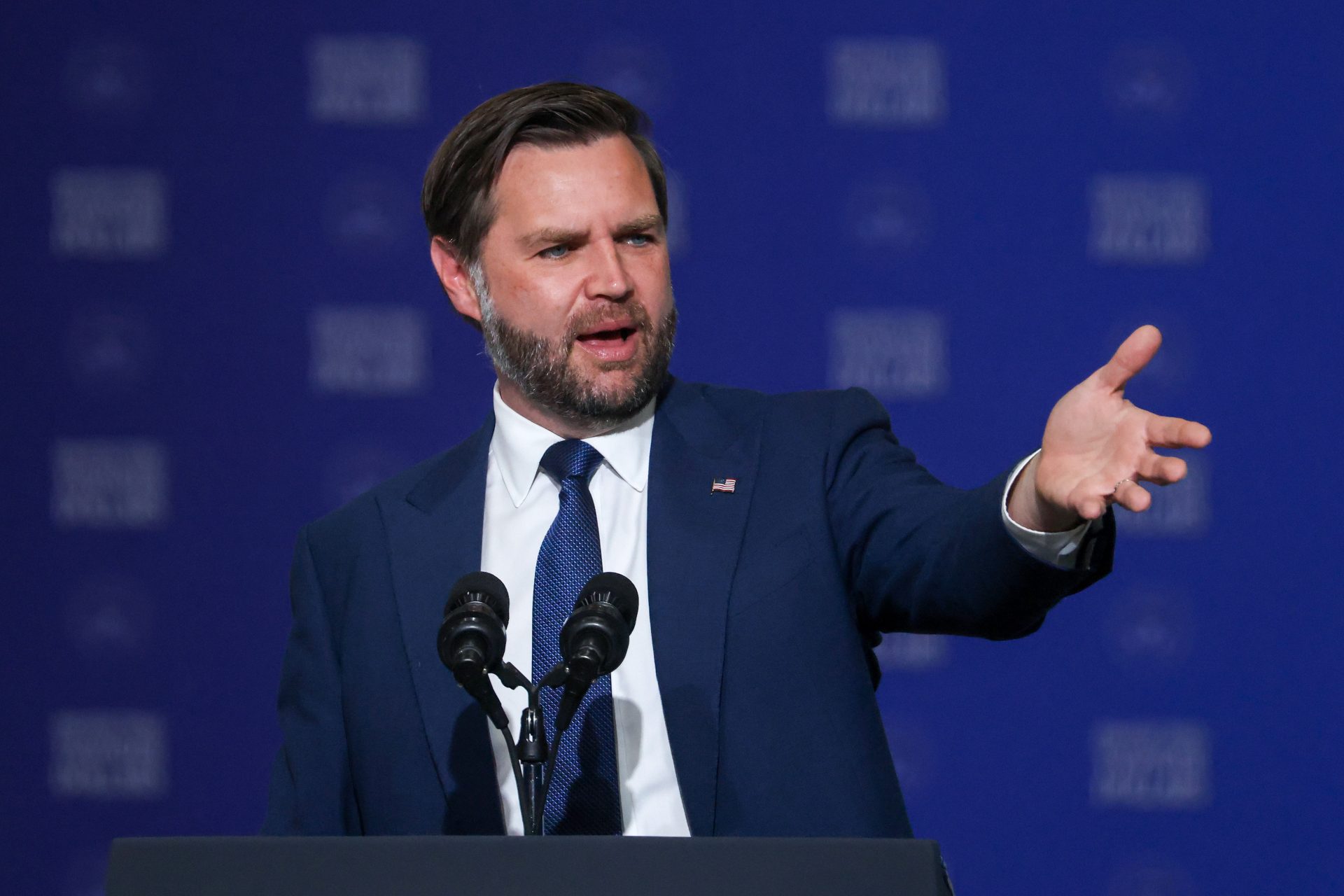
Yet for some in Trump’s inner circle, that may not be such a bad thing. In an old video shared this week by historian Phil Magness, Vice President JD Vance appeared to lay out the positives of this scenario. “This may be super heterodox,” said the then-senator in 2023, “but I’m not sure I think reserve-currency status is actually good for the United States of America… It allows your consumers to consume very cheaply.”
It’s kind of obvious why the VP might want to bury his old comments, since they contradict his current employer’s policy. For instance, the administration’s promotion of stablecoins has been explicitly put forth as a way to “buttress the dollar’s status as the global reserve currency, expand access to the dollar economy for billions across the globe, and lead to a surge in demand for US Treasuries, which back stablecoins.”
And yet, Vance’s former position which — who knows — he may still hold, has always been consistent with his politics. Back in his senatorial days, Vance once questioned then-Federal Reserve Chairman Jerome Powell on whether hosting the world’s reserve had any drawbacks. Vance argued that it functioned as a sort of “resource curse” which enabled the country to live in the style to which it had grown accustomed, all while degrading the industrial base.
As economic theories go, it’s certainly heterodox (the term used by economists for non-neoclassical schools of thought). Yet there’s also an internal logic to Vance’s earlier position. The dollar’s status as the world’s principal reserve currency has enabled the US to live beyond its means. Given the formerly insatiable global demand for Treasury paper, the government has been able to run fiscal deficits that would sink other countries, fuelling the economy and enabling Americans to import as much foreign stuff as they like.
But it has come at a cost, one that Vance chronicled so movingly in his memoir Hillbilly Elegy. Cheap imports fuelled the deindustrialisation that drove the rise of populism in the US, while cheap credit inflated the asset bubbles that have enriched oligarchs while making life more expensive for everyone else.
Vance thus offered a defensible theoretical case. It fits into the isolationist, America First agenda to which he still seems to adhere, regardless of what his boss wants. Nevertheless, as a political project it would be bold, to put it mildly. Were the US dollar to lose its place as the world’s primary reserve currency, imports would have to plummet, interest rates would rise, asset prices would likely fall and the dollar would probably weaken, raising short-term inflation. Without cheap import competition the industrial economy might then eventually revive, but only after the economy had gone through a painful adjustment.
Such a policy is therefore unlikely to see the light of day. But if an America First movement is to survive the Trump presidency and endure in the Republican Party, JD Vance may yet serve as its resident philosopher.
John Rapley is an author and academic who divides his time between London, Johannesburg and Ottawa. His books include Why Empires Fall: Rome, America and the Future of the West (with Peter Heather, Penguin, 2023) and Twilight of the Money Gods: Economics as a Religion (Simon & Schuster, 2017).
 jarapley