









12 October 2026 - 6:30pm
For years, critics of traditional media insisted that the future of journalism was the activist influencer: unbound by newsroom constraints, heedless of woke pieties, fearless and plain-spoken. But “influencer” journalism may finally have jumped the shark with the discrediting of a sloppy weekend story about Texas Democrat James Talarico’s supposed stay at a psychiatric hospital.
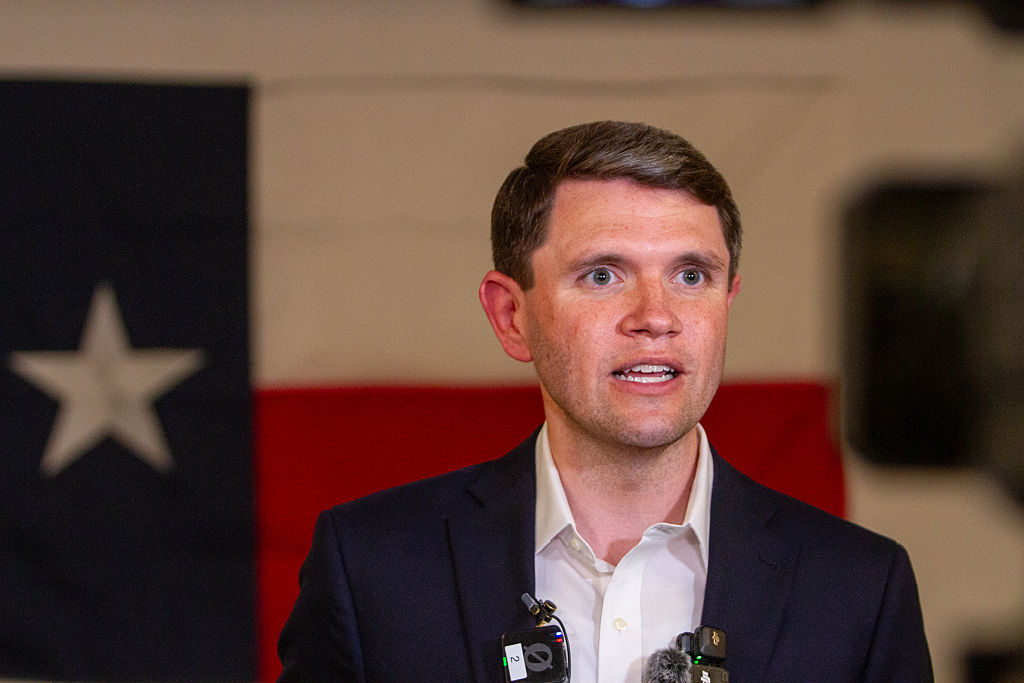
Talarico, the party’s nominee for the US Senate in the Lone Star State, left the high-stakes campaign for about a fortnight. The stated reason was a case of the flu, which can be especially dangerous for a diabetic like Talarico unless carefully addressed, per his camp. Was it possible that his absence in fact owed to a mental breakdown requiring a stint of inpatient psychiatric treatment at an out-of-state facility, as a trio of MAGA influencers claimed? Sure. And Texas voters certainly have a right to know if a Senate nominee is of sound mind.
But the evidence provided for the claim — that Talarico was treated at the Lindner Center for Hope in Mason, Ohio — was simply laughable. To wit, on Sunday evening a Dallas-based influencer named Rhein Amacher claimed that Talarico had been discharged from the Lindner Center the previous evening. The claim was amplified by Amacher’s ally and fellow MAGA influencer Nick Sortor, and soon electrified the wider online Right. Elon Musk, among others, responded to the story with his usual credulity for Right-wing slop, including a post consisting only of two exclamation marks.
The source of Amacher’s and Sortor’s scoop was a recorded phone call to the Lindner Center. At various points, an employee of the centre asked for a passcode, which wasn’t forthcoming until Amacher threw out what he claimed was a random four-digit number, at which point the employee revealed that a Talarico had been discharged that evening.
Online sleuths, including conservative journalists such as New York Post columnist Miranda Devine, immediately picked apart these claims. For starters, Talarico was seen at the Austin City Limits music festival during the evening in question, 9 October, as well as in Dallas the following day. The timeline didn’t work, especially considering that inpatient psychiatric care is a process that takes days; it isn’t a quickie allergy shot. The calls themselves were also released in dubiously edited and abridged batches. Once the full audio appeared, it became clear that the Lindner employee had repeatedly rebuffed the inquiring caller and struggled to locate a James Talarico in the patient rolls.
Yet the most glaring hole in the influencers’ account had to do with the choice of the Lindner Center. Why would Talarico seek mental-health treatment in Ohio? Why not check into a similar centre in his own state, of which there are many? Or better yet, why not have a mental-health specialist flown in to him?
Now get ready for the hard-hitting journalism: the reason Amacher narrowed it down to the Lindner Center in Ohio is that, a few days earlier, “Tickle” — a MAGA influencer with an AI-generated profile picture — had found a private flight departing from Austin and landing in Hamilton, Ohio, not far from the Lindner Center. That’s it. The MAGA influencers didn’t have access to the flight’s manifest, as they conceded, or really any other information about it. It was simply enough that a private plane had flown from Texas to Ohio.
Then came the coup de grâce from the Lindner Center itself, a Sunday evening post on X that stated unequivocally: “Representative James Talarico has never received treatment from Lindner Center of Hope.”
It’s all a reminder of why traditional newsrooms — with multiple layers for checking information, weighing claims and counterclaims, and judging the credibility of sources — remain indispensable. In recent years, such outlets have faced intense economic and technological pressure. But they’ve also done damage to themselves with nakedly partisan reporting and editorial choices: from the Russiagate hoax to efforts to suppress the origins of Covid to hiding then-President Joe Biden’s cognitive decline, the old-school media did much to earn mistrust.
Now, as the influencers falter in the face of increased scrutiny, the traditional media has a chance to shore up what it does. But that can only happen with humility and a clear understanding of how it was that, for a large subset of the population, the likes of Sortor and Amacher appeared more trustworthy than the prestige press.
Sohrab Ahmari is the US editor of UnHerd. His next book, on The Triumph of Normal, is forthcoming from HarperCollins.
 SohrabAhmari