









22 April 2026 - 10:00am
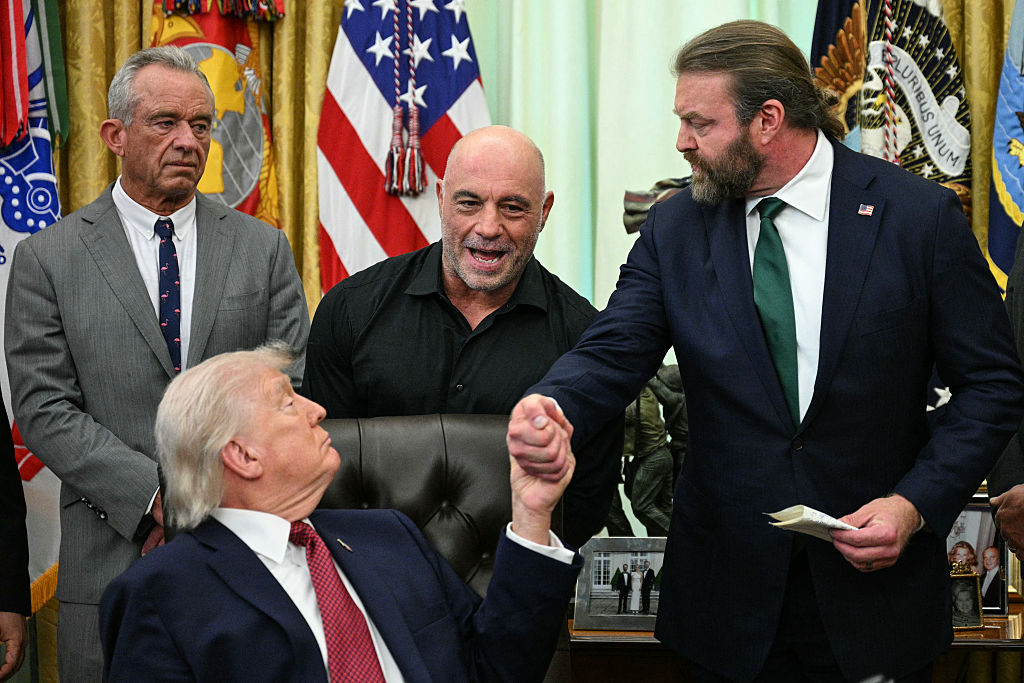
On Saturday, Donald Trump signed a major drug-policy executive order directing the fast-tracking of psychedelics such as ibogaine as potential treatments for severe mental health conditions, including addiction and PTSD.
Research into novel treatments is important. But so far the evidence supporting the miraculous claims made by advocates such as Joe Rogan — who says he played a central role in getting Trump to sign this order — is weak.
Consider Rogan’s claim that “one dose of ibogaine has an 80% rate of freeing these people from addiction”, possibly referring to a study of self-reported results from a sample of 88 opioid users. That might sound impressive, but it provides more questions than answers: how meaningful can a small study be? And how trustworthy are subjective reporting methods?
Two other studies from 2017 also warrant caution. Both found ibogaine to be associated with improvements in opioid addiction and withdrawal, but their evidentiary strength was limited. One lacked a control group, included only 30 participants, and also relied on self-reported outcomes. The other had a sample size of just 14, with only eight completing all follow-up interviews.
Both were supported by the Multidisciplinary Association of Psychedelic Studies, an advocacy group headed by longtime psychedelics evangelist Rick Doblin. A MAPS corporate vehicle, Lykos Pharmaceuticals, attempted to commercialise MDMA (ecstasy) — only to be rejected by the Food and Drug Administration over shoddy practices, such as failing to report adverse reactions to the therapy and alleged sexual assault at one of its research sites.
Ibogaine also enjoys the backing of the Psychedelic Science Funders Collaborative, a group of Silicon Valley enthusiasts who push for a closer political, regulatory, and social embrace of these drugs on the grounds that they can improve health and mental wellbeing.
Issues similar to the problems with the ibogaine studies outlined here plague the psychedelics research field generally: one 2024 review of nearly 300 psilocybin studies found almost half did not use a control group, close to 40% of the studies relied on self-reporting, over 45% reported conflicts of interest, and the median sample size was 22.
These drugs also carry significant risks. One is hallucinogen-persisting perception disorder (HPPD), in which perceptual disturbances can persist for months after use. Another is cardiotoxicity: ibogaine in particular is associated with potentially serious cardiac effects that may be delayed for days following ingestion. For that reason, regulatory caution is more than justified. As the current National Institute on Drug Abuse director Nora Volkow noted last year, ibogaine would be “dead in the water” as a candidate for FDA approval given its cardiac safety profile.
Volkow is not alone in her concerns. Harvard psychedelics expert Mason Marks has observed that “Ibogaine is one [drug] that has arguably not ‘met basic safety requirements’ necessary for eligibility under the federal Right to Try Act.” Similarly, Jeremy Richards of Beth Israel Deaconess Medical Center has argued: “Ibogaine does not have magical properties… claims of its efficacy are based more on hope and beliefs than on quantitative, rigorous medical evidence.”
The executive order also underscores a broader shift in Trump’s drug policy: normalisation. The move signals, implicitly, that these substances are already established medicine. In that respect, it closely mirrors his order on marijuana rescheduling, which was likewise framed around therapeutic promise. Yet that promise remains contested and, in many areas, unsupported by robust clinical evidence. Whether psychedelics will follow a similar arc — from optimism to disillusionment — remains an open question.
Answering that question will require serious, methodologically rigorous research. But that work cannot be subordinated to political convenience or hype. Nor should drug policy be shaped by Silicon Valley venture interests or the influence of media personalities such as Joe Rogan.
 KevinSabet