









26 June 2026 - 5:00pm
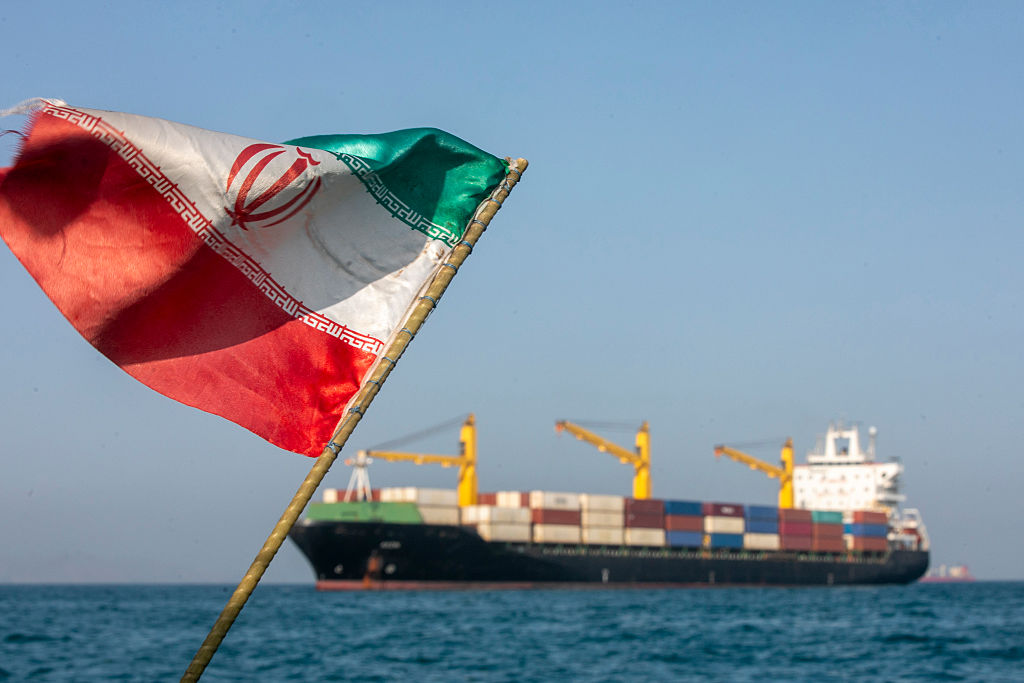
On both sides of the Persian Gulf, the old international order is under threat. It was reported yesterday that Iraq is the latest big oil producer to consider leaving Opec, which was long seen as a hybrid between a traditional cartel and a multinational organisation. In the Strait of Hormuz, the basic principles of maritime navigation are also at risk. Yesterday, Iran attacked a cargo ship, which suggests that the country’s regime is keen on establishing its own rules and system for ships crossing the Strait. That would be a clear violation of international maritime law, which has been a concept central to global commerce but is looking increasingly tenuous.
In both cases, the solutions to collective action problems are falling apart because of broader geopolitical changes. In Opec’s case, its institutional structure was key to its success: the risk of oil over-production could cause revenue-destructive price wars and thus a plan to keep relations fair was needed.
Now, times have changed. Both America’s rise as a major oil producer and the looming uncertainty over oil demand due to the green energy transition have put Opec under pressure. In particular, a rift has opened between Saudi Arabia, the biggest producer in the group, and some other members, including Iraq. Saudi Arabia has low oil production costs and wants to keep revenue stable to fund its longer-term economic transition. Others, like Iraq, push up against production quotas and want to make hay while the sun is shining.
The UAE, a major Opec oil producer, left the organisation in April following a similar split. Now Iraq reportedly wants a higher production quota for itself, or it will exit too. Although the Iran war didn’t cause these divisions, it exacerbated them. Saudi Arabia was able to weather the closure of the Strait of Hormuz and even emerged with more revenue, thanks to its bypass pipeline. This wasn’t a luxury available to other Persian Gulf countries, like Iraq, which have to make up for lost time and money.
Iran’s ship strike last night signals an even bigger rift. The move comes as the US and Iran are still negotiating a permanent peace deal, and as various cargo ships try to exit the Persian Gulf via the Strait of Hormuz. Iran didn’t take any responsibility for the attack, but the strike hit after the Revolutionary Guards warned against ships taking so-called unauthorised routes.
Setting up what amounts to a state-organised protection racket is an obvious violation of the United Nations Convention on the Law of the Sea’s provisions for transit passage. But at this point, through the Strait’s closure in the first place and the US’s subsequent blockade of vessels carrying Iranian oil, the convention has already been disregarded flagrantly.
Ships may well still be able to get out of the Strait. But the lasting damage will be in the erosion of international norms, which once held the oil economy together, and the second-order effects that follow. As the supply backbone of the world’s most important commodity erodes, pricing swings may well become more volatile. There is also the chance that other countries will try to mimic Iran’s stunt. This could lead to dire consequences for everything from maritime routes to shipping insurance, and, unfortunately, the price paid for everyday goods.
This is an edited version of an article that first appeared in the Eurointelligence newsletter.