









26 October 2026 - 6:51pm
For the most famous exponent of American exceptionalism in our lifetimes, Donald Trump is surprisingly sensitive to foreigners’ views of him. Not long before he complained that Norway was a “shithouse” country (because he did not get the Nobel Peace Prize), he bragged on Truth Social that “Conservatives just won a landslide majority in British Columbia, Canada, returning to power for the first time since 1928. And Brazil is about to elect a conservative President Flávio Bolsonaro. MAGA is spreading worldwide.”
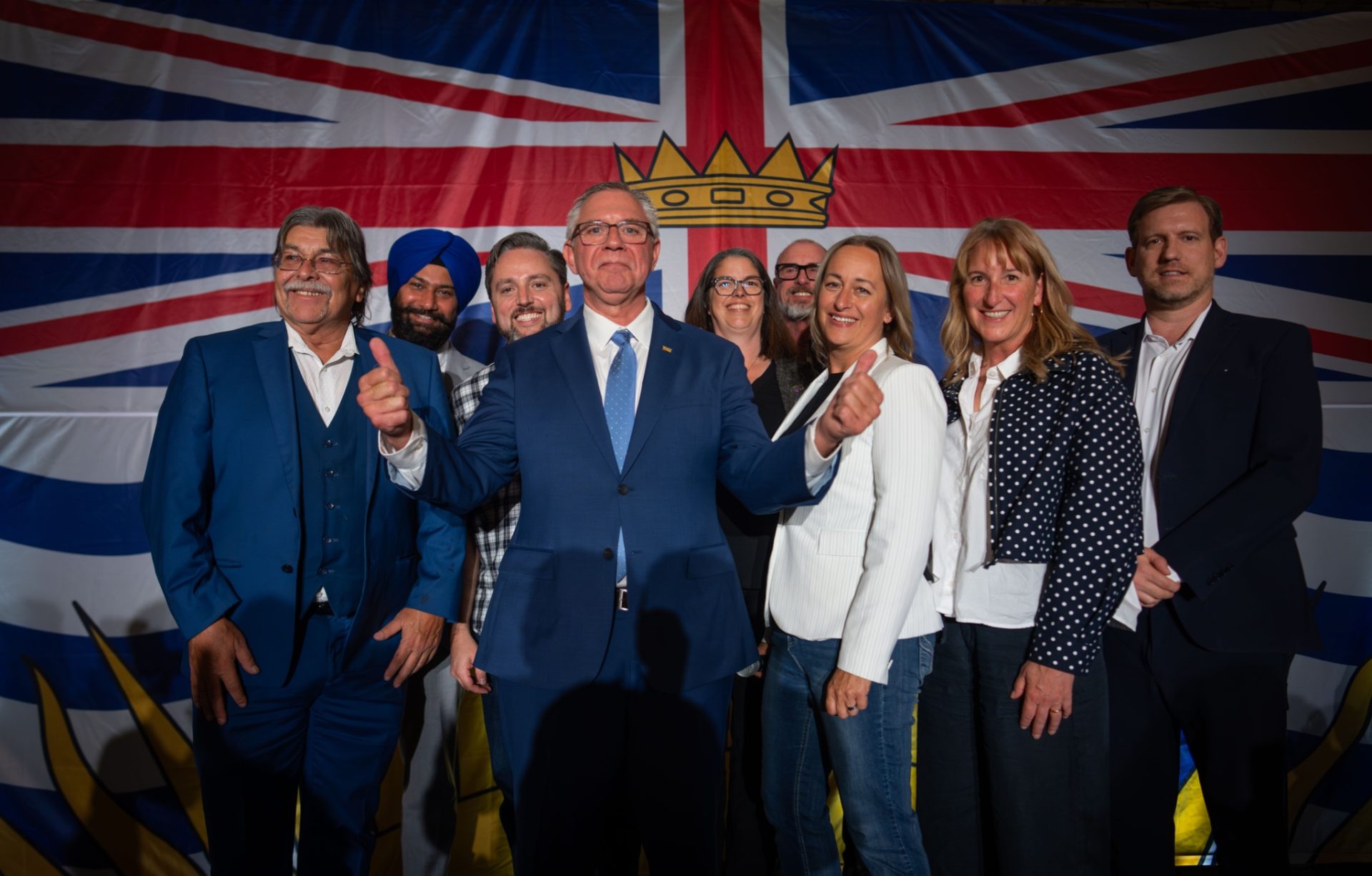
Flávio Bolsonaro proceeded to lose the election, but the victory in British Columbia (BC) was real. Such was the magnitude of the win that even Vancouver, which has a good claim to being North America’s most progressive city, returned a good number of Conservative legislators. Yet if Trump — and the MAGA world by extension — saw in the result a vindication of his international stature, they are sorely wrong.
For one thing, while this is the BC Conservative Party’s first victory in a century, it is hardly the first time the province has elected a Right-wing government. But more importantly, the BC Conservatives won in spite of Trump’s baleful influence on Canadian politics, not because of it.
Throughout the campaign, David Eby, the defeated progressive premier, sought to paint the BC Conservatives as MAGA-adjacent, a strategy that worked for Mark Carney. The party, meanwhile, only secured its victory after a brief but bloody civil war that ousted its previous leader, widely seen as too close to MAGA.
When Eby called an opportunistic snap election, the BC Tories found themselves without a leader. They settled on the most boring-looking member of their caucus, Lorne Doerkson, as interim leader. A month later, he is measuring the drapes in the premier’s office.
This is not to say that they won by compromising on conservative principles. Its key policies include repealing a law requiring consultation with Indigenous people in the law-making process, the abolition of a school programme on sexual orientation and gender identity, and the promotion of oil pipelines. All these are hot-button culture-war issues, but they did not stop voters from giving the party a huge majority.
The trend is not confined to Canada. Almost two years since Trump destroyed the guaranteed ascension of Pierre Poilievre to power, western Right-wing parties are finally waking up to the fact that MAGA is, well, American. Associating too closely with that movement is electoral poison.
It was only 18 months ago that the British Right was fighting over whether JD Vance had snubbed Kemi Badenoch on his visit to the Cotswolds. Today, one suspects that Tories would positively relish a fight with the administration, while Nigel Farage feels the need to distance himself from the man whose inauguration he attended, at least on issues such as Ukraine.
In Europe, former Trump-whisperer Giorgia Meloni has also fallen out publicly with Trump. In Germany, the Alternative for Germany (AfD), which had invested much effort in courting Trump, is now telling its senior members to take fewer trips to America. Even those European leaders who do not publicly break with Trump have largely stopped mentioning him. Viktor Orbán, the most Trump-aligned of all EU leaders, is out of office.
In retrospect, this outcome should have been obvious. Nationalism is, as its name says, national; and MAGA world’s insistence that other western states should kowtow to America was never going to be conducive to a long-term coalition of the global Right. The shared hatred of the cultural Left was a powerful glue, but a shared hatred of pronouns could not bridge the chasm that has opened between Trump and the US’ traditional allies.
There is an evident appetite for Right-wing policies across the West. But the best way to capitalise on the demand is to provide drama-free, robust Right-wing governance. This is itself incompatible with adopting the increasingly hysterical style of Trumpian politics, not to mention indulging the deranged debates that obsess the Trump staffer class.
Luckily for British Columbia, Trump’s embrace came too late.
