









5 October 2026 - 11:15am
In March, I wrote that Luiz Inácio Lula da Silva, a talismanic and enduring figure for the Brazilian Left, risked going down as his country’s Joe Biden in his quest for a fourth term in office.
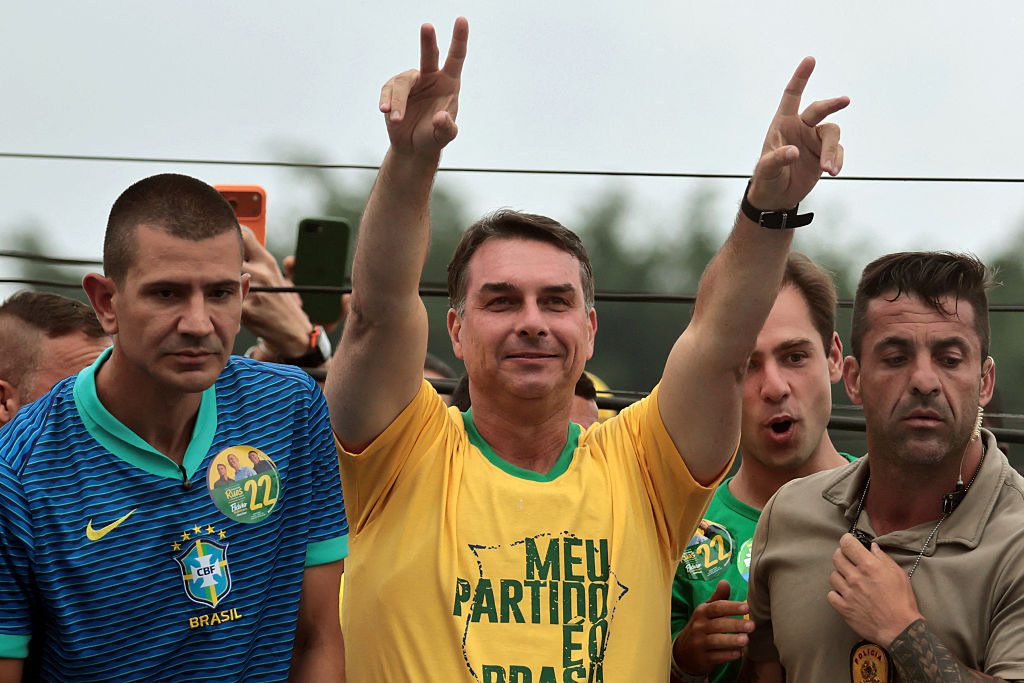
Last night’s first-round election results are a big step in that direction. Lula came in second with 45% of the vote, two points behind Flávio Bolsonaro — the son of former president Jair Bolsonaro — who received 47%. That sounds like a margin that could easily be made up in the run-off later this month, and it still could be. But in context, this is a disastrous result for Lula and his campaign.
Polls had expected the incumbent president to finish slightly ahead in the first round. And given the slate of other candidates in this election — who drew low single digits but are nearly all centre-right — he needed to finish first to have serious hopes of winning the run-off which polls predicted would be unusually narrow.
Even if he were to lose in the run-off, Lula’s legacy will remain incomparably more impressive than Biden’s. He will represent an era in his country’s politics, Biden only an epilogue. Such a result would be another instance in which Brazil seems to follow the political trajectory of the US on a two-year lag.
But the scene is all the more grim for the President, and for the Left in general, in light of the near-total rout that Right-wing candidates aligned with Flávio delivered to Lula’s coalition in races for Congress and state governorships. The Right won both senate seats up for grabs in São Paulo and in Rio de Janeiro, the two most important cities in the country. Flávio’s Liberal Party will now have the largest bloc in the Senate by a large margin.
Lula’s finance minister was also unsurprisingly blown out of the water in the first round by the São Paulo incumbent governor, while in Rio state, voters unexpectedly preferred a candidate even further Right than the already centre-cight former mayor. Add in crushing victories for the Liberals in Senate races in the federal district, in southern states and elsewhere, and the energy seems to rest unambiguously with the Right-wing end of the political spectrum.
Explanations can be found in a number of places: popular discontent with crime, high inflation and household debt, a widespread sense that life hasn’t become much better since the start of Lula’s third term, and scandals involving a Supreme Court that many see as allied with the incumbent. Never mind that the same scandals have tendrils which have touched Flávio himself.
Yet Bolsonaro seems to have succeeded in presenting himself as a more moderate take on his father’s Right-populist formula. Despite the fact the country has been turning to the Right since at least 2018, many winced at the harder edges of Bolsonaro père’s politics. Yet his ineligibility, convicted as he was for plotting a coup after losing the 2022 election, may in the end have favoured his son’s prospects. Zero-sugar sodas are wildly popular in Brazil, and Flávio seems to have managed to sell himself in similar terms: as a Bolsonaro for whom you can vote without feeling guilty.
A victory for Flávio in the runoff would complete a string of victories for Right-wing candidates in Latin America, putting all the region’s major economies — with the exception of Mexico — under the control of Donald Trump allies. That would represent the most unanimously US-aligned group of democratically elected Latin American leaders since the days of the “Washington Consensus” in the Nineties, and perhaps ever. Cuba once sought to be the lodestar for this region, but now it is the US that seems to have the most energetic imitators.
Nick Burns is associate editor at The Hedgehog Review and was previously editor at Americas Quarterly.
 NickBurns