







 Prefer us on Google

15 October 2026 - 2:00pm
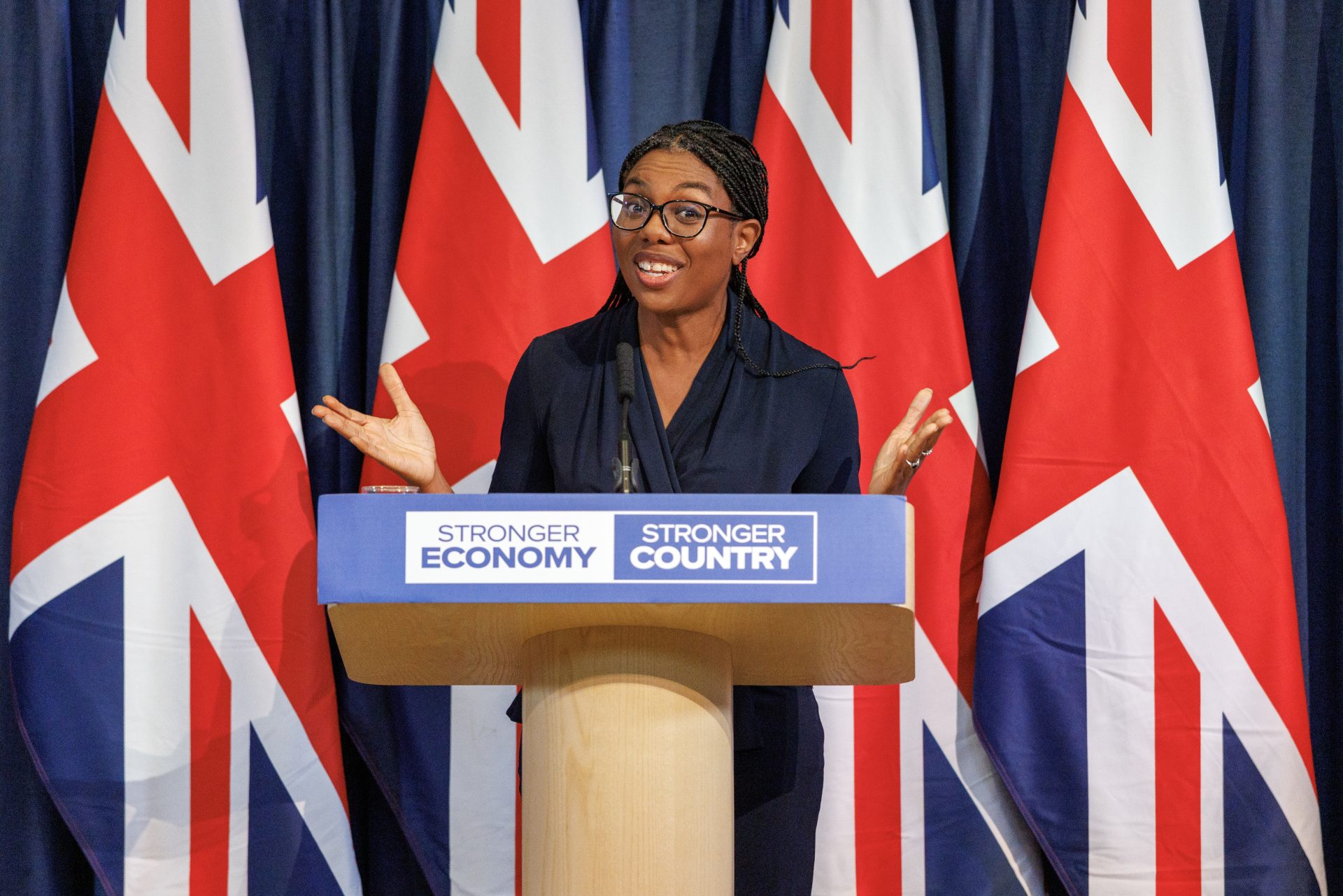
Tory leader Kemi Badenoch has found herself accused of undermining the Special Relationship by the White House itself. The row began after Nigel Farage said on a conservative American podcast this week that, as prime minister, he would tell Donald Trump, “Chagos, it’s yours. Diego Garcia, in perpetuity,” in return for the President keeping quiet about the Falkland Islands. Badenoch responded by accusing the Reform UK leader of proposing to give away British territory. But both Farage — who insisted he meant guaranteeing continued American use of the Diego Garcia military base — and an unnamed White House official rejected her interpretation. The latter accused Badenoch of spreading “fake news”.
During her time as Tory leader, Badenoch has become increasingly critical of Trump. Recently, she took the US President to task over his decision to ease sanctions on Russian diesel, describing the move as “disappointing”. But while picking a fight with the leader of Britain’s most important ally might seem an unusual strategy for an aspiring prime minister, politically it could work rather well.
After spending much of her leadership attempting to outflank Farage on immigration, Net Zero and the European Convention on Human Rights — and making very little progress in the polls — Badenoch is pivoting. At last week’s Conservative Party Conference, she appeared to rebalance her electoral pitch away from the working-class Red Wall voters and towards the affluent Liberal Democrat shires by promising to abolish inheritance tax on family homes and ease the childcare penalty facing higher earners. Polling suggests a modest conference boost.
And Trump offers the Tory leader a useful dividing line. YouGov polling finds that 67% of Britons describe themselves as anti-Trump, including 89% of Lib Dem voters and 61% of Conservative voters. Even 24% of Reform voters oppose the US President. Whatever else divides the electorate, disliking Trump is something of a national pastime.
However, at the moment, 41% of Lib Dem voters think the Conservatives are pro-Trump compared with just 8% who believe they oppose him. That is a problem for a party trying to win back voters who deserted it in 2024. Disagreeing publicly with Trump will not, by itself, reverse those defections, but it might remove one reason for refusing to consider the Tories.
It also exposes a weakness in Farage’s position. More in Common found that 37% of Britons cited his support for Trump as a reason not to vote for Reform, making it the most commonly cited reason. Half think he is “in Trump’s pocket”. Farage’s personal relationship with the President, so often presented as an electoral asset, may actually limit his appeal.
Badenoch would not be the first Right-wing female leader to discover this strategy. Giorgia Meloni was once praised by Trump as “one of the real leaders of the world”. But their relationship soured over Italy’s refusal to facilitate American operations against Iran. When Trump questioned her popularity, she fired back in typical Roman style: “My popularity is none of your concern. I suggest you focus on yours.”
Yet the confrontation has hardly damaged Meloni’s domestic standing. Her Brothers of Italy party remains Italy’s largest, polling around 27%. Being tough on Trump remains compatible with being firmly on the European Right.
There are risks. Meloni is an experienced prime minister; Badenoch, despite serving as international trade secretary under both Liz Truss and Rishi Sunak, has never had to manage the Special Relationship from Downing Street. Nor is a diplomatic spat over comments made on a podcast necessarily evidence of good judgement. Labour and Reform will seize on any suggestion that the Tory leader cannot deal with Britain’s allies.
But there is a difference between standing up to America and standing up for Britain. If Badenoch can deliver something akin to the Tories’ own Love Actually moment, and show voters that, unlike Farage, she won’t be the President’s lapdog, she may discover that being on the wrong side of Trump is precisely where voters want her to be.
