









4 July 2026 - 1:00pm
This week, the Commonwealth Short Story Prize, run by the UK-based Commonwealth Foundation, gave its annual award to Trinidadian writer Jamir Nazir for his short story “The Serpent in the Grove”. Established to spotlight new voices from underrepresented parts of the Commonwealth, the prize is intended to elevate writers from regions often overlooked in global publishing circuits. Nazir’s story supposedly had just the underrepresented qualities they were looking for.
Nazir’s name will be familiar to some because in May the prize, which had an agreement with prestigious UK-based literary magazine Granta to publish its finalists, was found to have shortlisted at least three howlers that were most likely generated by AI. In particular, Nazir’s “The Serpent in the Grove” quickly attracted attention for its chatbot syntax and bizarre lines such as “She had the kind of walking that made benches become men.” Granta’s human readership — rather than its editors or Commonwealth’s professional-writer judges — were the ones to cry foul.
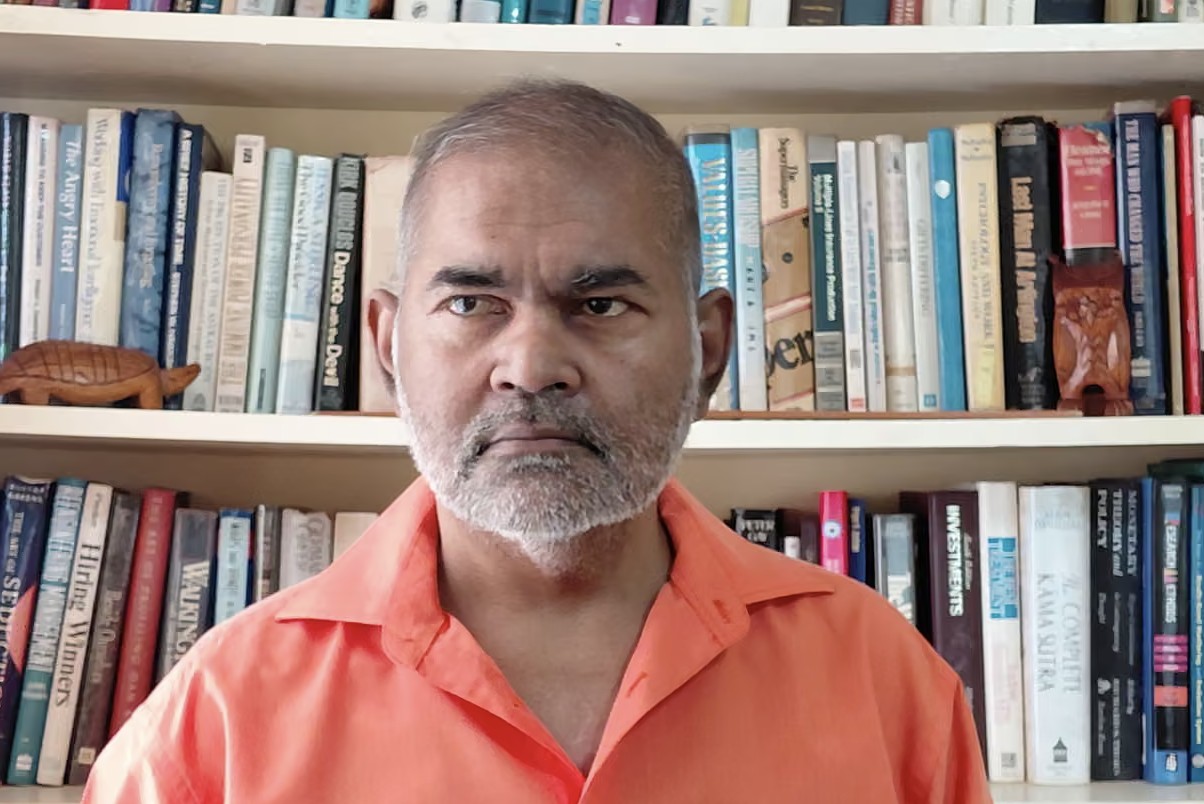
After being run through AI-detection software, “The Serpent in the Grove” and two other short stories were found to be entirely or almost entirely generated by AI. Nazir’s photograph appeared to be AI-generated as well, a falsification to which Nazir later admitted. “That definitely had AI in it,” he said to writer Kevin Hosein in now-deleted screenshots, “because I had taken that shot with an old t-shirt on and guys in India wanted a picture to put because I was supposed to be on a board of directors for another company and they used that by putting the suit and maybe cleaning up the beard.” The explanation raises more questions than it answers. Why was Nazir impersonating a board member for an Indian company? Does this convoluted stratagem suggest the skills of a prize-winning writer?
During the initial scandal, Granta released a statement to journalists, distancing itself from the controversy. “Granta editors have no control over the selection of the Commonwealth Prize stories, and nor are they involved in choosing the jury,” the journal’s publisher, Sigrid Rausing, explained. Rausing also struck an arch tone, musing: “It may be that the judges have now awarded a prize to an instance of AI plagiarism — we don’t yet know, and perhaps we never will know.” On 19 June, however, Granta announced an end to its partnership with the Commonwealth Foundation. “For the sake of our own editorial integrity, the Granta Trust board has now taken the decision that we will no longer engage in external publishing partnerships,” a prepared statement read.
Since May, the “all-star judging panel” of another prestigious publication, the UK edition of the magazine Harper’s Bazaar, has fallen for AI content. The magazine flew “writer” Kavyta Kay to Burgh Island, off the coast of Devon, for a stay in the Burgh Island Hotel as a reward for winning first place in its short story competition. Talk about bizarre: her Nazir-like tale, “Back and Forth”, was also found by writer Nabeel S. Qureshi — the first to discover Nazir’s AI — to be 100% AI-generated.
“There’s no formula to a successful short story,” Ruth Ozeki, the award-winning novelist and head judge of the Harper’s prize, said, announcing the winner. “But whatever its strength is going to be — whether plot, a narrative voice or poetic language — it must be established quickly.” What Kavyta Kay’s AI chatbot established quickly was all the necessary clichés and stereotypes that the Leftist mainstream requires in order to ventriloquise the Third World. The piece included wise, anthropomorphic nature (that knowing, waiting tree), tiredness from long walks (the burden of being a non-Westerner), and a connection to animal and bodily instincts (their feet taking them to places they can’t foretell). Not to mention that the story is written in the unmistakable, consolidated unistyle of the modern mainstream. Harper’s Bazaar has yet to release a statement on the scandal.
We’ve been hurtling toward this moment for a long time, and may have arrived sooner than we expected. As the publishing-industrial complex has long favoured bad algorithmic writing — or what it calls mainstream and upmarket — a human might be able to venture a few conclusions: publishers and arbiters of taste are not, and have never been, on the side of the individual, only the collective. They care only if humans buy their books, not if they write them. We’re heading for a future in which publishers can pinch a penny by replacing the already small cost of fees and book advances with monthly premium subscriptions to an AI bot. Storytelling will be replaced by corporations generating slop at the click of a mouse. Where we go from there, perhaps only the trees know.
 BarneysRubble0