









11 October 2026 - 8:00am
In Germany, the populist Alternative for Germany (AfD) party is getting serious about power. According to a report in Politico, party officials are planning to water down its promise to bring back the seutschmark, the German currency which was replaced by the euro in 2002. It’s a wise move: even voters who regret the decision to join the single currency recognise that leaving it would make Brexit look easy. At best, it would mean significant economic disruption; at worst, a collapse of the eurozone and even the European Union itself.
The policy on the euro is part of a more general softening of the AfD’s stance towards the bloc. Instead of advocating for Germany to leave the EU, a new AfD policy being mooted is to offer a referendum on Germany’s continued membership if negotiations with other eurozone member states fail to adequately reform the EU.
“Negotiate and decide” isn’t an approach that worked out very well for David Cameron, but German voters will see it as a sign that the AfD is willing to change. In fact, it would put the German populists on a similar path to their French counterparts. In 2017, Marine Le Pen abandoned her party’s pledge to leave the eurozone, declaring that “there will be no Frexit.” Almost a decade later, she’s on the brink of winning next year’s presidential elections.
If the AfD is removing barriers to its electability, it’s because the party also smells power. Recent polls show the party breaking through the 30% barrier. Crucially, that’s not just a function of the AfD’s strength in the former East Germany. The party is now also moving into first place in regions such as North Rhine-Westphalia.
Meanwhile, in the eastern state of Saxony-Anhalt, establishment attempts to stop the AfD taking control of the regional government are faltering. Despite the party being three seats short of a majority in the regional parliament, its candidate Tobias Rausch has just been elected to the post of speaker — the first such victory for a hard-Right party in Germany’s postwar history. The suspicion that some in Friedrich Merz’s Christian Democratic Union may have voted for Rausch is yet another omen that the brandmauer — a pact among the mainstream parties to exclude the AfD from power — is giving way.
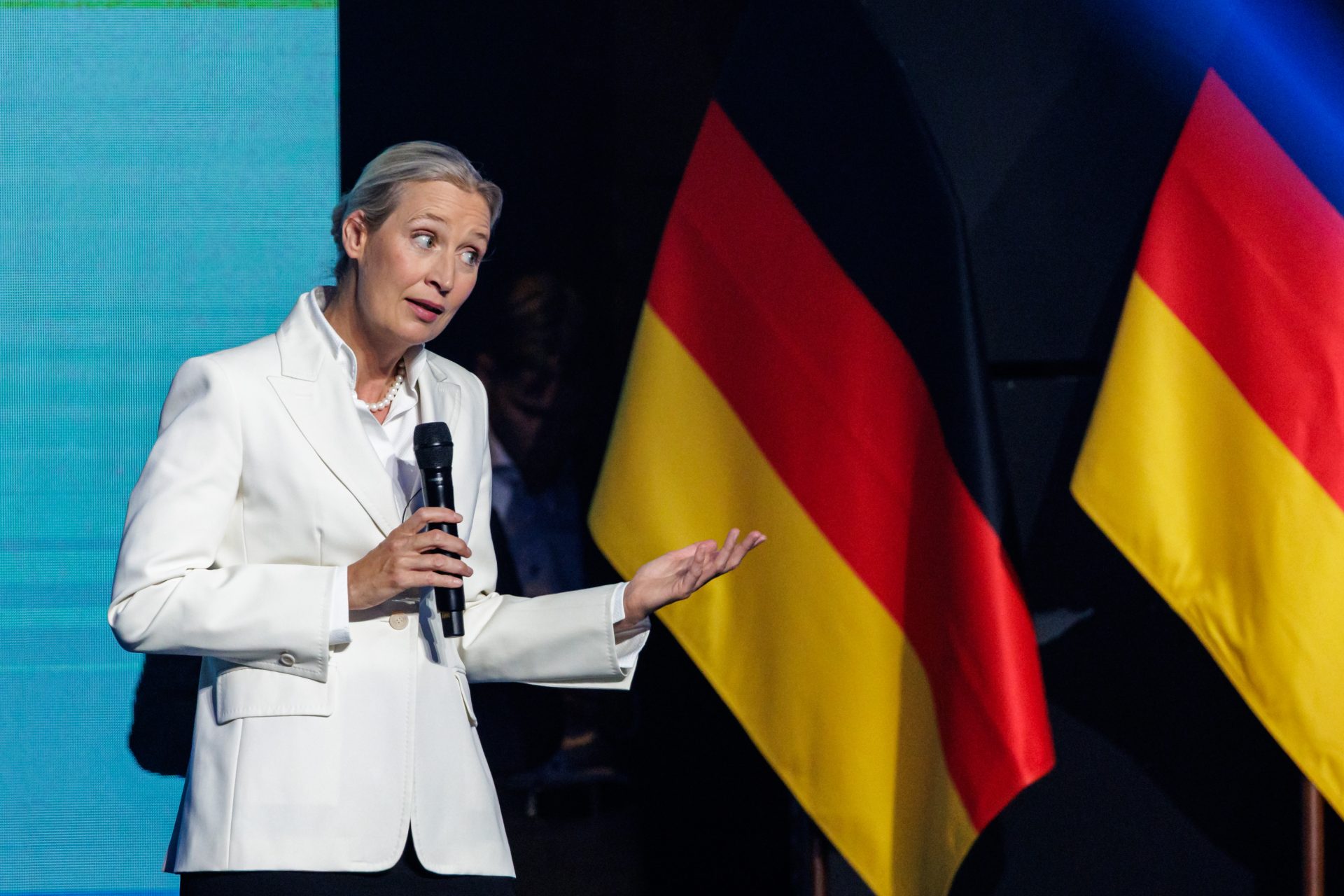
Does any of this matter if the party is becoming more moderate? Perhaps AfD co-leader Alice Weidel is the next Giorgia Meloni — the Italian Prime Minister who started her career on the fringes of the Right but is now a stalwart of continental conservatism.
However, the AfD formula is different to Meloni’s. Instead of quitting the EU, the party now wants to reprogramme it. Take a look at the motion leaders are pushing in Saxony-Anhalt in alongside the Alliance for Social Justice and Economic Reason (BSW), a party of the populist Left that holds the balance of power. The document calls for an end to financial support for Ukraine and the normalisation of relations between Germany and Russia.
It’s an agenda on which the AfD is finding allies across Europe. For instance, in neighbouring Austria, the Russia-friendly Freedom Party now stands at around 40% in the polls — more than all the governing parties put together. In France, Le Pen wants to cut off aid to Ukraine and withdraw from Nato’s Integrated Military Command.
To many, it’s a tempting electoral offer. No more talk of quitting the eurozone and all the immediate problems that would bring; instead, the discussion concerns solutions — the restoration of cheap Russian energy supplies and the “peace” dividend that would come from letting Vladimir Putin have his way. If Le Pen wins next year in France and the AfD isn’t stopped in Germany, this will be the new Europe. Is that what Andy Burnham wants Britain to rejoin?
Peter Franklin is Associate Editor of UnHerd. He was previously a policy advisor and speechwriter on environmental and social issues.
 peterfranklin_