









May 20 2026 - 10:00am
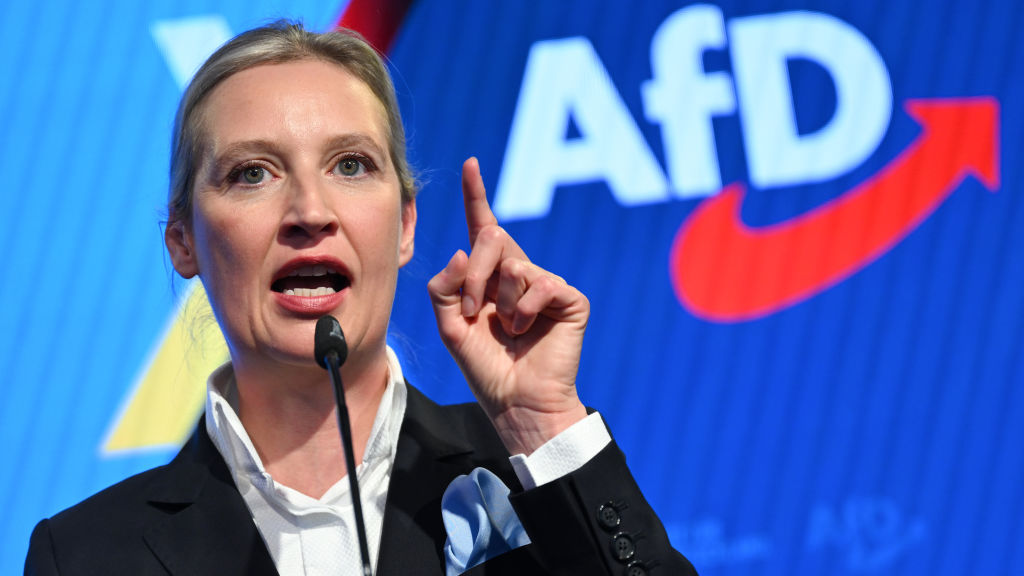
Viktor Orbán’s defeat in Hungary last month was meant to signify the turning of the tide against Right-wing populism in Europe. Yet the latest INSA polling from Germany dashes those hopes. Support for the populist Alternative for Germany (AfD) has hit a record high of 29%. The second-placed party, the governing Christian Democrats (CDU), is on just 22%, giving the AfD its biggest ever lead. The same research also puts Alice Weidel, the party’s leader, 10 points ahead of Friedrich Merz on the preferred chancellor question.
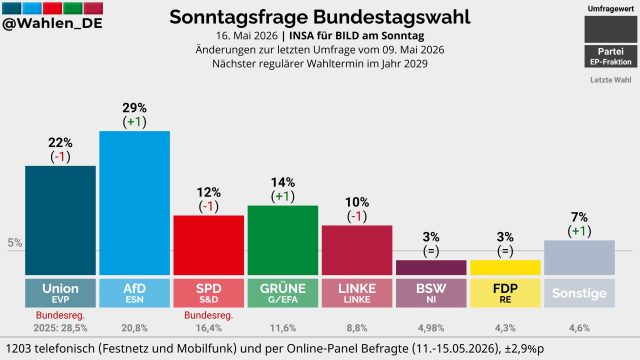
Elsewhere, Forsa has also just put the AfD on a record high of 28%, while pollsters at the prestigious Allensbach Institute last week had the AfD out in front for the first time. So while precise percentages differ, the polls agree on the trend: the party is advancing beyond its position at last year’s federal election, which was already the best result in its history. The AfD’s popularity is also spreading geographically. Until recently, it was the most popular party only in constituencies that lie within the borders of the former East Germany. But the latest maps show the party’s appeal spreading westward.
It isn’t just the polls that show the populists advancing. In March, there was a regional election in Rhineland-Palatinate where, despite being marginalized by the political and media establishment, the AfD more than doubled its support.
The party continues to grow in the east, too. Of particular concern is Saxony-Anhalt, which is centered on the great fortress city of Magdeburg (founded by Charlemagne to hold back his barbarian foes). With elections for the regional parliament due in September, the latest polling puts the AfD on an extraordinary 42%. Taking into account the 5% cut-off for getting seats, this means the other parties combined would barely have a majority. The so-called Brandmauer — or firewall — agreement among mainstream politicians to keep the AfD out of power is on the brink of failing.
Meanwhile in Berlin, the consequences of the Brandmauer are destroying the Merz’s credibility. Very much not in the mold of Angela Merkel, he was elected to take the CDU and Germany to the Right, especially on immigration. But despite that mandate, he has been frustrated at every turn by his coalition partners, the center-left Social Democrats (SPD). As a result, his approval ratings are even lower than Keir Starmer’s.
What’s more, he’s trapped. If the coalition government falls and fresh elections are held, then the exclusion of AfD means that the Christian Democrats would have no choice but to form another coalition with the SPD, only this time with the Greens as well. Instead of one Left-wing coalition partner, Merz (or his successor) would be lumbered with two.
The Social Democrats are playing a dangerous game. By not following the example of their center-left comrades in Denmark — and instead blocking immigration reform — they are daring Germans desperate for change to keep defecting to the AfD until something gives. Maintaining the Brandmauer imposes much higher costs on the mainstream Right than on the Left. In effect, it means that more than half of all Right-of-center votes are disregarded. It also practically guarantees a permanent place in governing coalitions for the SPD. The very least that the Social Democrats could do in return is make some meaningful compromises on immigration. If they’re too selfish to do that, then whatever happens next will be their fault.
Peter Franklin is Associate Editor of UnHerd. He was previously a policy advisor and speechwriter on environmental and social issues.
 peterfranklin_