









6 July 2026 - 6:00pm
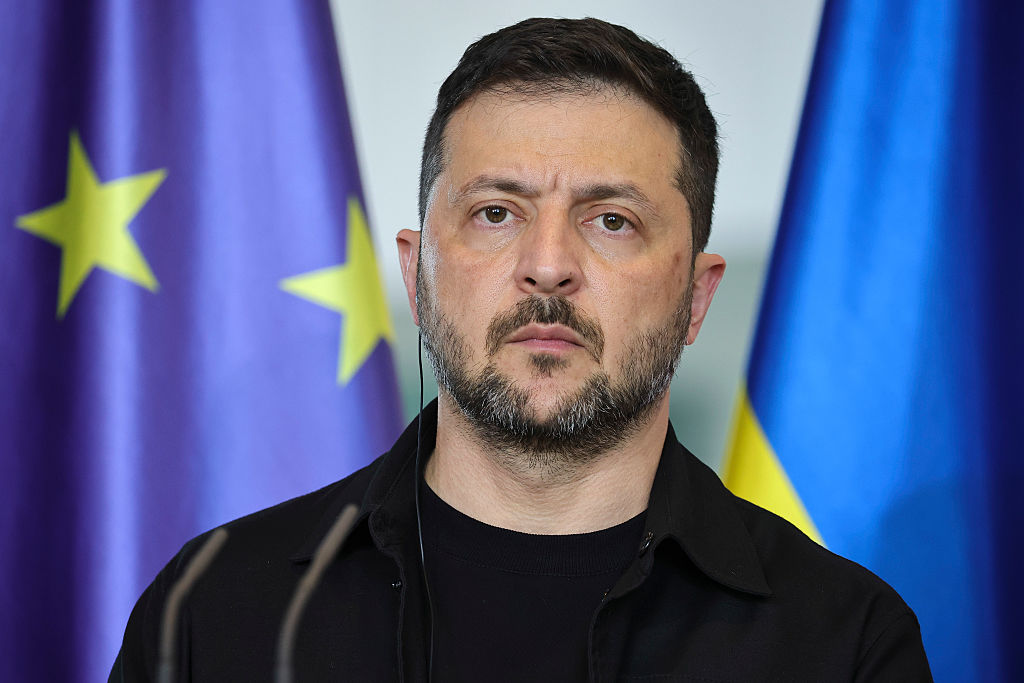
After his 4 July call with Donald Trump about the war in Ukraine, Volodymyr Zelensky projected only optimism. “There is a real prospect to put an end to this war,” he said in a statement posted on X.
He’s not alone in this assessment. For weeks, coverage of the war in the Western media has been celebratory, enthusiastically predicting that Ukraine has “turned the tide” and now has a real chance to force Vladimir Putin to settle the four-year conflict on terms favourable to Kyiv.
This new narrative, however, amounts to a mix of intentional propaganda and wishful thinking. To be sure, Ukraine’s deep strike campaign has created new economic and social pressures in Russia. But even if the war looks and feels different to outside observers, its trajectory is unchanged and its end no closer than it was a year ago.
Zelensky has good reason to put a positive spin on Ukraine’s prospects on the battlefield. Not only does the hopeful picture give war-weary Ukrainians a morale boost, it encourages the country’s European backers to redouble their economic and military support. What’s more, it reinforces the view that one final push may be enough to compel Russia into a ceasefire. Zelensky’s message is also aimed at Trump himself, part of an ongoing effort to convince Washington that Ukraine is a horse worth backing.
But there is little evidence to support Zelensky’s version of events. The most visible change in the war over recent months has been the growing success of Ukraine’s long-range strike campaign, which has damaged parts of Russia’s oil infrastructure. As a result, Russia’s war effort has been strained, as has its civilian population, with gas shortages reported in many areas. Ukraine has also used medium-range drones and missiles to disable Russian logistics, slowing its progress on the front line and complicating efforts to resupply Crimea, which Russia annexed in 2014.
These developments have changed the character of the war but not its long-term fundamentals. For instance, deep strikes may inflict damage on Russia, but ultimately Ukraine suffers more. That is because Russia has leveraged its superiority in firepower to escalate its response significantly, launching strikes on Ukraine’s energy and transport networks. Kyiv’s industrial base has also been worn down due to insufficient air defence coverage.
The binding constraint on this war is still Ukraine’s lack of manpower. Drones can help offset this disadvantage but cannot turn the scales in Kyiv’s favour. Indeed, in recent weeks Russia’s ground offensive has made slow but important gains. It is on the verge of taking Kostyantynivka, a strategically important city in Donetsk, and is moving closer to other cities along Ukraine’s “fortress belt” as well.
Confident about Russia’s continued offensive progress, Putin has shown no real signs of backing down from his war aims, raising further questions about whether peace is as close as Zelensky suggests. In fact, Putin has signalled an increase in Russia’s territorial ambitions and restated his 2022 conditions for peace, articulated when the two combatants met in Istanbul early in the war.
It would be wrong to say that Moscow is not interested in negotiations. In fact, Putin expressed continued interest in diplomacy in his own 4 July call with Trump. But there is no indication that economic pressure from Ukraine’s attacks is weakening his position internally or causing him to consider an early end to his military operation. As was the case in 2022, it is very unlikely that economic pressure on Russia will determine the end to this war.
But even if Moscow and Kyiv could agree on the need for resumed negotiations, the two combatants face a common obstacle: US disinterest. Ever since the war in Iran began, Washington has had little time to devote to the Russia-Ukraine conflict. Ukraine and Russia can do a lot of negotiating on their own, yet both sides also want security guarantees that only Washington can provide. The US absence is therefore a serious impediment.
Trump has suggested several times that US attention might shift back now that the Iran war’s active phase has ended but, so far, this seems unlikely. With Iran negotiations ongoing and the midterms looming, Ukraine is simply not a high priority for the Trump administration.
For all the happy talk about Ukraine’s new momentum and the potential for a near-term ceasefire, then, the war looks likely to continue, and the pendulum is likely to swing back in Moscow’s favour soon enough. Rather than indulging in fantasy, Kyiv’s interests would be better served by confronting this cold, hard reality.
 jekavanagh