









26 April 2026 - 8:00am
There is a certain type of metropolitan intellectual who will support any political movement that subscribes to their cult of national self-hatred. Many of these people seriously believe that Scotland is in some way a captive, even a colony of England, and that Scottish nationalists are tartan freedom fighters yearning to throw off the yoke of oppression. Nothing could be further from the truth.
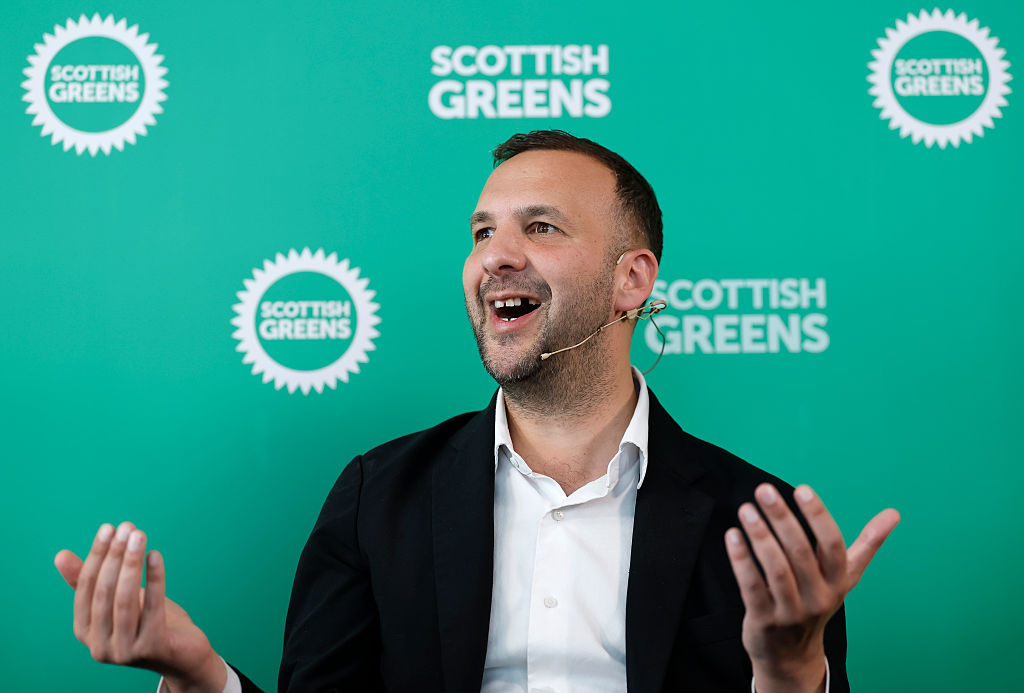
But in Glasgow on Friday, the leader of the Green Party of England and Wales, Zack Polanski, was banging the drum for Scottish independence — to liberate Scots from the tyranny of Westminster rule. “I can’t see why a UK prime minister would want to keep a country in a union,” he said in a joint press conference with the separatist Scottish Green Party yesterday, “which had demonstrated so clearly with votes that they didn’t want to be in that union any more.”
Well, Polanski may not be aware of it, but Scots demonstrated clearly with their votes back in 2014 that they wanted to remain in a union with England. There is zero evidence from opinion polls that Scots want to repeat that traumatic and divisive referendum any time soon. Independence comes way down the priority list of voters in the current Scottish Parliament election campaign, behind the cost of living, the NHS and, surprisingly, immigration. But that doesn’t seem to bother Polanski.
“Who the hell does Wes Streeting think he is?” he said, referring to the Health Secretary’s remark that there would not be another referendum even if the SNP managed to win a majority in the 7 May Scottish Parliament elections. “He’s acting as if Westminster owns Scotland.”
Of course, the UK Parliament is ultimately sovereign under the devolution settlement. But Scotland has a parliament with powers over a range of domestic policies — education, health, policing, justice and the environment — and has wide-ranging tax-raising powers, including the right to set the bands and levels of income tax. That’s a funny kind of oppression.
It is true that some opinion polls show a plurality of Scots backing independence. But for many, that sentiment functions less as a concrete programme than as a statement of identity — a way of signalling Scottish patriotism rather than an immediate desire to dissolve the Union. In practice, there is little appetite for a near-term rupture with England. The UK link involves significant financial transfers to Scotland that allow Scots to benefit substantially more than their English counterparts. The Scots are nothing if not canny with money.
They may vote in substantial numbers for the Scottish National Party, but that is largely because they think the SNP will fight Scotland’s corner better than their erstwhile champions, Labour, which dominated Scottish politics for decades before and some years after devolution. And they are probably right. Labour allowed itself, over many years, to appear as the “branch office” of London Labour, as the former Scottish Labour leader Johann Lamont once admitted.
But according to the polls, it is not Labour that is likely to become the official opposition to the SNP in May, but Nigel Farage’s Reform UK. Right-wing populism has taken areas of lowland Scotland and the North East by storm. Many working-class Scots, “scunnered” with the liberal-Left establishment and reeling from the cost-of-living crisis and oil industry job losses, want to make their discontent known. It is no longer the “Canada of the UK”, uniformly dedicated to pro-immigration, quasi-socialist policies.
The Greens have sensed that this could be their big chance to corral a lot of disillusioned Labour voters into their tactical campaign against Reform, viewing this year’s election as a “popular front against the far Right”. And in this endeavour, the “eco-socialists” are shoulder to shoulder with the Scottish National Party.
It is unlikely that SNP leader John Swinney will win an overall majority in the Holyrood Parliament in two weeks’ time, and the Greens stand to return 10 or more seats. This would open the door to another “coalition of chaos”, as the last SNP–Green alliance came to be known after a string of policy misfires — from plans to phase out a million gas boilers to the push for gender self-ID.
Scots must prepare themselves for another such coalition — and, on top of that, another IndyRef effort. This is all rather strange, because there is no real demand in Scotland for constitutional change. It’s not so much a popular front against the far Right, but an unpopular front against the Union.
Iain Macwhirter was political commentator for The Herald between 1999 and 2022, and is the author of Disunited Kingdom: How Westminster Won a Referendum But Lost Scotland. He was Rector of the University of Edinburgh from 2009-12.
 iainmacwhirter