









23 June 2026 - 5:00pm
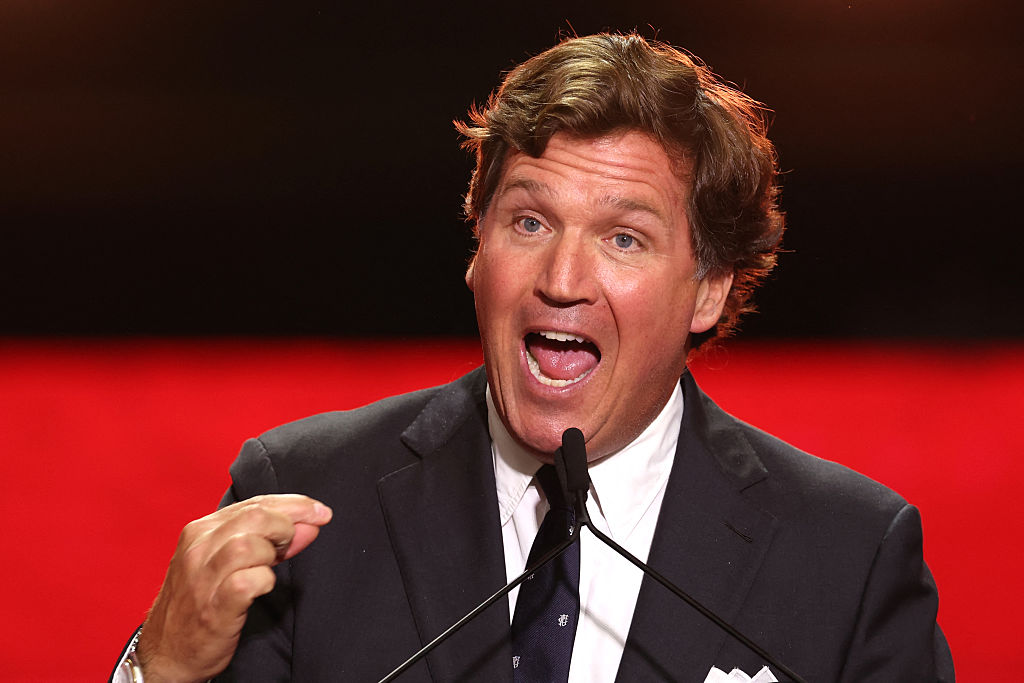
Last week, on the podcast Can’t Be Censored, Tucker Carlson said there was no chance he would ever support the Republican Party again. The clip went viral on Monday. He would not back the Democrats either, he added, and “did not know what he would do” when the next American election came along. After 35 years of defending the party, he said, there was no defending it now: it had just become too immoral. “I’m out. And if I’m out, then I think a lot of other people are out.”
The temptation is to file this under the long-running Trump-Tucker feud: another sulk from a man the President dismissed in March as having “lost his way”. That reading fails to understand what Carlson is doing. After decades of trying on various ideologies, the commentator is now reviving a strain of American conservatism that predates Trump and has been homeless since the Cold War ended: the isolationist, anti-interventionist, restrictionist Right. Carlson has managed to secure a wedge issue with a real constituency behind it.
That issue is Israel. His disillusionment hardened after Trump attacked Iran in February, which Carlson has called “treasonous” and a “betrayal of American interests in favour of a foreign government and its donors”. He also regrets backing Trump in 2024, and claims some American politicians are more loyal to Israel than America. This broader position is no longer fringe inside his own coalition. A Pew survey conducted in late March found that 57% of Republicans under 50 now hold an unfavourable view of Israel, up from 50% a year earlier.
As can be seen when Aipac moved against Thomas Massie, the lobby can still win individual primaries while losing the rising generation that will decide the party’s future. But Carlson’s war on the GOP is even broader. On a recent episode of his show about the trucking industry, Carlson’s guest Gord Magill noted that the states handing out the most dubious commercial licences to foreign drivers were Texas and Florida, both run by Republicans. Carlson did not blink. The Governor and Lieutenant Governor of Texas, he said, were “way more liberal than a lot of Democrats I know”. He has stopped fighting over what he perceives as an arbitrary party label, and now treats it as a costume worn by people who do not share his politics.
So is there a chance that Tucker sets up his own Right-ward challenge to the GOP? Probably not soon, and probably not as a third party. After two memorable GOP primary challenges in 1992 and 1996, Pat Buchanan tried that route in 2000, on the Reform Party of the United States ticket. It delivered the election to internationalist Republican George W. Bush, who went on to launch the war in Iraq.
Trump showed in 2016 that the easier path is to seize a lane inside an existing primary, in his case, the anti-war lane the other candidates had vacated. Carlson could attempt the same trick, but his wing would need money, candidates, a whip and a reason for ambitious politicians to stake their careers on it. He has none of this assembled, only an audience whose true size is questionable.
What Carlson has not built, and may not bother to build, is the machine that turns a grievance and an audience into a small-but-potent faction to the Right of the House Freedom Caucus, and its Trump-supporting members such as Jim Jordan and Lauren Boebert. A presidential run within the GOP in 2028 would likely break MAGA; a durable faction might even replace it. Whether Carlson does the unglamorous work of actually organising it is the only thing still in doubt.
Oliver Bateman is a historian and journalist based in Pittsburgh. He blogs, vlogs, and podcasts at his Substack, Oliver Bateman Does the Work
 MoustacheClubUS