









20 Nov 2026 - 7:00am
On Wednesday, Home Secretary Shabana Mahmood vowed to release data on crimes committed by foreign nationals in the UK, albeit at an unspecified future date. This is a promising step, but there is still cause for concern. The Government has long been reluctant to publish these statistics, presumably due to concerns around “community cohesion”. Freedom of Information requests made by the Centre for Migration Control, aiming to acquire a breakdown of the number of convictions by nationality, have been stubbornly resisted by the Ministry of Justice.
In June, the Information Commissioner’s Office upheld a complaint from the CMC, rejecting official arguments that collating the relevant data would be disproportionately expensive. The Government is currently appealing the ICO’s decision. And, over the weekend, the MoJ dug its heels in yet again after further appeals, arguing: “On balance the interests of the data subjects to safeguard personal information outweigh the legitimate interest in this case.”
Why are officials so concerned? In other countries, such as Denmark, offender nationality statistics are routinely published. In the UK, though, the subject is consistently skirted by civil servants and the political establishment.
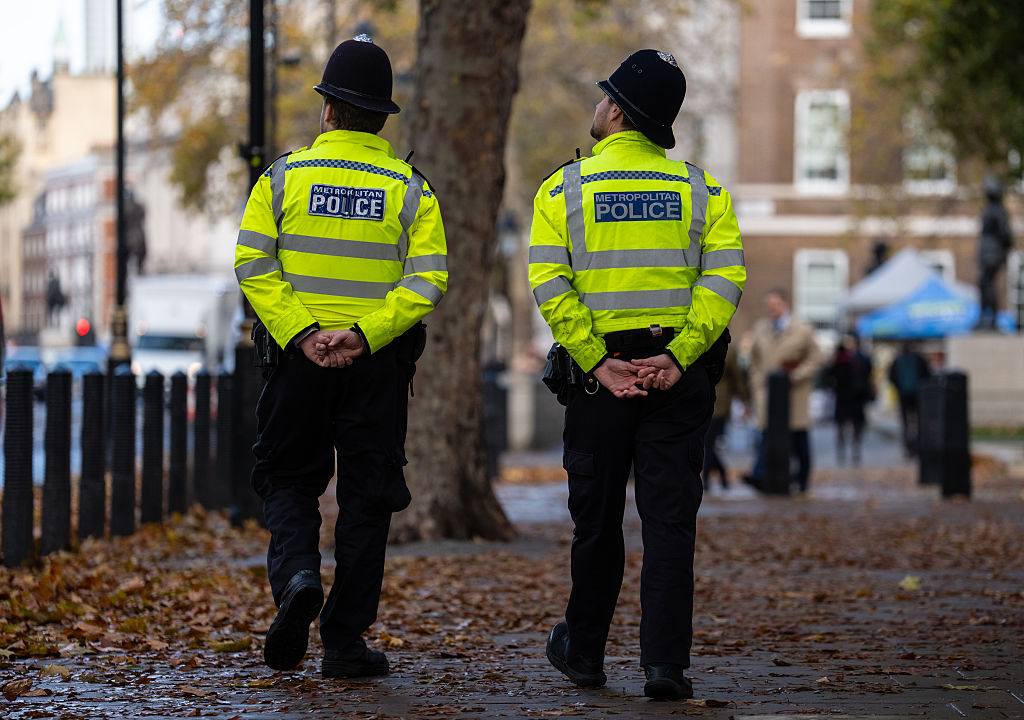
I served in the Metropolitan Police’s central intelligence unit for three years. I left the Service shortly before the 2020s “Boriswave”, but have a working knowledge of foreign offending ratios. I, along with most police officers and intelligence staff, know full well that the answers to these questions broadly reflect what the average person might imagine: that different cultural groups, living under different socioeconomic conditions, are more likely to commit certain types of crime. Could such data be misused by those with an agenda? Yes, fairly easily. Does that mean the data should be withheld? Certainly not. After all, in a mature democracy, shouldn’t public debate be informed by the available evidence?
There are certainly difficulties in publishing such information. Police data is often incomplete, while nationality data is occasionally reliant on an offender’s say-so. Then there are statistical anomalies concerning crime recording. For example, the MoJ figures turn on the number of people convicted of a crime, rather than those charged or found not guilty. Those figures could be even more alarming for the Government.
Nonetheless, why shouldn’t the figures that are available be released, along with suitable caveats around accuracy? The excuse of cost is clearly a red herring. Police IT systems are notoriously inefficient, but any competent police analyst is capable of providing eye-wateringly detailed performance figures around any conceivable type of crime. I remember that when a swathe of cashpoint robberies were committed by Slovakian criminals, the network was forensically dissected by colleagues from a regional organised crime unit. In many such cases, the material has already been collated.
So what would the figures, should they be released, reveal? There are already clues. Successful FOI requests point to the disproportionality of foreign nationals in the prison population, for example highlighting the number of Albanians residing at His Majesty’s pleasure. They also reveal that 15% of sexual offences, including rape, were committed by foreign nationals between 2021 and 2023. Statisticians will argue the salience of these figures, which is part of a wider problem inside the police and Civil Service mindset — one convinced the public simply isn’t sophisticated enough to understand the subtleties of data collection and collation.
The public, though, have eyes. They read the news. They see the cash-only, money-laundering businesses on their high streets. They aren’t surprised that foreigners may be overrepresented in people trafficking, modern slavery and prostitution. The most revealing statistic, perhaps, might be one never collected: how many politicians and senior civil servants take the British public for fools?