









27 October 2026 - 2:30pm
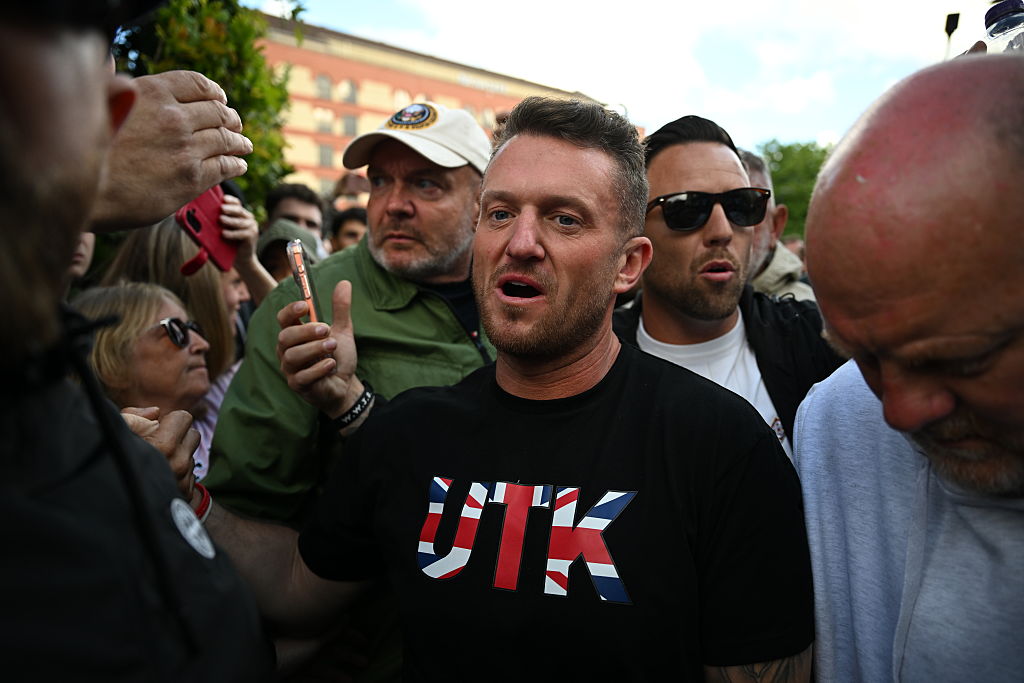
Back in 2018 — the mists of time, as far as Britain’s political Right is concerned — Nigel Farage quit Ukip because of the party’s “fixation” with Tommy Robinson. He labelled Robinson, who had been appointed as an adviser by then-Ukip leader Gerard Batten, as “thuggish” and criticised the activist’s allies as “violent criminals”. Association with Robinson has remained a red line of sorts for Farage throughout his career. But now the tribune of Britain’s populist Right appears to be undergoing a shift on the anti-Islam activist.
On the BBC’s Today Programme this morning, Farage said that he wouldn’t block Reform candidates who had previously expressed support for Robinson. Speaking to host Nick Robinson (no relation), the Reform leader said that while the English Defence League co-founder’s politics “wouldn’t be my cup of tea”, he also “wouldn’t ban anybody from [backing] him”. The Reform leader added: “I’m not going to run a party where we say ‘You can’t talk about that person or that person.’ We have to be sensible about vetting, and we are.”
Earlier this year, Tommy Robinson endorsed Matt Goodwin, Reform’s candidate in the Gorton and Denton by-election, prompting Keir Starmer, who was still Prime Minister at the time, to claim that this embodied the party’s “politics of poisonous division”. While Farage refused to reject the endorsement, he had previously been much more vocal about distancing himself from Robinson.
During the 2024 disorder across England following the Southport murders, Farage suggested his own position was very different from “the Tommy Robinsons and those who genuinely do stir up hatred”. This comment led to a split in the party between the leadership, who maintained that there should be no collaboration with Robinson, and figures such as former Reform deputy leader Ben Habib and London mayoral candidate Howard Cox.
What, then, has prompted this shift? One reason is that some of Reform’s other senior members are more sympathetic towards Robinson. During a fringe event at the party’s annual conference last year, home affairs spokesman Zia Yusuf (who was head of policy at the time) defended Robinson’s work on exposing the grooming gangs, while maintaining that he would not be allowed to join Reform. Last week, the party selected Darren Crandon as its candidate for the Risca East by-election in Wales next month, even though he has previously declared himself a “big admirer” of Robinson’s.
Another reason for Farage’s change in stance may simply be that his party is not performing as well in the polls. Most polling from the last fortnight has Reform at least five points behind Andy Burnham’s Labour, with this gap extending to 12 points according to a new Ipsos survey. This comes in the wake of an ITV exposé earlier this month which alleged that multiple Reform councillors and candidates had made racist comments, as well as the arguably more damaging Channel 4 probe into party funding last month that resulted in the departures of key advisers James Orr and Dan Jukes.
As the Tories threaten to overtake Reform in the polls, Farage may be looking for ways to broaden his support on the British Right. But the former EDL leader’s criminal background and ties to ethnonationalist movements could prove a barrier to attracting the centre-right voters Reform needs to expand its appeal. With other Right-wing parties, including Rupert Lowe’s Restore Britain, on the rise, Farage faces a challenge in maintaining Reform’s position as a broad coalition without alienating his base.
