









17 May 2026 - 1:30pm
City of London
In the hours before Wes Streeting arrived, the attendees passed through several stages of grief. “Can we do a bit of despair, please?” Emily Wallace, the Chair of Labour Business, asked from the stage soon after we had assembled. “You’re all looking good considering it was only 10 days ago we went to the polls and suffered some really difficult results.”
The Labour movement was in a spin. They were a family, panelists kept saying. They had shared values. And the voters had rejected them. More than 1,000 council seats had been lost across the country, the party caught in a pincer between Reform UK and the Greens.
In sleek conference rooms in the middle of the City of London, Progress was picking over the entrails. The pressure group was founded 30 years ago to secure Tony Blair’s revolution. It is the intellectual and organisational vehicle for the Right of the Labour Party, though its supporters shy away from this phrasing. They see themselves instead as modernisers.
They are also Wes Streeting’s people. According to the Spectator, it was the “factional headbangers” from Progress who had been urging him to “seize the moment” and contest the leadership. With Andy Burnham approved to stand in Makerfield, it seemed the future of Labour was heading Leftwards. Streeting’s appearance, scheduled for 3 that afternoon, was a chance for the modernisers to take a stand.
Outside, more radical forces were marching. To commemorate the Nakba, tens of thousands were demonstrating against Israel. Separated by thousands of police officers, others rallied for Tommy Robinson. The blood-dimmed tide was loosed. But in the conference venue’s airless rooms, the centre held.
At a panel on “Creating an Open Britain with Secure Borders”, MPs and experts set out duly measured stances. Extremists, declared Matthew Patrick, the MP for Wirral West, want to pour petrol on the fire, whereas he wants “the fire to simmer down”. Uma Kumaran, the MP for Stratford and Bow, said she had been scared to travel to the conference because of assembling Tommy Robinson supporters — more scared than she had been when London was hit by terror attacks. In the end, she dragged her husband with her for protection.
When the panel ended, we broke for lunch and helped ourselves to a herb-crusted seared tuna salad, as well as a black quinoa and courgette salad and a cheeseboard. When I sat down to eat with an MP, I suggested to her that it was a bit on the nose. We were discussing the rise of populism and Labour losing its heartlands, and we were eating from a cheeseboard. Perhaps, she said, but working-class people like cheese as well.
When I spoke to two middle-aged Labour activists, they expressed annoyance over their party’s inability to get it together. They had both spent months traipsing around canvassing for Labour, they said. The histrionics in Westminster were becoming farcical. “If you’d asked me a couple of weeks ago I’d have said good chance I vote Wes,” said one. Now he, and the other assembled, were less sure who to back. “These are his people. That’s a problem.”
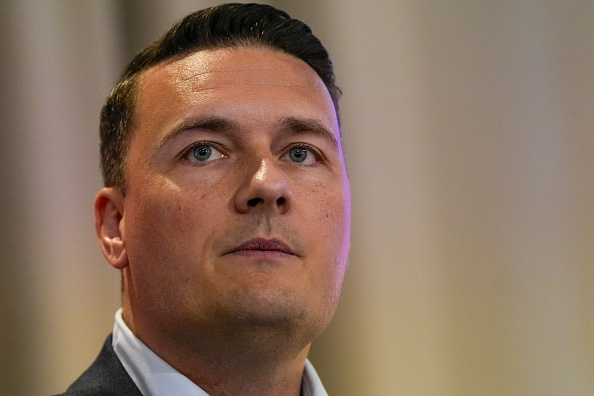
Shortly after 3, Streeting made his appearance through a media ruck. When he began to speak, he seemed genuinely angry. Labour was underprepared for power and lacked clarity. The party needed a “battle of ideas” to renew itself, he argued. The Government should pursue a “new special relationship” with the European Union. While pausing for applause, which came frequently, he pursed his lips and raised his head, looking in profile a little like Mussolini. He would indeed stand for the Labour leadership. “I know how to win,” he insisted to the crowd.
Spilling out from the room, people seemed energised. The bit about the EU was best, I heard a man declare to the men’s toilets. Streeting had been written off but he really could win, a Scottish man with curled white hair told me. Starmer was nearing retirement, but Burnham was barely younger. In a contest across Britain, the more energetic candidate might triumph, he said.
Standing by the coffee machine, Sem Moema, a member of the London Assembly, said she thought that newly elected Greens — whom she had seen waving a Palestinian flag and chanting “From the river to the sea” — would let voters down. Labour needed to appeal more widely than Zack Polanski’s party to win again. “I don’t want us to turn into the people who’ll say anything for a vote,” she said.
Streeting, Moema thought, could really win. Labour tribalism, she argued, had been overstated. But, we both agreed, the coming leadership contest would only be the start. The real challenge was how to govern.
