









8 June 2026 - 4:40pm
As someone who writes about politics, free speech and women’s rights, I’ve received my fair share of online abuse. But even some of the most brutal activists I’ve encountered on social media are no match for fans of the US medical drama House, as I found out last night after a light-hearted observation on X about the show’s repetitive formula went viral.
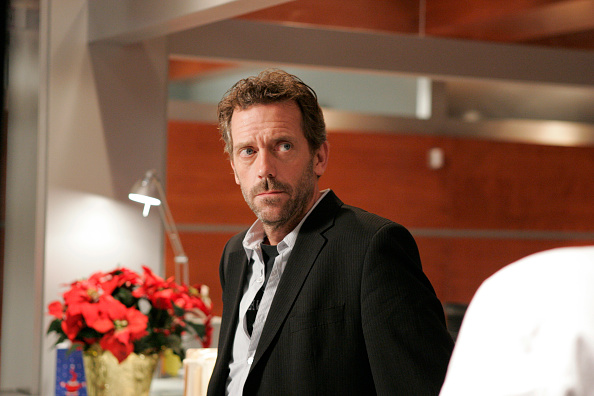
The observation itself, made on Saturday night, was hardly revolutionary. After a few episodes, I noted that House seemed to follow a familiar pattern: unusual patient arrives, Dr Gregory House (played by Hugh Laurie) confidently proposes a diagnosis, Dr House is wrong, proposes another diagnosis, is wrong again, faces professional ruin, has a final epiphany, is right after all, and somehow keeps his job. Would this really be it, I wondered, for eight series?
Then, to my surprise, Laurie himself replied on Sunday night. His response, delivered firmly in character as the acerbic Dr House, was funny. After explaining that the show was about variations on a theme — like Bach’s Goldberg Variations or Frida Kahlo’s self-portraits — Laurie suggested that if all I saw was “hospital, medical blah blah”, then perhaps it wasn’t meant for me. He added, “Nonetheless, I look forward to your first novel!”
It was sharp, witty and unmistakably patronising — which, given that he was role-playing as one of television’s most patronising characters, was rather the point. Up until then, the conversation had been good-natured. Some people agreed with my observation; others insisted I should keep watching their favourite show. But when Laurie engaged, the tone changed. What followed was not disagreement so much as tribal defence. My X feed filled with accusations that I was stupid, humourless, a “Karen” and, inevitably, the c-word. There is something oddly unsettling about watching strangers direct that level of vitriol towards someone they have never met, while simultaneously telling a celebrity how much they love him.
House fans are hardly unique. There are many examples of fandoms attacking people who dare to criticise their idols. BBC Radio 1 presenter Greg James famously found himself on the receiving end of a backlash from Taylor Swift fans in 2018, after joking that the singer should “take a shower” following a muddy festival performance. The following year, film director Martin Scorsese was accused of elitism after suggesting Marvel films were “not cinema”. And last year, Piers Morgan was engulfed by Beyoncé’s fanbase — known as the BeyHive — after joking that the singer was “culturally appropriating” Marilyn Monroe in a Levi’s advert.
Why do fandoms behave like this? One possible explanation lies in what psychologists call parasocial relationships — the one-sided bonds people develop with celebrities and fictional characters. Social media has intensified those attachments while encouraging people to make their heroes part of their identity. Once that happens, criticism of a television show, celebrity or film franchise can start to feel surprisingly personal. The explanation may be even simpler. Of course, Laurie’s fans weren’t really responding to me. They were responding to a celebrity they admire, performing for one another, competing to produce the funniest put-down or the most enthusiastic defence.
I can’t possibly be the first person to have made that observation. House ran for eight series and finished over a decade ago. Entire online discussions are devoted to debating its formula. Plenty of people in the replies agreed with me. So why did Laurie respond to that particular tweet?
Perhaps he saw I was a journalist and assumed, reasonably enough, that I could take a joke. But the experience has left me wondering about the strange dynamics social media has created between celebrities and the rest of us.
Most fandom is harmless. Much of it is funny. But criticism of the things people love can start to feel like criticism of them. And once that happens, perfectly nice people can turn nasty. Political tribes behave this way, as do football supporters. Increasingly, it seems, so do television audiences.
As a journalist, I have some experience with public criticism, so the episode has been more entertaining than upsetting. It has earned me coverage in publications including the Hollywood Reporter and the Daily Mail, which was not on my bingo card for 2026. What happens, though, when that spotlight lands on someone unused to public scrutiny? Things are bound to play out very differently when attention is focused on an individual for whom the incident is not amusing but genuinely distressing.