









28 April 2026 - 9:30pm
The UAE has announced that it is leaving Opec and the wider “Opec+” group. This decision is being framed as a geopolitical rupture, a major blow to Opec and a boost to President Trump. In reality, it’s something more subtle but potentially more significant, marking a move from coordinated energy management to strategic independence.
For decades, Opec has functioned as a mechanism for managing the supply of oil to global markets, and stabilising prices. Saudi Arabia, with its huge swing production capacity, has acted as the anchor, adjusting output to balance the market. Membership implied not just participation, but alignment with the agreed production strategy. The UAE’s departure signals that this alignment is fraying.
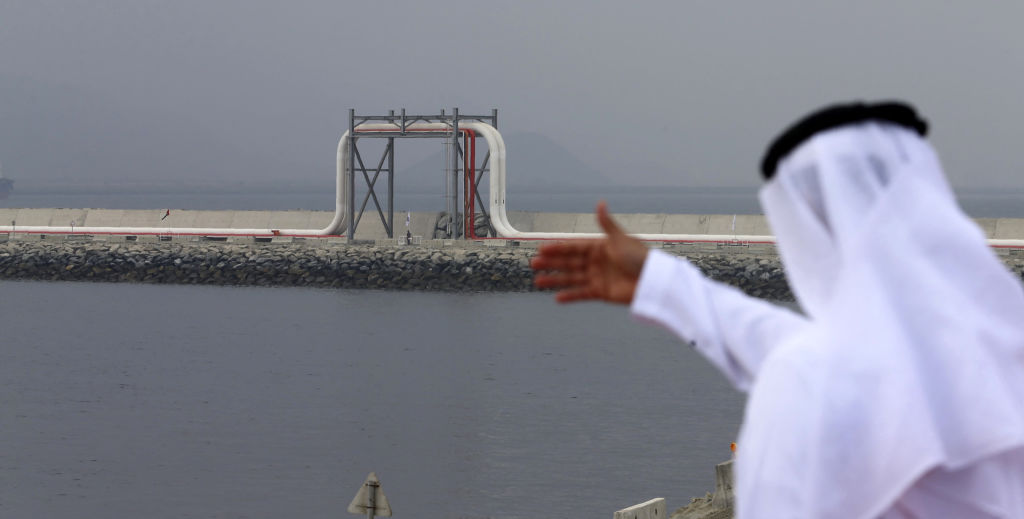
The immediate driver is straightforward. The UAE has invested heavily to expand production capacity, but has been limited in its ability to monetise that capacity by Opec quotas. But the issue isn’t quotas alone; it’s also about having room to manoeuvre. Over the past decade, the UAE has quietly built infrastructure that allows it to act independently. The Habshan–Fujairah pipeline enables crude oil to bypass the blockaded Strait of Hormuz entirely, landing on the Gulf of Oman rather than within the Persian Gulf. Fujairah itself has been transformed into a major storage and export hub, with further expansion planned.
Roughly a fifth of global oil supply passes through the Strait, which sits within easy reach of Iranian disruption. By investing in bypass capacity, the UAE has reduced that exposure. Leaving Opec is the logical culmination of a long-prepared strategy.
The temptation, particularly from a European perspective, is to extrapolate. If the UAE is seeking independence, why not Qatar? Why not build pipelines across the peninsula, liquefy gas on the Arabian Sea coast, and eliminate reliance on the Strait of Hormuz altogether? This makes sense on paper, but it runs into major challenges in practice. It is also where Western thinking diverges from Gulf reality.
In Europe, energy infrastructure is built on trust and integration — pipelines connect countries precisely because they are seen as mutually beneficial. In the Gulf, they are often mistrusted as potential instruments of leverage.
Qatar learned this in 2017, when Saudi Arabia and the UAE imposed a blockade that cut land routes and disrupted trade. The episode underscored a hard lesson: geography is not neutral, but can be weaponised. Any pipeline that crosses a third country’s territory creates a structural dependency, giving that state effective leverage over how much oil or gas flows — or whether it flows at all. This tension reflects deeper, long-running geopolitical rivalries in which cooperation remains conditional, transactional, and far less trust-based than in Europe.
This is why Qatar has focused on liquefied natural gas, carried on ships, rather than pipelines through neighbouring states. It’s not the cheapest option, but it is the most flexible, since cargoes can be rerouted and end markets arbitraged. Crucially, no single neighbour can shut the system down — even if Iran can disrupt or temporarily close the Strait of Hormuz, it cannot reliably control or permanently halt Qatar’s export system without escalating into a broader conflict.
At first glance, more UAE crude reaching international markets should be positive since increased supply tends to lower prices. But the reality is more complex, given Europe’s current fuel imbalance where it is long gasoline, but short diesel.
UK and European refineries were originally configured around light, sweet North Sea crudes like Brent, but over time adapted to run a broader slate, including medium sour grades such as Russia’s Urals, which are better suited to producing diesel. These tend to yield higher proportions of middle distillates, including diesel, but inevitably produce significant volumes of gasoline, often beyond what the market requires.
UAE crude is relatively light and low in sulphur, making it a high-quality feedstock, which is easy to refine. But like other lighter crudes, it tends to produce a higher share of lighter products such as gasoline and naphtha, relative to diesel. Since Europe already runs a surplus of gasoline, this is of limited help at precisely the point it needs more diesel and jet kerosene. Additional UAE crude is therefore useful, but it does not match the yield profile of the Russian barrels Europe has lost.
The more important takeaway is that the global oil system is becoming less coordinated and more fragmented. Producers are optimising for independence, not stability, building infrastructure to bypass threats rather than to connect markets. For consumers in the UK and Europe, that means a more volatile environment. Supply will still flow, but the system that once smoothed shocks is weakening. That’s the real significance of the UAE decision to leave Opec, and it will outlast whatever the oil price does next.
