









23 May 2026 - 12:00pm
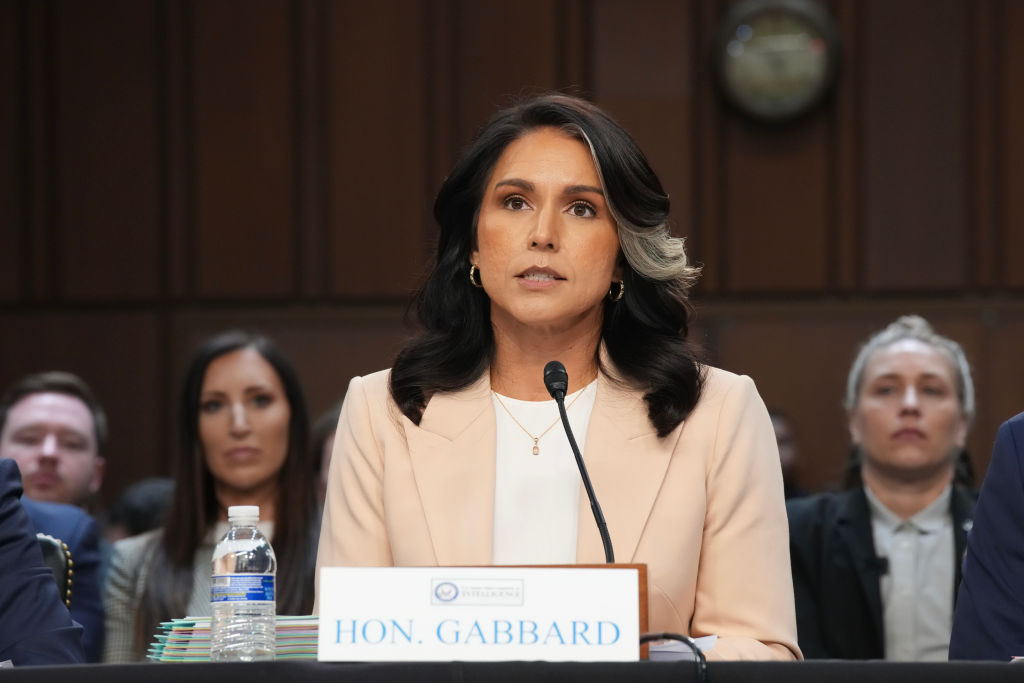
On the surface, Tulsi Gabbard’s resignation from the post of Director of National Intelligence is politically unremarkable: she cited the need to support her husband, who is suffering from bone cancer. But symbolically, Gabbard’s exit carries greater significance. Her short tenure is a sign that the anti-interventionist school of “America First” has become more a slogan than reality in the second Trump term.
As she exits the administration, it’s clear that the White House has moved in favour of interventionism. A US-led conflict rages in the Middle East, and neoconservatives including Marco Rubio, prioritisers such as Elbridge Colby, and dove-turned-hawks — who’ve had to defend the Iran war regardless of their personal stance — like JD Vance have taken over. The fact that Gabbard wasn’t able to make a dent in the White House’s warpath shows the stubbornness of the GOP’s militarist impulses and the fatal institutional weaknesses of the America First alternative.
Gabbard is a unique figure on the post-2016 political spectrum, one who oscillated between the populist edges without ever making a home on either side. Her experience as an Iraq veteran made her a vocal opponent of the regime change wars of the Bush and Obama eras. She once championed economic redistribution as the Hawaii congresswoman who formally nominated Bernie Sanders for president. However, her opposition to the Democrats’ “woke” drift put her at odds with social progressives. That she endorsed the idea of a neutral, non-Nato Ukraine also did not endear her to the foreign policy elite.
With no prospect of advancing as a Democrat, she announced first that she was leaving the party in 2022 before endorsing Donald Trump in time for 2024. Her style and priorities seemed a far more natural fit in the Republican coalition, where anti-war voters flocked. Initially, her appointment as DNI heralded a reset of US policy away from interventionism. It certainly horrified liberals who painted her as a Russian asset. But the America First faction in the Trump White House never had the same deep institutional reach in terms of donors, personnel, and policy shops as its rivals, and not even Gabbard’s elevation to an important post could address that deficiency. She was outgunned from the start and quickly sidelined.
It soon became clear that a mercurial president who was easily swayed by promises of cheap and spectacular victories against US foes, regardless of whether they were Bolivarian or Islamist, was not going to be the instrument of military restraint. Instead, Gabbard’s warnings of nuclear disaster before the 12-Day War earned a rebuke from Trump. Recently, her refusal to support claims of Tehran’s nuclear capability in the lead-up to the American strikes on Iran in March struck a chord of disloyalty in the White House. These events no doubt helped ease the way for her decision to leave.
These stances showed her actions were indeed born of conviction rather than mere political expediency. Though she never ended up publicly disagreeing with Trump in the same outspoken way as fellow anti-war tribunes Joe Kent and Thomas Massie, she said enough to earn his ire. Just as the public — including Trump 2024 voters — is souring on an out-of-control foreign war and as the spectre of another in Cuba looms on the horizon, Tulsi has headed for the exit. The question now is who will lead the charge for peace and America First in an administration seduced by the thrill of war. After Gabbard’s failure in preventing Venezuela and Iran, the answer seems to be: nobody.
 1TrueCuencoism