









9 May 2026 - 7:00pm
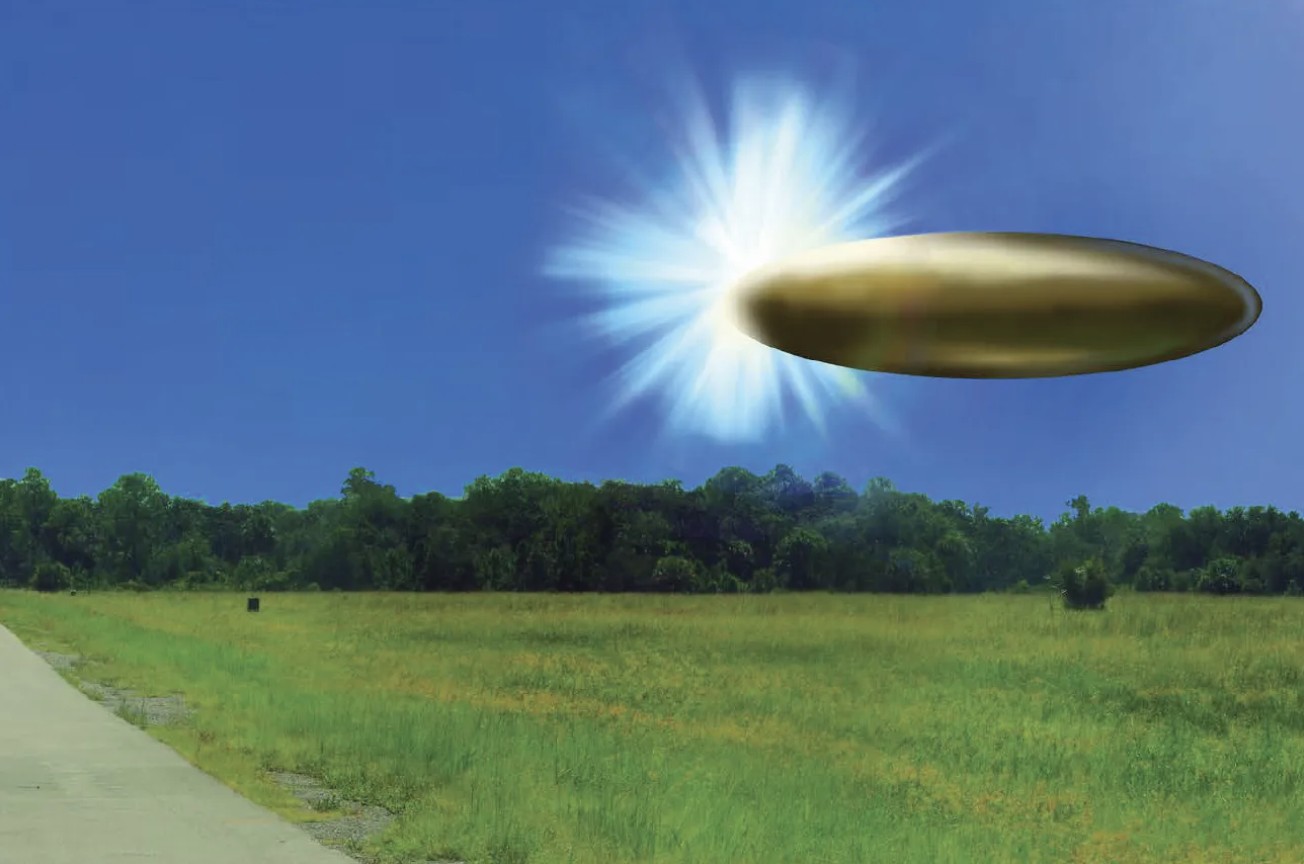
The United States government has released its first batch of files on Unidentified Flying Objects (UFOs). These are objects that the Pentagon and the intelligence agencies cannot identify. If they are real and not spurious, there are two possible interpretations: either these are familiar human-made or natural objects, or these are non-human objects. Regardless, the matter is of great importance for both national security and basic science.
However, perhaps the biggest impact of this week’s release is psychological: this topic deserves a place in mainstream public discourse. Like any detective story, the mystery can be resolved with high-quality evidence. Knowing the distance, velocity and acceleration of these objects would address the question of whether any of them lies outside the performance envelope of human-made technologies.
The Department of War and the US intelligence apparatus have been using state-of-the-art sensors to monitor the sky and the oceans for decades. As a result, these sensors might have detected rare anomalies that escaped scientists’ attention. It is the civic duty of scientists like myself to help the government interpret these anomalies of these unidentified objects.
After reviewing the new files, my research team concluded that none of the objects is sufficiently extraordinary to require an exotic origin. Interesting details regarding the videos are unfortunately redacted, and all images could be explained as either reflections in the camera optics or human-made objects. Apollo mission images show lights above the lunar surface, but these light sources could be flashes from asteroid impacts — as reported by the Artemis II astronauts — or optical artefacts.
But this does not mean that the release of the files is without value. The public funds scientific programmes, and it is the duty of scientists like myself to address the public interest in unidentified objects as to their true origin. If we end up concluding that they are human-made, research time would still not be wasted, as it develops our understanding of the universe. Furthermore, the new release will be followed by additional instalments in the coming weeks. The best is yet to come, because higher-quality data will take more vetting by layers of government bureaucracy before it is released.
This is not to downplay what we have already received. It is remarkable to find within the released files a letter from 1947, addressed to the chief of staff of the Air Force, discussing flying discs. Serious military and government officials have been documenting unidentified objects across agencies, across decades and across the world.
To this point, President Trump referred to the UFO file release with the words: “Have fun and enjoy!” Indeed, this is exactly what the Galileo Project is doing — using AI to analyse new data from our newly constructed observatories in search for extraterrestrial technological objects near Earth.
Science is the privilege of staying curious and taking risks. Enrico Fermi asked in 1950: “Where is everybody?” This is not a philosophical question. It is a scientific question that can be addressed based on data. The answer might be: “Right here”. We should be open-minded to this possibility rather than ridiculing or sidelining it. If we identify all anomalous objects as either natural or human-made, national security would be strengthened.
But even if the evidence shows conclusively that only one in a million objects is of extraterrestrial technological origin, its existence will constitute the most important scientific discovery ever made. It will offer us new science and technology that we do not possess, and it may inspire us to explore space and visit the senders of this object. Our knowledge is an island in an ocean of ignorance. If you read the news every day, you realise that we are wasting most of our resources on conflicts with other Earthlings. My hope is that an extraterrestrial visit will inspire us to do better.