









3 May 2026 - 8:00am
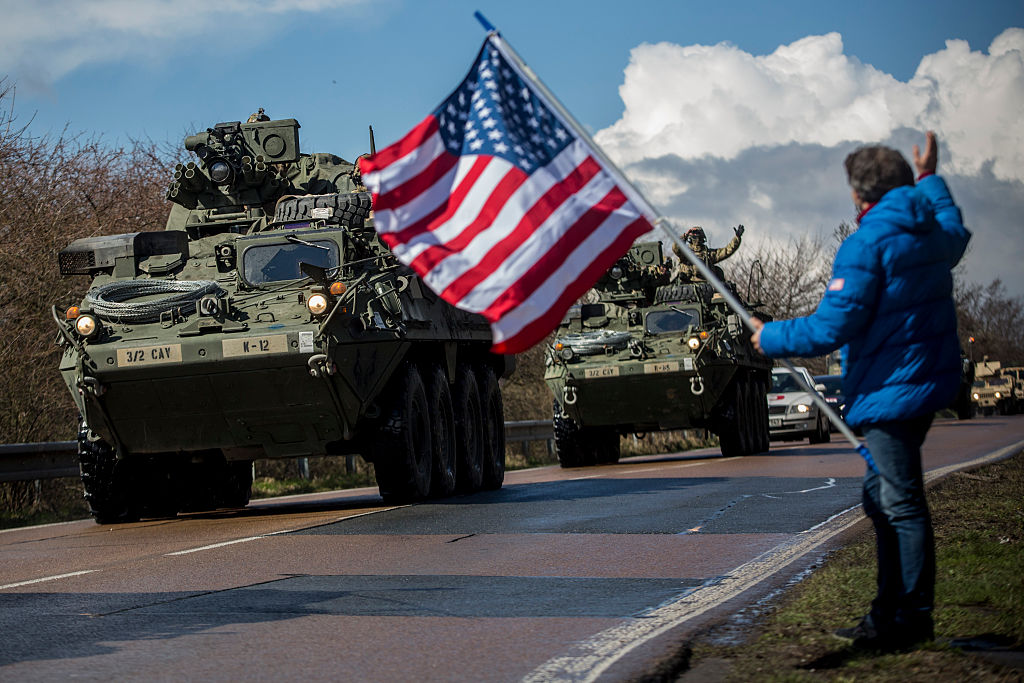
President Donald Trump’s decision to withdraw 5,000 US troops from Germany is poorly judged. Still, Nato’s security is not compromised by the withdrawal of this infantry brigade. The central takeaway is that the Trump administration remains committed to the transatlantic alliance, as this move is mostly symbolic.
After all, it was only a few days ago that Chancellor Friedrich Merz described the US as lacking a strategy in its conduct of the Iran war. Merz claimed the US had been “humiliated” by Tehran. This was foolish rhetoric from a leader who has otherwise shown nuance in dealing with Trump. But the US President’s petulant response is even more foolish. Germany has finally — under Merz’s leadership — approved substantial defence spending increases. This makes the Chancellor more deserving of Trump’s praise than his scorn. And to put things in perspective, Germany’s percentage-of-GDP defence spending now significantly exceeds that of America’s oldest ally France, as well as its closest ally the United Kingdom.
Nato is safe, however. The US Army retains a significant presence across Europe, with well over 80,000 troops stationed on the continent. This includes two armoured brigades, a high-readiness airborne infantry brigade, and an artillery brigade. Numerous US Air Force squadrons are also based across Europe. And US attack submarines continue to trail Russian ballistic missile submarines from the moment they leave port to the moment they return home.
More crucially, largely unnoticed by the media, the Trump administration has doubled down on Nato’s most vulnerable eastern flank. As Defense Secretary Pete Hegseth put it in a December 2025 speech, “model allies that step up like Israel, South Korea, Poland, increasingly Germany, the Baltics and others will receive our special favour.” In written testimony submitted to Congress this week, Hegseth re-emphasised this point, albeit substituting Germany for Finland. He noted: “Model allies that step up, like Israel, South Korea, Poland, Finland, the Baltics, and others, will receive our special favour. Allies that do not — allies that still fail to do their part for collective defence — will face consequences.”
While the Pentagon is correctly determined to prioritise the Pacific theatre, the scale and potency of US forces across Nato remains significant. Indeed, the muted response to the withdrawal of this infantry brigade suggests that European governments were fearing a more significant relocation of US forces. US-German military cooperation is also the best it has been for decades.
The Nato alliance will last the remainder of Trump’s term, and America’s broader military commitment to European security is set to remain intact. There’s a simple reason for this: Nato provides outsized strategic benefit on both sides of the Atlantic. Disputes over the Iran war notwithstanding, the preservation of democratic peace in Europe facilitates a massive economic boon for the US economy. Nato members imported approximately $1.1 trillion in goods and services from the US last year. They also invested roughly $300 billion more in new foreign direct investments into the US in 2025.
What’s more, the US gains significant diplomatic, economic and military influence from this alliance. This influence has been critical in pushing European governments to adopt more restrictive policies towards high-tech exports to China, for example.
Thus, with Nato allies now broadly taking responsibility for fairer burden-sharing, we should view current tensions with a sense of proportion. They reflect real discord and mutual frustration. They do not, by a long shot, provide credible incentive for Vladimir Putin to believe this alliance is a paper tiger.
