









28 February 2026 - 9:30am
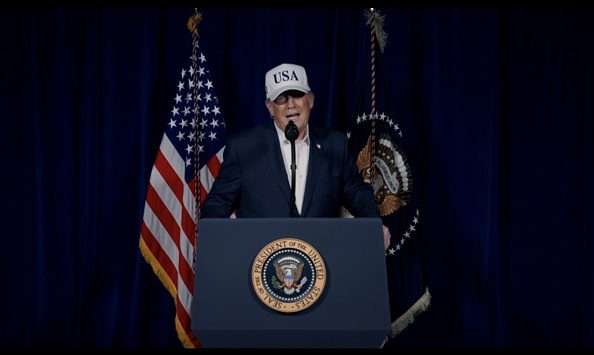
In the early hours of this morning, the US military began what President Donald Trump described as “massive” strikes against targets inside Iran. Israel has also confirmed that it launched strikes on the capital, Tehran. Emphasising that the strikes were designed to destroy Iran’s ballistic missile, naval and nuclear power, Trump did not explicitly state that the US intended to remove Iran’s Supreme Leader, Ayatollah Ali Khamenei, and his regime from power. But the American President sent a clear message to the Iranian people to overthrow their government. “Let’s see how you respond,” Trump said, calling on Iranians to “seize control of your destiny”.
The scale of these military actions is highly significant. Such strikes on different areas of Iranian military infrastructure invite retaliation. Ballistic missile strikes against Israel have begun, while US military bases in the region could also be targeted. Possible Iranian efforts to mine the Strait of Hormuz are also on the table. Still, these strikes are clearly designed to push Iran’s regime toward collapse under rising pressure from external military power and domestic insurrection
Regardless, it is unsurprising that Trump decided to take action now. The failure of talks in Geneva this week to make substantive progress towards a functional agreement clearly frustrated the American administration. Barak Ravid, a close source to top negotiator Steve Witkoff, noted that the US side was “disappointed” with the outcome. Trump will also be aware that the longer talks stall, the more he and American interests suffer for it.
The President would have been particularly concerned by the prospect of being perceived as hesitant or interested in a weak deal. This would have risked a comparison to Barack Obama’s 2015 JCPOA accord with Iran, which drew domestic and foreign criticism. The military may also have told Trump via Gen. Dan Caine that if the White House intended to act, it should do so sooner rather than later. The cost and complexity of keeping such a vast array of US military forces forward deployed outside of their home bases is important.
But there are risks to deploying these forces in a multi-day or multi-week air campaign. America’s ability to successfully deter China in a major war over Taiwan would be degraded by a sustained conflict with Iran. The US already lacks enough of the air defence munitions it would need for a war with China, yet the longer and more ambitious any conflict with Iran, the more Iranian forces will employ their missile and drone power in retaliation. This will force the US to expend more munitions in defence of these attacks, thus making the air defence munition deficit even worse.
While it’s impossible to know how long this military operation will go on for, Trump seems intent on making sure it is brief. But the President’s message is clear: he wants regime change.
