







 Prefer us on Google

17 July 2026 - 10:00am
Last night, Donald Trump beamed into homes across America, unveiling what he argued is a vast, international plot to corrupt the country’s elections. The US President implicated everyone from the CIA and the media to China and Venezuela, announcing the imminent declassification of records intended to support this theory. Four months out from the midterm elections, amid a failed war, stalled Congress, and stubborn inflation, the speech felt like an uncharacteristically desperate effort to wrest back control of the narrative.
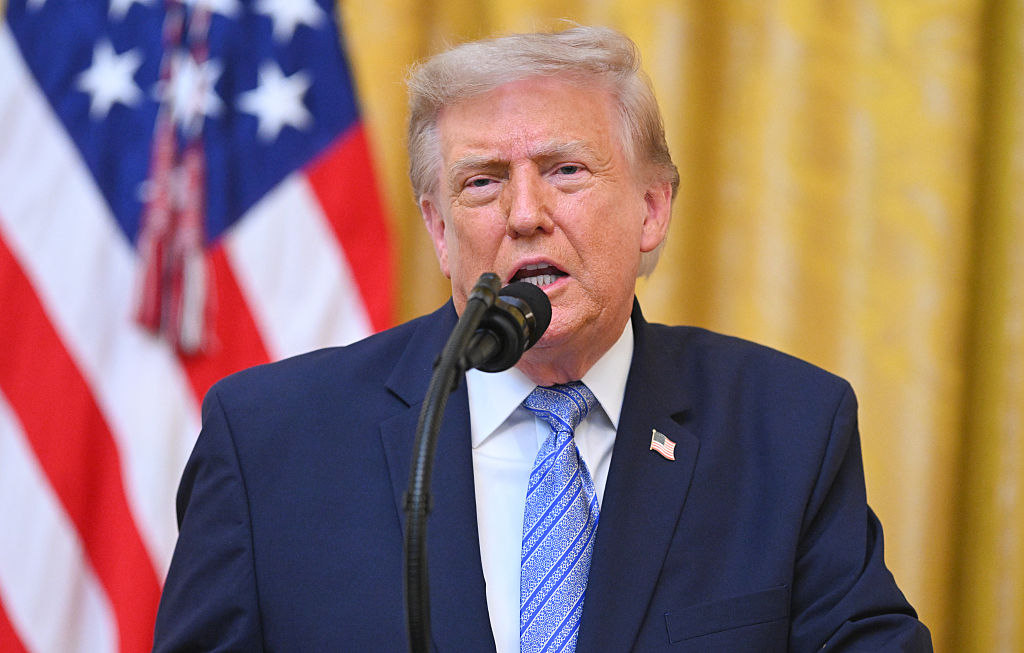
Trump made a startling pronouncement. The nation’s election system, he said, is “so broken and so vulnerable that no one can possibly defend it”. He sounded hoarse and lagging. His microphone was too hot, and his staging was off-kilter, with most of the backdrop covered by a gold curtain as some white wall peeked into the shot’s right side. Even the lighting looked too harsh. From one of television’s great practitioners, it seemed to reflect a frustrated ruler cracking under pressure.
Before outlining his list of major threats to federal elections, Trump began by assuring the country that “we are doing great”. While he claimed he inherited an “economic and social disaster” from Joe Biden, he insisted that America is now “safer, stronger, and far wealthier than it has ever been before”. But since 2020, he warned, the country’s elections have been compromised. The media is covering it up. The intelligence agencies are covering it up. And America’s adversaries are laughing.
As is typical of Trump’s favourite targets, the evidence of some wrongdoing is not entirely ludicrous. The scope of it, however, is what will matter to voters.
During the President’s speech, the White House website uploaded zip files of documents to support his contention that China hacked voter files and the “deep state” covered it up. Officials did the same for Trump’s claims that Biden’s FBI slow-walked an investigation into widespread Democratic voter registration fraud in Michigan, that Homeland Security found 278,000 non-citizens registered to vote in federal elections, and that Nicolás Maduro’s regime digitally altered Venezuelan ballot counts in 2020. The US President referred to this patchwork as a revelation of “shocking vulnerabilities in our election infrastructure”.
Heavily redacted emails released by the White House did indeed appear to show an effort to “massage” the Presidential Daily Briefing away from election concerns in Trump’s first administration. Media reports will surely provide swift pushback on that from his opponents, but it would hardly be surprising to learn that China attempted to manipulate an American election, just as it was unsurprising to see the infamous Russian memes of 2016.
It would also not be entirely surprising to see high-ranking members of the intelligence community working against Trump. From Peter Strzok at the FBI to the CIA’s involvement in the Hunter Biden laptop letter, this scenario is not without precedent. And the misdeeds of Trump’s enemies continue providing him with cover to make claims that exploit supporters’ reasonable institutional distrust for political gain.
As Trump’s signature “SAVE America Act” is stalled in a closely-divided Senate, he ended the primetime address by urging voters to call Congress and demand the bill be passed. Whether SAVE was the main reason for his speech, it’s certainly an example of the President facing hurdles from his own party. The conservative Daily Caller reported last month, “according to several sources familiar with the matter”, that Senate Majority Leader John Thune privately said in a meeting “that some Republican senators oppose President Donald Trump so strongly that they will never vote for the SAVE America Act, regardless of the legislation’s merits”.
The effect of emphasising election integrity could actually be disillusionment among Trump’s own voters, who end up distrusting the system so much that they stay home on election day. It also risks alienating swing voters who want the President focused on the economy rather than what may appear to be score-settling.
With a 56% disapproval rating measured by the RealClearPolitics average, and Democrats up five points in the generic congressional ballot, Trump could be facing a period as a lame duck come January. Gas prices look poised to climb again. The Iran conflict is proving intractable. Inflation persists. For a man who made a triumphant comeback and ushered in the great “vibe shift” of 2024, it’s easy to see why Trump’s frustration is starting to boil over.
