









13 September 2026 - 3:00pm
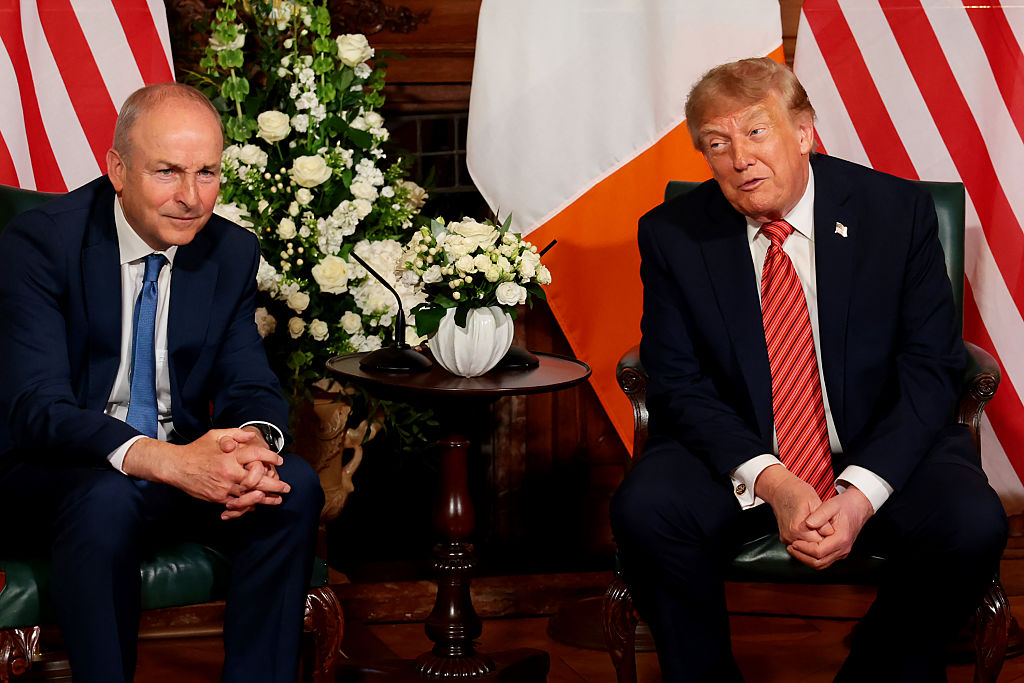
Does it ever pay to be Donald Trump’s friend? Northern Ireland’s pro-British unionists are among the few politicians on these islands to express substantial and unforced support for the US President. He has rewarded them by publicly saying in front of Ireland’s Taoiseach, Micheál Martin, during an official visit to Dublin that “he’d love to see” Irish reunification and that it was “going to happen eventually”.
In contrast to the Unionists, Northern Ireland’s main pro-reunification parties have been consistently hostile to Trump. In recent years, they have even boycotted the traditional Ireland-US political love-in that is the St Patrick’s Day celebrations at the White House. While Dublin-based politicians have an actual sovereign state to run and a crucial diplomatic relationship with Washington to manage, Northern nationalists have no such restraints and have not held back in their criticism.
Perhaps Trump’s comments were an indirect response to Andy Burnham, a man he has not taken a shining to, who said during his first official visit to Northern Ireland in late August that a border poll was “off the table”. But the US President had already hinted at his pro-Irish reunification sympathies with a joke at a St Patrick’s Day event in the White House back in March — one that Sinn Féin boycotted — in front of Northern Ireland’s Democratic Unionist deputy First Minister. Evidently, it’s been on his mind for some time.
The United States was founded through a successful rebellion against the British Crown, and Americans have consequently long felt a degree of sympathy for those seeking a united and independent Ireland. For some, that sympathy went much further: during the Troubles, Irish Americans even helped fund the IRA’s campaign, with some going so far as to buy weapons. But across the world, people who know little about Northern Ireland or the precise nature of its communal divisions generally assume that it is natural and inevitable that the region will ultimately leave the UK and reunify with the Republic.
It is likely that Trump’s remarks reflected that widely held instinct and have no actual diplomatic plan behind them — just another flippant comment made for laughs. But those with more intimate knowledge of what is still a place apart from both Great Britain and the rest of Ireland are only too aware that four centuries of complex and messy ethno-sectarian conflict in Ulster will not vanish quickly.
Northern Ireland is a notoriously self-obsessed place, where political shifts are measured in decades and generations rather than months or years. It is unlikely to pay much attention to outsiders as its people work out whether its changing demographics will also alter its constitutional status — a genuinely open question.
But nobody sees a path to rapid Irish reunification — explicitly nationalist parties, after making significant gains around the turn of the century, have been stalled on 40% of the vote between them for two decades.
What Trump’s comments do show is that if public opinion in Northern Ireland does shift towards reunification in decades to come, a British government couldn’t delay a border poll, even if tacitly supported by an under-prepared Irish government, without incurring the wrath of powerful US politicians. But, for now, that scenario remains a hypothetical, one not likely to become real for a decade or two.