









23 May 2026 - 8:00am
A decade ago, I was invited to judge the Amnesty International Media Awards while reporting on education and social affairs for the Guardian.
To be invited onto the panel was an honour. Growing up in Britain in the Eighties and Nineties, I had enormous respect for Amnesty International, then best known for its work on prisoners of conscience. I still vividly remember a school assembly at my girls’ grammar school — which strongly encouraged girls to find their voice — that focused on its campaigns.
As a teenager from a working-class background, it opened up a wider world beyond my small town: one of politics, human rights and international affairs, and the idea that ordinary people could make change.
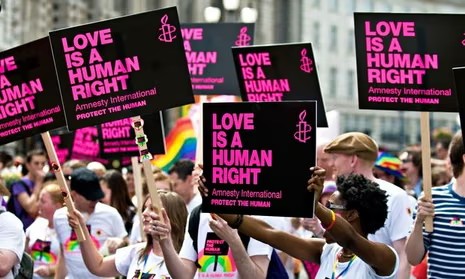
So when a Facebook post this week flagged a new Amnesty UK report “exposing the UK’s anti-trans networks”, it stopped me in my tracks. The accompanying text described the rise of the UK’s “gender critical” movement, a “hostile environment against trans people”, and the role of the media in “normalising anti-trans narratives”. It ended with the slogan: “Trans rights are human rights.”
The report itself — entitled “Like a snowball: the growth and impact of the gender critical movement in the UK” — is extraordinary. At points, it reads less like a human-rights report than a dossier on a dangerous extremist network, rather than women who simply do not want to get undressed in front of men.
The report claims to map “GC actors” and funding streams, repeatedly framing gender-critical women as part of a broader anti-rights movement alongside ultra-conservative religious groups. The media is partly responsible for growing negativity towards trans people, it claims, and the increasing use of phrases such as “biological sex” and “single-sex spaces” helped normalise gender-critical ideas within public discourse.
It also tracks the growing legal fundraising of gender-critical organisations, noting that the combined spending of FiLiA, LGB Alliance and Sex Matters rose from £80,000 in 2019 to £3.6 million between 2020 and 2024. But the report does not explore why women felt compelled to crowdfund legal action in the first place: namely, because they were losing jobs, reputations and livelihoods for expressing gender-critical beliefs.
Perhaps the most revealing section comes at the end, where Amnesty advises journalists to platform more trans voices, produce more “positive” stories about trans people and avoid “gotcha questions” such as “can women have a penis?” At which point one begins to wonder whether this is a serious report from an international human-rights organisation — or an activist guide to shaping media narratives.
That an organisation once associated with defending dissidents and civil liberties now appears to view ordinary women organising around lawful beliefs as something suspicious and dangerous is deeply unsettling. It is difficult not to notice the timing of the report — published in the morning, updated EHRC guidance following last year’s Supreme Court ruling was due to be released — making the tone feel less like confidence than panic from an organisation confronted with the reality that ideology cannot override the law.
Unsurprisingly, the guidance simply reaffirmed what the judgment had already made clear: that “single-sex” under the Equality Act means biological sex. Which means men can lawfully be excluded from women’s spaces and services — regardless of how they identify.
This makes it strange and deeply sad to see an organisation that once encouraged women to find their voice now apparently so alarmed to see them using it.