









1 March 2026 - 2:00pm
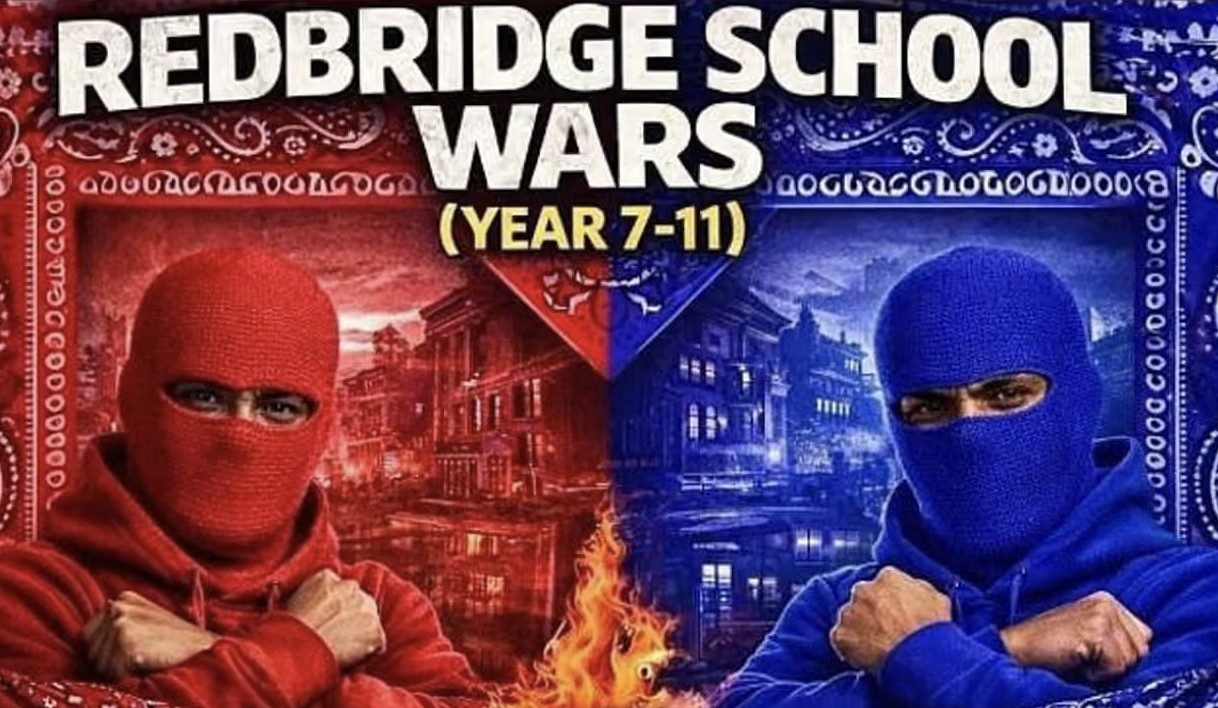
Police are reportedly monitoring several social media accounts encouraging a “school war” between multiple secondary schools. First reported as circulating among teenagers in north London on Snapchat and TikTok, the social media posts divided schools into “red” and “blue” teams. Pupils on one “team” are encouraged to attack those on the other, and are offered points for different levels of violence. Some posts encouraged pupils to bring weapons.
Subsequent stories appear to indicate the same trend spreading to other areas. Parents were warned by Somerset police to check their children’s phones for “school wars” content. Police were on high alert in south London and Northamptonshire following a similar meme.
It’s hard to say how seriously we should take any of this. Inter-school rivalry, sometimes violent, is real and precedes social media. In the small town where I grew up, there was a standard battleground, common for planned mass fights between my school and the other local secondary. While these fights did occasionally happen, no one brought knives. By contrast, especially in London, fatal stabbings of school-age children are unfortunately common. Even then, under those circumstances police can hardly be blamed for taking the proposed “school wars” somewhat more seriously.
Social media is also a force multiplier on a scale that would have been unimaginable in my adolescence. It’s one thing for a few teenage boys to gather, by word of mouth, for a recreational scuffle. But it’s another thing altogether for the proposal of inter-school fights to spread, lightning-fast, through the digital ether, attracting more belligerents and propagating across geographies.
And yet despite numerous press reports of police alerts across multiple locations, there have been no reports of actual “school wars” taking place. Was it all just TikTok memes — an event occurring primarily in the space of digital fantasy rather than actual high streets? It is possible that this was always more noise than signal. The police and school response may have been an overreaction to digitally-mediated youth cultures, whose medium and communicative register are opaque to adults.
It is tempting to read the volume of reporting on “school wars” in the context of ongoing political debates over access to social media for school-age children. Concern has mounted in recent years over the effects of these digital platforms on developing brains, prompting calls for restriction. The most recent such calls concern banning under-16s from social media.
Opponents argue that, in practice, restrictionist policies do not protect children so much as impose digital censorship and eradicate online anonymity. This criticism has been frequently levelled at the Online Safety Act, which critics allege has had the effect of chilling legitimate debate rather than protecting children.
In this context, then, anxious reports about “school wars” feel, if not confected, certainly politically useful. Actual violence against children is rife in Britain, but its principal vectors tend to be real-world social ills. County lines drug trade, urban “postcode gangs”, and indeed the ongoing scourge of the rape gangs, not smartphone-mediated flash mobs, are the real issues.
Against this, the recent generalised outbreak of “school wars” anxiety, dissipating into a nothingburger, feels off. While I am perhaps being too cynical, in the light of the ongoing consultation, I fully expect this drip feed of anxiety-provoking stories to continue. This will likely happen as a gratefully amplified descant to whatever “evidence-based” research officially informs the public debate, over how to balance freedom of speech and child protection.
