









5 May 2026 - 7:00am
Three in five British Muslims would consider voting for pro-Gaza independent candidates to stop Labour at the upcoming local elections, according to a new poll.
The survey, commissioned by the think tank Policy Exchange and carried out by JL Partners, examined political attitudes among just over 1,000 Muslim adults living in selected urban areas across London, Greater Manchester, Merseyside, Yorkshire, the West Midlands, and parts of Lancashire.
The report found that Labour support among Muslims had fallen to 33%, down eight percentage points since the 2024 general election. Meanwhile, more than a quarter (27%) declared their support for the Green Party, while 14% said they would vote for a pro-Gaza independent candidate if one stood in their area.
However, the research highlighted a strong level of tactical voting intent. Around 60% of respondents said they would consider backing a pro-Gaza independent “to prevent a Labour candidate from winning locally”. Similar proportions said they would consider voting Green or for independent candidates to block Conservative or Reform UK candidates.
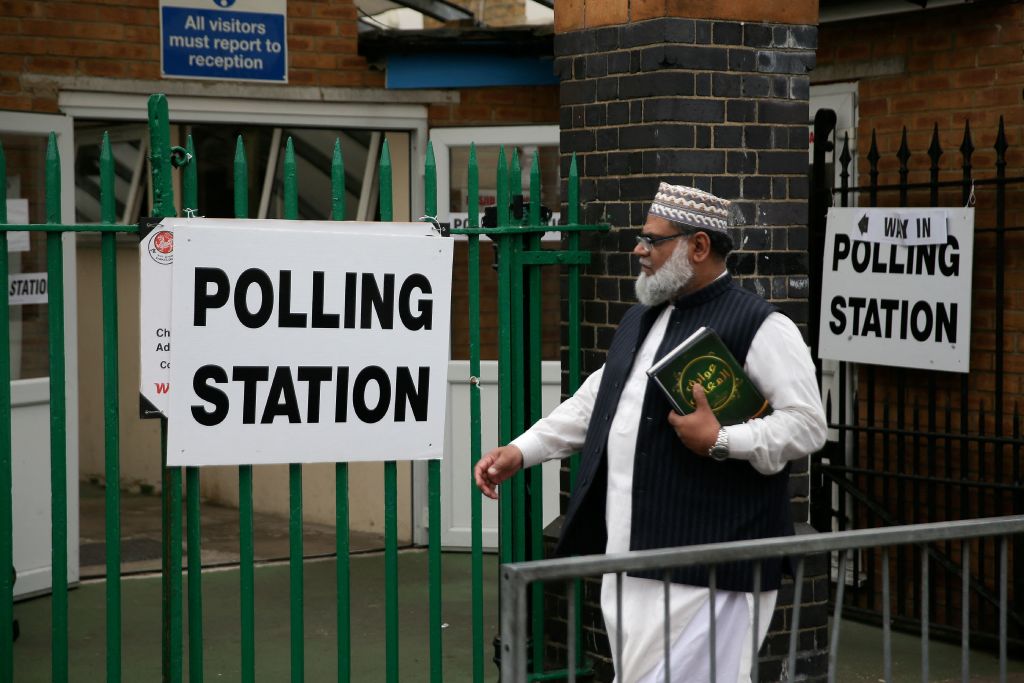
This week’s local elections are taking place in several urban councils where the Muslim vote is seen as particularly significant. Muslim voters are concentrated in key wards across cities such as London, Birmingham and Manchester, where small shifts in turnout or party preference could prove decisive. Recent polling suggests support for Labour is softening, with the Greens and Reform UK both appearing likely to pick up votes in some areas.
The poll’s findings form part of what Policy Exchange describes as “Islamopopulism” — a term it uses for emerging Muslim-led political mobilisation around communal and international issues, particularly Gaza. For example, one in four Muslim respondents selected the Israel-Gaza conflict among their top three issues influencing their vote in local elections, second only to the cost of living.
On policy questions, 59% supported increasing income tax by 1p to fund Gaza reconstruction, compared with 20% of the general population sample. Nearly half supported banning Israeli-built technology from the NHS.
The report also found that 63% of Muslim respondents say their religious identity is the most important aspect of their personal identity, compared with 12% of the general population sample. Meanwhile on social issues, the survey reported majority support among Muslim respondents for criminalising depictions of the Prophet Muhammad and for banning the public burning of holy books. A smaller proportion, 24%, said violence could be a legitimate response to such acts, while 48% said it could never be justified.