









10 July 2026 - 4:45pm
In a much-trumpeted exclusive, last week the BBC published an investigation into Twana Jamal, a Kurdish Iraqi who had claimed asylum in Leicester under a pseudonym while running a string of illegal vape and sweet shops. These dodgy mini-marts, which are often laundering fronts run by Kurdish organised crime gangs and staffed by asylum seekers working illegally, are taking over struggling British high streets from Newport to Birmingham, National Crime Agency (NCA) investigations have found.
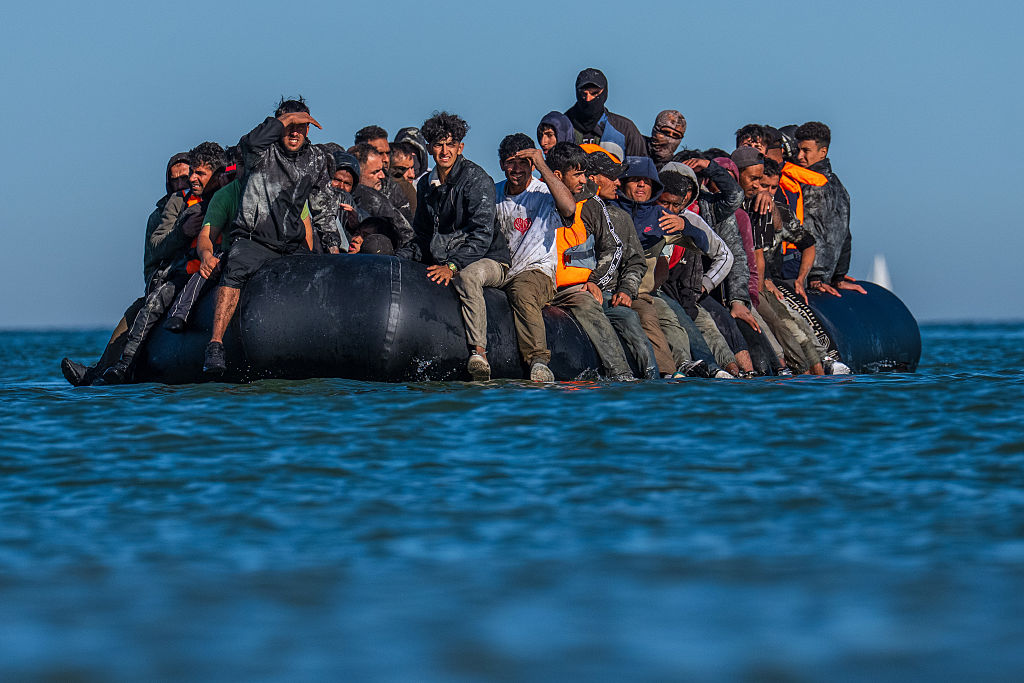
The exposé is of a piece with the present Labour government’s efforts to “smash the gangs”, in which Keir Starmer has called for people smugglers to be treated like terrorists. Despite the approach, boat crossings have remained high, with over 40,000 crossings in 2025 and 12,000 in the months from January to June 2026, with numbers typically peaking in late summer. While boat suppliers, engine providers, document forgers and transport coordinators have been arrested, smuggling networks remain largely intact.
Yet, in the course of my recent travels around Dunkirk and the scattered encampments near the Channel Tunnel, it has become clear that the binarisation of actors in the European human trafficking industry into “good” victim-migrants and “bad” criminal kingpins wildly misses the mark. Like any illicit transnational industry, from drugs to sex trafficking, migrants become workers for these diffuse criminal networks to earn their passage, and to recruit and facilitate the migration of others from their home country.
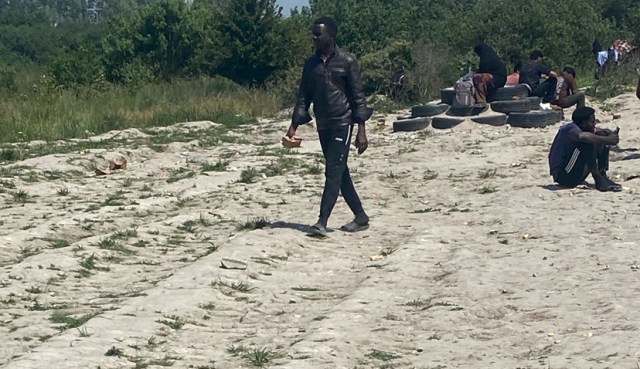
Indeed, migrants whose families have scrambled together the money to fund passage outright are the rare lucky ones. As common is the story of Ali, a 22-year-old Afghan I meet in Dunkirk who works at a shop selling dinghy passages, forcing fellow migrants onto a boat at gunpoint. Common, too, are the unaccompanied minors I meet at Médecins Sans Frontières’ humanitarian clinic in a working-class district of Calais a few days earlier. The teenagers tell me that, with no hope of paying the fees for boat passage, they will keep “having a go”, stowing away underneath a Channel Tunnel train or truck, facing the fatal risks of electrified rail and moving wheels.
Last month, the United Nations Office of Drugs and Crime published a review of research into the smuggling of migrants. It stated that, rather than being hierarchical mafia-style organisations, smuggling networks are highly heterogeneous, relying on temporary facilitators, providers of transport and accommodation, and document forgers, all of whom are themselves recruited from migrant communities. One young migrant with whom I’m still in touch, who made it through to the UK, helps others procure documents to prove that they are under 18 in UK Home Office and local authority assessments. Another UN agency, The International Organisation for Migration (IOM), describes migrants acting as guides, translators, recruiters or logistics workers to pay off the cost of their own journey, with blurred boundaries between smugglers and migrants.
The reality of Europe’s vast irregular people smuggling system thus belies a caricatured narrative of good and bad actors. People-trafficking networks are a grey zone in which people on the move are exploited, coerced and folded into the very machinery of violence, their dividing lines obscured by debt, desperation and survival. Even Twana Jamal might see himself as a victim.
Governments across Europe struggle with the complex realities of irregular migration, employing a mixture of externalisation (Italy’s offshore interception and processing of migrants in Libya and Tunisia), rapid returns (Spain to Morocco and Senegal); and hardline deterrence (military border pushbacks from Greece). An EU-wide Pact on Migration and Asylum, agreed in 2024 and now being rolled out, will harmonise the approach across national borders through mandatory fingerprinting and identity checks, as well as stronger coordination with Frontex, the bloc’s border agency.
In the UK, Labour’s current approach to people smuggling will likely continue when Andy Burnham enters No. 10. Last month, the former Manchester mayor said that the small boats issue is “damaging public trust” and that the Government “need(s) to go further to deal with those crossings”. What this means in concrete terms remains to be seen, whether it leads to faster returns according to the Spanish model or deeper collaboration with the EU. One thing is for sure, though: policies that collapse complex criminal networks into a few bad apples on the one hand and a blameless majority on the other are doomed to failure.