









1 September 2026 - 12:15pm
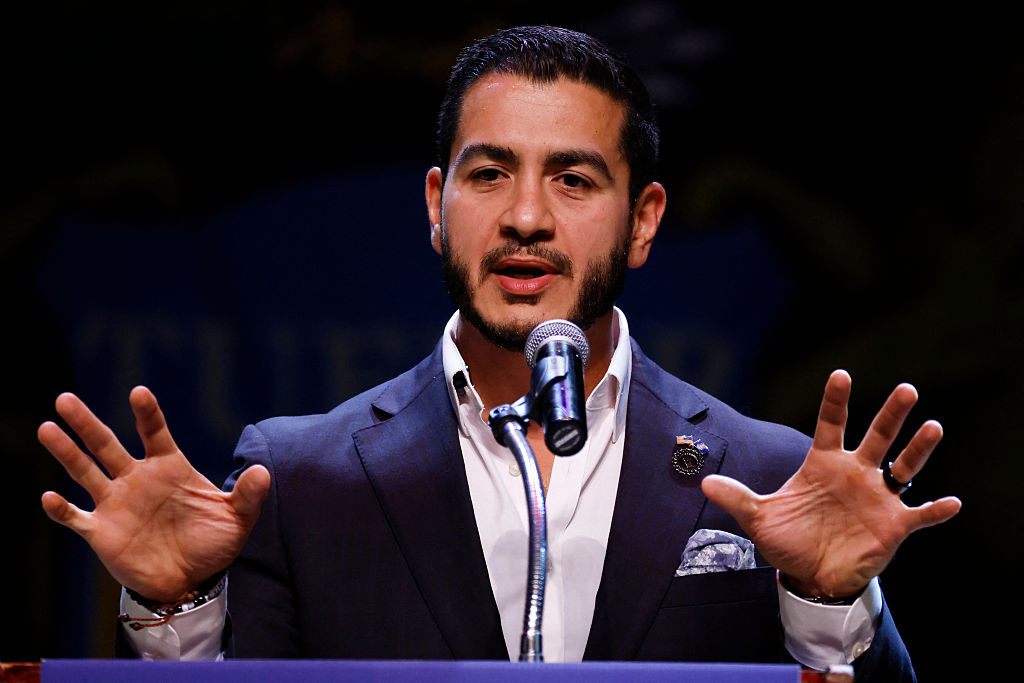
Can the Trumpian GOP and its media allies save the midterms — and perhaps the 2028 presidential election — by leaning hard into post-9/11-style themes about Muslim infiltration and the menace of “Shariah law”? The answer is, likely, no. But that isn’t stopping them from trying against Abdul El-Sayed — popularly known as AES — the Democratic nominee in the crucial Michigan Senate race.
The reason: Republicans don’t have much else to run on, what with persistent inflation, a new Middle East quagmire, an ill-conceived tariff regime that hits Michigan extra-hard, and a dullard of an ex-congressman as the GOP contender — Mike Rogers.
The latest anti-AES hit came via the newly Trumpified CBS News, which on Monday ran the following bit of commentary, masquerading as news: “As the nation prepares to mark 25 years since Sept. 11, 2001, Abdul El-Sayed, the Democratic nominee for US Senate in Michigan, may be facing the risk of renewed scrutiny.” (Commentary-as-news because it was the sort of “news” item in which the outlet itself gins up the very controversy it claims to cover.)
El-Sayed was 16 when the 9/11 terror attacks took place, and as many pointed out on social media, it seemed his half-Egyptian background and Muslim faith were the only real peg on which to hang the insinuation that the former public-health official is a certified Bad Guy. The CBS piece did dredge up old tweets in which El-Sayed called for a response to Covid that would be “commensurate with the nation’s post-9/11 mobilization”.
That was it, really. As Eric Levitz of Vox pointed out, the notion that America could’ve done more domestically instead of prosecuting two decades’ worth of fruitless post-9/11 wars used to be axiomatic among the MAGA faithful. President Trump himself put it this way back in 2015: “We’ve spent $4 trillion trying to topple various people. If we could’ve spent that $4 trillion in the United States to fix our roads, our bridges and all of the other problems — our airports and all of the other problems we’ve had— we would’ve been a lot better off.”
Trump echoed such messages in 2020 and again in 2024. And that’s what drew a growing share of young voters — including blacks, Hispanics, and Muslim Americans — to his campaigns.
But this time around, Trump allowed himself to be manoeuvred by Benjamin Netanyahu and his American spokesmen into a massively unpopular war. He can no longer credibly run as a leader committed to foreign restraint and domestic reconsolidation, so he repeatedly mispronounces AES’s name to underscore the sheer foreign scariness of the high-school athletic all-star with the white grandparents.
Rogers, the Republican nominee, has joined in too, describing Egypt as El-Sayed’s home and the true source of his attachment. El-Sayed was born in the United States, and for what it’s worth, when I interviewed him for UnHerd, he identified Egypt as one of the countries to which he would cut US foreign aid.
Unfortunately for Rogers, he lacks the ideological flexibility and rhetorical acuity needed to distance himself from the Iran war and other Trump II excesses the way other Republicans like, say, Susan Collins of Maine, can. Rogers has always been a down-the-line hawkish party loyalist, leaving him without a message as El-Sayed pulls ahead in Michigan polls and on betting markets by running on Medicare for All.
This is the real tragedy of the GOP’s El-Sayed desperation act: the party has been forced to trade a young, multiracial populist coalition for tired messaging fit only for an ageing audience.
Sohrab Ahmari is the US editor of UnHerd. His next book, on The Triumph of Normal, is forthcoming from HarperCollins.
 SohrabAhmari