









9 April 2026 - 1:00pm
The wonderful thing about the canon is that it’s the same for everyone. It doesn’t matter whether you’re on the dole or Elon Musk: we all listen to the same James Brown, watch the same Taxi Driver, and read the same Moby Dick. There’s something truly redemptive about this — or at least there was before art itself was turned against us.
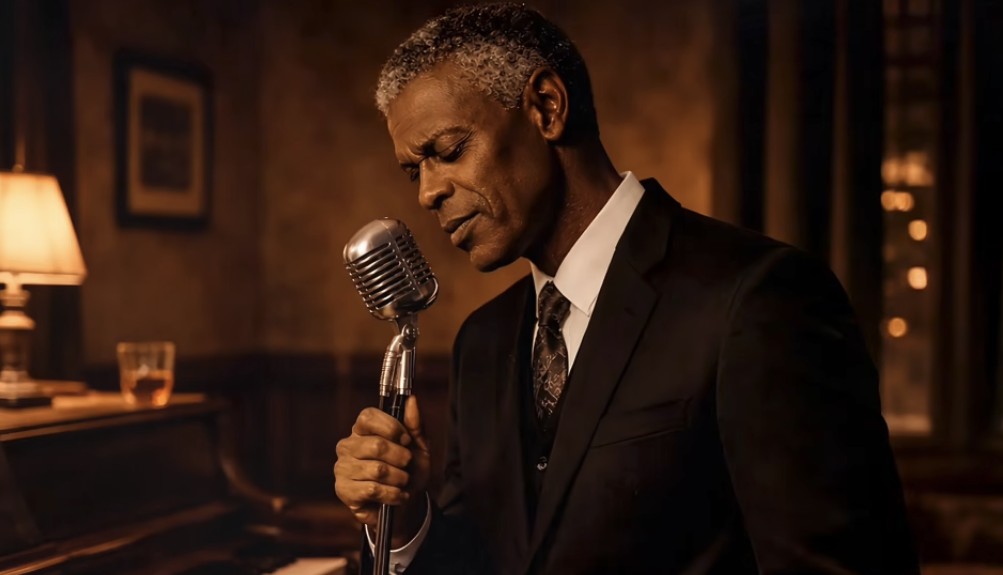
Over the past week, it’s been reported that a new singer called Eddie Dalton currently occupies 11 places on the iTunes top 100. He’s an old jazz crooner with a voice that sounds like hard-fought experience, singing wistful songs about the nature of hard-fought experience. Only he hasn’t experienced anything. He doesn’t exist the way you or I exist. He doesn’t eat, shit, sleep, have affairs, pray for peace, compose diatribes, try to give up smoking or get hooked on gear. Eddie Dalton does none of this because he’s an AI creation.
One might be inclined to get up in arms about an AI creaming the music charts. Whatever shadowy forces conjured him up in the first place will now be reaping potentially limitless funds in the background — funds which could otherwise go to the needy hands of actual artists, producers, and studios. But it could be worse. Instead of the money flowing directly into Big Tech, those funds might have continued pouring into the pockets of Ed Sheeran. At least that guy’s being given a run for his money now.
This is where the contradiction comes in for those outraged about the emergence of AI “musicians”. Of course, it’s sickening to see, but soulless music is increasingly the norm for the charts. I have nothing against Sheeran other than everything he stands for. His art is cyborgian. Any number of hyper-derivative pop acts from the last decade fit the same bill, but Sheeran is surely the prime example, and his music sounds exactly how an LLM writes — with disturbing palatability.
As much as we’d like to believe otherwise, Sheeran and his ilk have souls. He’s real, like you or me. The problem is that the music industry is currently built upon mindless slop like his. That universal brand of empty music was just a stepping stone towards Eddie Dalton, with the same goal in mind. If one thinks of capitalism itself as a kind of AI, this is easier to accept. Technology was always going to usurp us. Sheeran never allowed himself to be weighed down by nostalgia. He was smart enough to cash in, but now even his days are numbered.
In his defence, Eddie Dalton isn’t real. Eddie Dalton is a machine doing what it’s been told, aping a man. To anyone who bothered to inspect the goods closely enough, this should have quickly become apparent. The lyrics sound like a stroke trying to write a self-portrait — “I don’t move as good as I used to. Sometimes it takes me a minute or two” — only they’re supposed to conjure up an edge-of-the-bar, smoky midnight feeling. If you’re not looking closely enough to care, this is exactly the pop music you deserve.
The same thing could be said about the film industry with regard to the endless bilge pumped out by Netflix. Or half of the food you eat. Or that band Geese. It’s all a lazy rehash of a rehash of a rehash. We are lost to infinite self-referentiality, and originality has made way for universally palatable profitmakers. The world will be a fundamentally less embarrassing place when we accept defeat and give the machine total control. Eddie Dalton, then, is the true voice of his generation, and of every generation henceforth. All hail Eddie Dalton!
Lias Saoudi is the frontman of Fat White Family and the Moonlandingz, and the co-author of Ten Thousand Apologies: Fat White Family and the Miracle of Failure
 FatWhiteFamily