









8 August 2026 - 1:00pm
The nearly six-month war with Iran has given US policymakers plenty to think about. Most of those lessons are on the negative side of the ledger. The US, it turns out, has trouble converting tactical military accomplishments into strategic victory. Iran’s defence strategy and military capabilities are far more durable than the Trump administration assumed. And geography can be weaponised to nullify or at least fight back against a superior military adversary.
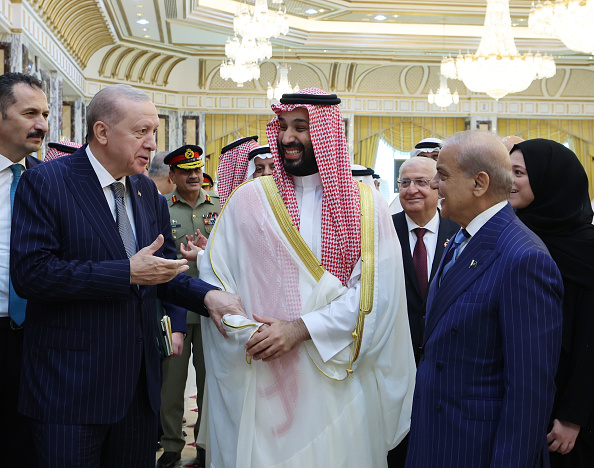
But the war has also produced a silver lining for the United States: countries in the Middle East which were once content to remain within the American security umbrella are now being more proactive with their own security affairs. The latest example occurred yesterday, when Saudi Arabia, Turkey and Pakistan signed the so-called Mecca Joint Defense Agreement. According to statements from the three countries, the agreement “is intended to strengthen collective deterrence against any act of aggression, and stipulates that any armed attack against any one of the three states shall be regarded as an attack against them all”.
The Saudi-Turkish-Pakistani deal comes on top of a bilateral security arrangement Riyadh signed with Islamabad last September, which laid the groundwork for the deployment of 8,000 Pakistani troops and a squadron of Pakistani fighter jets to the kingdom this spring.
Although the exact terms of the trilateral security deal have yet to be released, the intent behind it matters as much as the details. Faced with a more hostile environment and a traditional security provider in the United States whose leaders are making decisions — such as waging a preventive war in Iran — that have dramatically adverse consequences for the region, the affected countries are taking matters into their own hands and diversifying their security ties.
The foreign-policy establishment in Washington, DC will shudder at the thought of traditional partners moving away from the US in any capacity. The boilerplate paradigm holds that the greater the distance there is between Washington and its partners, the less influence the US will have in the region’s geopolitics. Others will no doubt view the new pact as an illustration of how little trust these countries now have in US foreign policy. And to be fair, this argument is not off the mark.
After all, outside of Israel, no state in the Middle East believed it was a particularly brilliant idea to launch a conflict that would compel the Iranians to close the region’s critical trade chokepoint, push the regime further into the grips of the hardliners, and spoil whatever efforts at détente with Tehran were taking place.
But whether the latest move is motivated by a sense of disgust with US foreign policy or by fear that Washington’s security commitments no longer look as ironclad as they once did, the result is the same: forced to live within a security reality that is more complicated than it was last year, leaders such as Saudi Crown Prince Mohammed bin Salman and Turkish President Recep Tayyip Erdoğan are broadening their horizons by solidifying their defence ties closer to home. The US is still the preferred foreign guarantor for many if not most of these states, but no longer the option of first resort.
Assuming the war with Iran doesn’t persist for the rest of his term, Donald Trump has an opportunity to capitalise on the willingness of US partners to do more for their own security. He, Barack Obama and Joe Biden all entered office promising to reduce America’s military presence in the Middle East, only to leave their successors with the same problem — or a bigger one. Despite what Washington officials might say in public, the blunt fact is that the US is an unpredictable and, at times, unreliable security guarantor for the region anyway. The Middle East needs less Uncle Sam, not more.
Daniel R. DePetris is a fellow at Defense Priorities and a syndicated foreign affairs columnist for the Chicago Tribune.
 DanDePetris