









14 January 2026 - 6:00pm
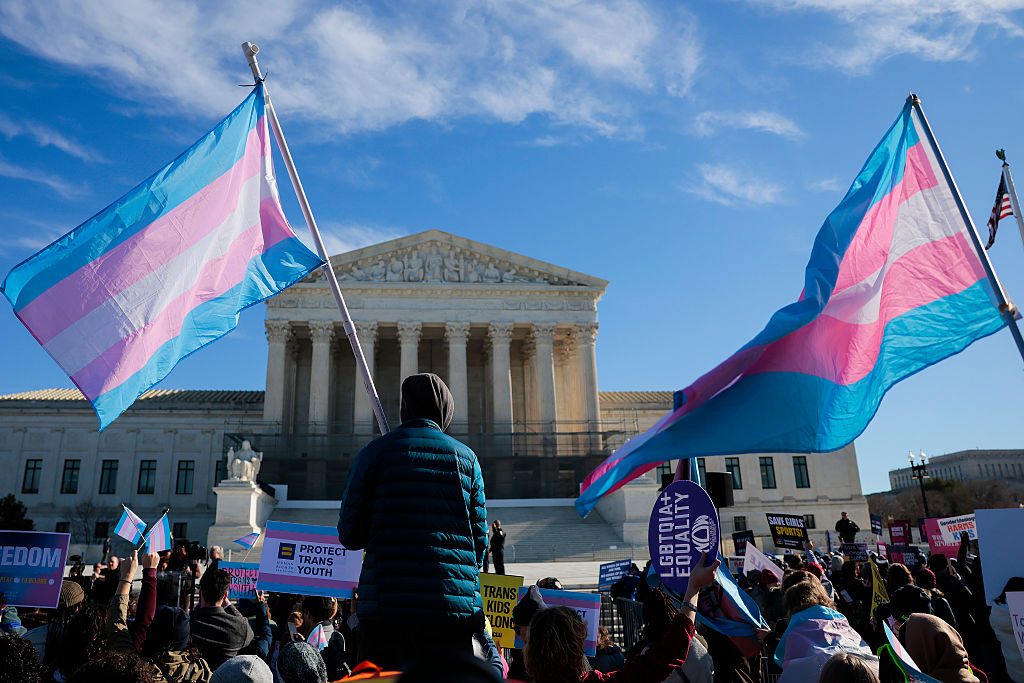
Yesterday, the US Supreme Court got as close as it could to becoming the setting of a Kafka novel or a Molière farce. SCOTUS heard the cases of Little v. Hecox and West Virginia v. Beverly Pepper Jackson, both of which deal with discrimination in women’s sports. The decisions will be significant, because each case concerns whether the Supreme Court will uphold laws prohibiting transgender girls from competing on girls’ sports teams.
For anyone following these cases on NPR, listeners would have heard about “two girls” who were “banned from playing sports in their respective states”. In fact, both athletes at the centre of the case are biological males. Each child was not banned from playing sports, but instead required to play on teams according to their sex rather than their gender identity.
Individual laws in both Idaho and West Virginia state that sports teams designated for women and girls “shall not be open to students of the male sex”. The American Civil Liberties Union (ACLU), which has been involved in numerous trans rights cases, and Lambda Legal argue that this counts as sex discrimination, violating the Constitution’s equal protection clause, because they’d be able to compete but for their sex. If the Court agrees, the laws will be unconstitutional. The ban seems likely to be upheld.
The hearing was contentious, with neither judges nor lawyers quite able to pinpoint what they were arguing about. If the laws only apply to trans girls and women, then are they discriminating based on gender identity, which some policies have institutionalised as a facet of sex? Are trans people a small group, or, as one Justice insisted, millions of people? What even is sex? As one Justice asked: “How can we discriminate on the basis of sex, if we don’t know what sex is?”
Infamously, Justice Ketanji Brown Jackson admitted in 2022 that she did not know what a woman was, but she didn’t recuse herself from the case. I waited for someone to explain what most people understand: biological sex simply refers to one’s reproductive class, whether we’re wired to produce sperm or eggs. Gender identity is an idea, not a fact, with no objective measures.
What we heard yesterday shows how much those supporting males competing against females have shunned a belief in objective facts. Their false beliefs that each person has a gender identity, separate from sex, and that sex is malleable while the gender identity is not, power these arguments. But what we also heard was how these issues around gender identity — a completely subjective classification — can hamper rational discussions. The arguments stretched into the fourth hour, with no one establishing what sex or gender identity was, or how to determine when one is being discriminated against based on them.
What’s most astonishing about the case is that the media continued to paint the issue as one of Left versus Right. NPR suggested “conservatives have increasingly argued that transgender women and girls have an unfair advantage in sports.” But this ignored an amicus brief signed by 102 female athletes, submitted in support of laws that segregate sports by sex, which contains no mention of political leaning. In a “Do No Harm” rally outside the Supreme Court, speakers included a black lesbian named Tish Hyman, as well as Republican House Speaker Mike Johnson. This is clearly not a partisan issue.
In fact, nearly 80% of Americans oppose men and boys in women’s and girls’ sports. Dozens of famous female athletes have spoken out about not just the unfairness on the fields or courts, but the psychological damage of being told to keep quiet or share intimate spaces with men.
When the young people in both cases challenged the state laws on trans athletes in sport, the pendulum seemed to be swinging in their direction. But by the time SCOTUS accepted these cases, it was clear to almost anyone, including these athletes, that this would be a losing battle. Lindsay Hecox withdrew the suit and tried to get the case vacated, but SCOTUS refused. The court has previously declined to see transgender people as a suspect class, and it’s doubtful that it will do so now.
The question remains, then: will liberal advocacy groups continue their desperate opposition to women’s and girls’ rights? Or will they instead offer reasonable policies, which would allow people to dress or identify as they please, but not force everyone else to disavow biological reality? From the arguments made yesterday, that’s not happening any time soon.
