









1 September 2026 - 4:00pm
Dolly Parton was born the fourth of 12 children in a tiny cabin in the Great Smoky Mountains, poor enough that her father once paid the doctor who delivered her with a sack of cornmeal. Steely, self-made, and unmistakably Appalachian, she transmuted her passion and struggle into American music gold. The timing of her death is grimly apt: country music has lost its great rags-to-riches original just as a riches-to-playlists successor has arrived.
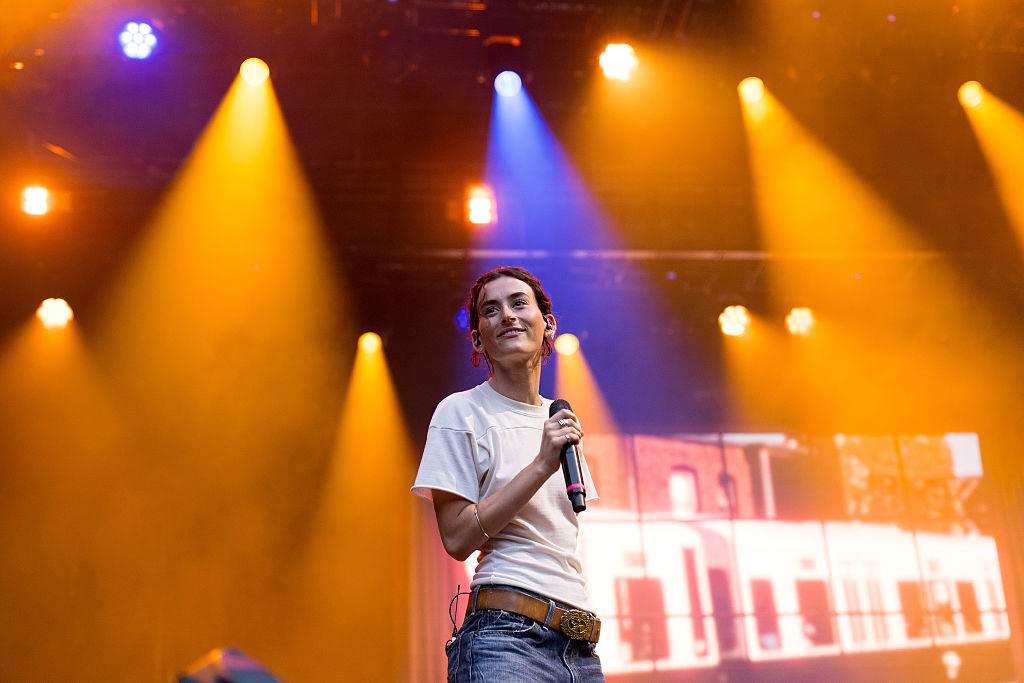
Meet Stella Lefty, a country star engineered for the age of slopulism. The 24-year-old singer’s origin story reads almost like a satire of the nepo-baby era. Lefty is short for Lefkofsky: her father is Eric Lefkofsky, the co-founder and former CEO of Groupon, now worth roughly $5.5 billion as the CEO of the healthcare-AI firm Tempus. She grew up not in some podunk small town in the South, but in Glencoe, Illinois, a leafy Chicago suburb. She then attended Tulane, began posting music while there, and moved to Los Angeles after graduating. Groupon’s founder built a business on skimming a cut of other people’s labour; his daughter’s music does something eerily similar.
Take “Boston“, the song that made her a star: a sappy, pedal-steel-laced love song, sung in a strained approximation of a Southern accent, about a city she has no discernible connection to. It’s undeniably catchy, but it’s country music from an airport bar: suggestive of places without belonging to any of them. And it doesn’t stop at the borrowed atmosphere. “Boston” resembled Noah Kahan’s “Stick Season” so closely that his team got a co-writing credit added after the fact. Meanwhile, Rolling Stone has now confirmed that another album track, “Summer You Were Mine,” interpolates the Chicks’ track “There’s Your Trouble”.
Likewise, Lefty’s put-on rasp sits atop lyrics with no originality or interiority at all. Scan the lyric sheet, and all you get is a litany of drab clichés: “One glass of wine and you’re on my mind / One sip of gin, and I’m right back in / One shot of tequila, and I really wanna feel ya.” Much of Long Way Home feels less like songwriting than a genre exercise in Google autocomplete. Desire is measured in drinks, intimacy happens at the local bar or on the backroads, and leaving town serves as both a recurring plot and a substitute for personality. In the end, the songs are relatable in the same way a horoscope is relatable.
None of Lefty’s music or lyrics may be technically AI-generated. But they already embody the AI aesthetic: successful existing inputs blended into a frictionless average, with any stubbornly personal detail or anything resembling personality sanded away; optimised for a Netflix rom-com montage — indistinguishable from the next algorithmically approved single in the queue. In a telling interview on a country music podcast, Lefty is asked what “her journey” is like behind the scenes, and she responds that no one understands how many “hours upon hours” she spends on her cellphone doing self-promotion.
Dolly Parton represented the opposite. Her songs emerged from a fiercely particular world: her mother stitching rags into a coat and giving it biblical meaning in “Coat of Many Colors”, working-class fury in “9 to 5”, sexual jealousy given a name and a face in “Jolene”. Even her most universal compositions remained unmistakably hers; the wigs and rhinestones were artificial, but the art underneath them was not.
Some believe that the coming deskilling of cultural production due to LLMs will democratise music, but Lefty’s rise suggests the opposite may happen. When anyone can generate a competent song, image, or screenplay, competence ceases to be scarce, and the industry will inevitably shift from “can you make something?” to “can you get it heard?” What remains scarce is attention, and the money, time, collaborators, and marketing required to capture it. That’s an advantage the merely talented can’t buy and the merely rich can.
Dolly Parton turned a hard life into songs nobody else could have written. Stella Lefty has turned a soft one — apparently mostly spent on her phone — into songs anybody could have written. That makes her the anti-Dolly and, probably, the future.
