









26 August 2026 - 6:00pm
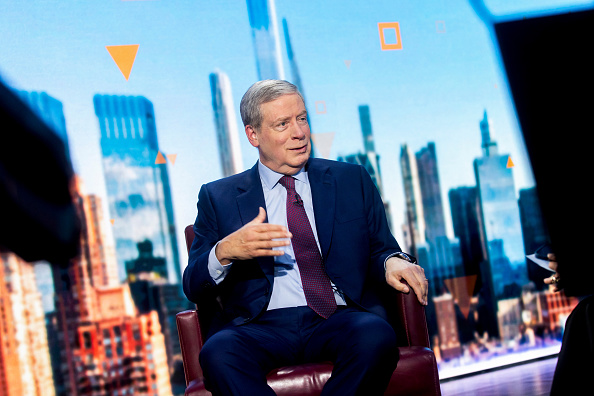
A billionaire called Stanley Druckenmiller was invited by the Wall Street Journal to write an op-ed piece for the paper on a subject that need not trouble us. When it came out, an intelligent reader was amused by phrases like “There is a quieter cost, too,” and “this wasn’t liquidity management, it was price management.” The reader ran it through the AI detector, with predictable results.
Stanley, caught bang to rights, fought back. “I write everything using AI now for the same reason I use a calculator when I do math problems,” he, or presumably ChatGPT, responded. The WSJ, unusually, defended its pet billionaire. “Nobody can doubt that his op-ed is his genuine opinion.”
This sort of thing is on the rise, and a surprisingly large number of stupid people see nothing wrong with it. In one survey carried out by the Reuters Institute, 33% of respondents said they were comfortable with AI writing the article. But, AI certainly has its uses. I was struck recently, after speaking at a conference of policymakers, to be sent an AI synopsis of my hour-long session, perfectly accurate.
However, to replace the effort of original thought that an op-ed or a more thoughtful piece of writing must require with a summarised consensus rendered in bland prose is an utter waste of time. Paul Lay has wisely remarked that the last thing that AI will be able to fake is an epigram. (I just asked ChatGPT to write an epigram about creativity. “Making the unnecessary indispensable,” it responded, proving the point). The concision of contrarian thought must be beyond an engine surveying the consensus on a point. And the possibility, at least, of contrarian thought is at the heart of intelligent writing.
Stanley’s comparison of AI to produce prose with a calculator’s ability to do maths is absurdly thoughtless. There is no place in a maths problem for the eccentric, the anti-consensus solution. Instead, a maths problem is just right or wrong. On the other hand, in recent cases where AI use has been discovered in journalism, it has served to demonstrate just how weakly a Sunday book reviewer or a Financial Times columnist has always followed an unthinking consensus. The value of the contrary and the independent thinker in writing has been revealed.
The larger point, which neither Stanley nor his craven boss seemed to take into account, is that they were hoping for readers to not notice — paying readers, more to the point, who shell out $8.50 an edition. I can’t help feeling that these suckers are being taken somewhat for granted here. Why would they pay for this, when (as I have just done) they could ask ChatGPT to write a column in the style of Stanley for nothing? “Inflation is not merely an unpleasant statistic; it may become a political situation to a fiscal problem,” it merrily chirped back at me. Seems about as good as the $8.50 version.
As the 33% take hold of journalistic practice, the basic, banal commentary parroting the usual bromides about its subject will disappear. If in the future, you want to hear a pompous consensus about the future of the bond market, Wales’s chances in the World Cup or where Richard Strauss’s Arabella stands in the canon of his works, you’ll just ask AI to pump something out. You won’t require an author’s name on top of it, and it won’t cost you anything but your dignity.
In the world of actual writing, done by individual humans with extensive experience of the subject, I can imagine things becoming more and more idiosyncratic and eccentric. To distinguish themselves from the machine-driven output, a paranoid avoidance of the words the Reuters Institute identifies as characteristic of our robot overlords such as “underscore”, “commendable”, “resonate”, “navigate”, and “delve”. Especially delve, though Lord knows, if text-generating AI continues into the sorry depths of thought and expression, we may find we have need of it.
Philip Hensher is the author of 11 novels and a Professor of Creative Writing at Bath Spa University. His new book, A History of the Novel in Britain, will be published by Pelican in September.
 PhilipHensher