









13 October 2026 - 1:00pm
Madrid
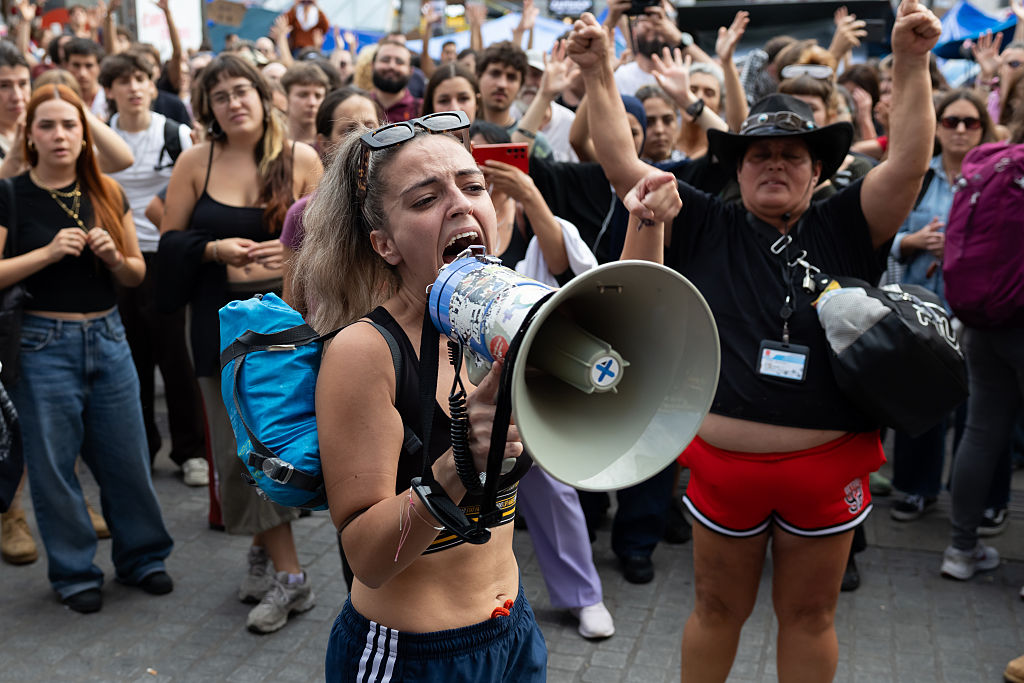
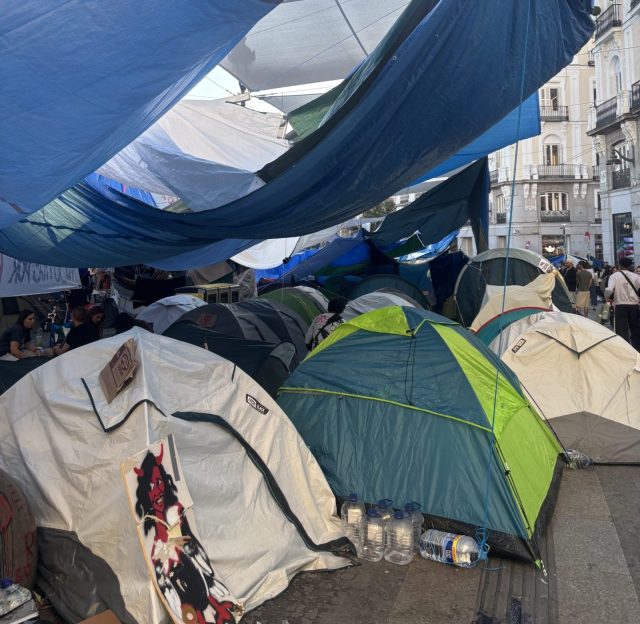
In the Puerta del Sol square in Madrid, thousands of mostly young people have taken to pitching tents and camping out to protest the country’s worsening housing crisis. Protesters wait idly by for something to happen, while door number-style pieces of paper adorning the front of tents estimate the number of occupants at over 5,000. Graffiti across the encampment and zines for sale depict Pedro Sánchez, Spain’s Socialist Party (PSOE) Prime Minister, as a rapacious politician who has ignored the interests of the youth and working class. The crisis now threatens to engulf him after eight years in power.
“Maricarmen is just the tip of the iceberg, but the fire started with her,” Ernest, a 23-year-old chef, tells me. He’s talking about Maricarmen Abascal, the 87-year-old whose eviction from the Madrid flat she lived in for 70 years sparked nationwide protests, and who died last week. Ernest, who spends 80% of his €1,500 monthly salary on rent, adds: “She is a martyr for our movement.”
Another Madrid resident, a comedian called Jorge who lives in the city’s western district, explains why Maricarmen’s eviction has galvanised the country’s youth: “If they can evict a lady that old, what protections do us young have?”
It’s little wonder they are protesting: according to research by Spanish bank BBVA, the country faces a housing deficit of 800,000 homes by 2027. Around 50% of the shortages are concentrated in the Spain’s biggest cities and hotspots, including Barcelona, Valencia, and Madrid.
In Malasaña, a trendy Madrid neighbourhood splitting the districts of Sol and Chamberí, a two bedroom apartment cost around €680 per month in 2015. A one-bed in the same neighbourhood will now set you back €1,750 per month. The issue for many here, however, goes beyond housing and into the cost of living — a crisis blighting every Western economy.
Police numbers around the Sol encampment have dwindled in recent weeks, despite the number of tents growing. But across Europe, echoes of Spain’s crisis ring out. Housing was a key factor in the electoral success of the far-Left Die Linke in Berlin’s September state elections, when the campaign led by Elif Eralp more than doubled the party’s vote share on a promise to impose rent controls. The city faces a housing squeeze in which rent costs have risen nearly 70% over the last decade.
So far, nobody is camping out in Alexanderplatz, but protest signs already adorn prominent streets such as Karl-Marx-Allee calling on the government to provide aid. Chancellor Friedrich Merz, like Sánchez, is clinging on politically. This is in no small part due to the disaffected German youth who, like many of their European peers, view their inheritance as substantially diminished compared to that of their parents and grandparents.
Italy, meanwhile, may be experiencing some uncharacteristic political stability under Giorgia Meloni; but in Rome and Milan, the country’s industry hubs, rent costs can eat up as much as 76% and 65% of the average salary respectively. Tensions in Paris, an expensive tinderbox with a young population, have already boiled over.
Youth rebellions throughout the 20th century tended to spread, as civil rights and anti-war movements manifested themselves across university campuses in Europe and America. Throw in stagnant wage growth and a lack of job opportunities today, and the outlook does not look good for disaffected youth trying to establish a life in cities of their choosing.
As Sánchez attempts to hold onto power and quell youth anger, he has offered tax incentives to both tenants and landlords. His opponents in the centre-right People’s Party, which look set to take the reins of government following the snap election in late November, have promised to build more housing to correct the flailing market. Yet many in Sol’s protest camp reject the idea that supply is the problem, and call instead for prices to be capped.
“We want cheaper rent and higher wages,” pleads Sylvia, a member of the Sindicato de Vivienda tenants union. She says that she will not vote for the “Right-wing” Sanchez in November, claiming he has broken too many promises. As Madrid bubbles, the Prime Minister’s problems look almost insurmountable. Other European leaders should be paying close attention.