









7 May 2026 - 4:00pm
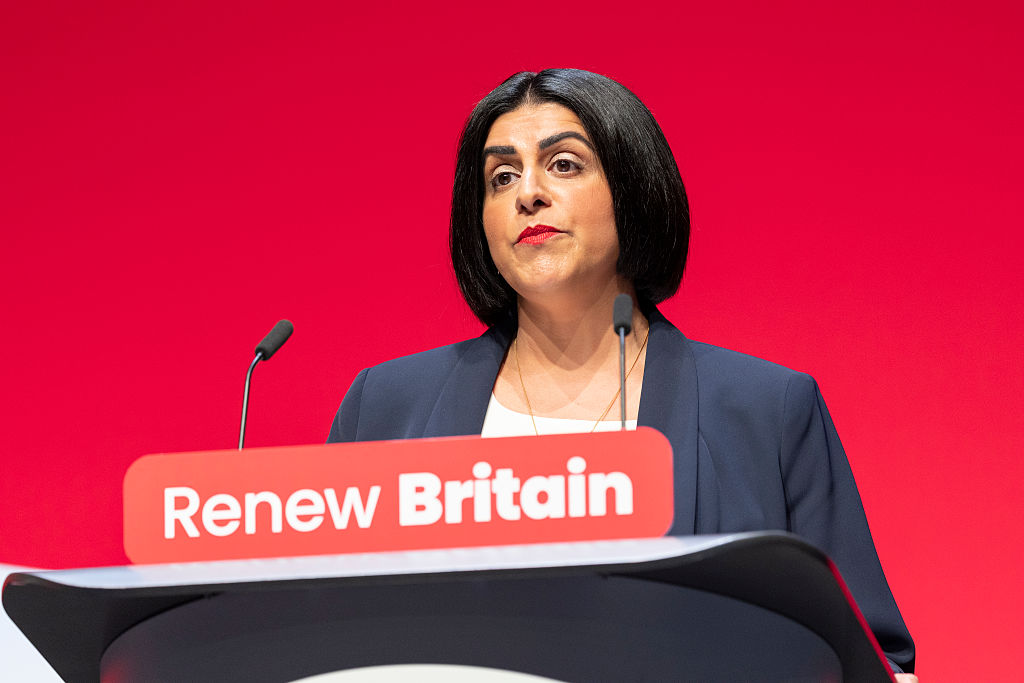
Home Secretary Shabana Mahmood has said Britain could “go much bigger” on “safe and legal routes” for refugees once Government reforms are in place. The remarks, widely read as preempting criticism from the Left ahead of a possible Labour leadership contest, came during an appearance on Matt Forde’s podcast, where Mahmood sought to underline her humanitarian credentials.
Her argument is that only by restoring control of the system and ending illegal immigration can Britain properly expand safe routes for those arriving legally. But her comments are likely to prove as unpalatable to the Left of her party as they are to sections of the wider electorate.
On the Left, it is often treated as an article of faith that expanding legal routes for those seeking to enter the country is essential to deterring illegal immigration. Labour’s own “Restoring Order and Control”policy explicitly draws that connection, and even relatively centrist figures such as Mahmood’s predecessor Yvette Cooper have accepted the underlying premise.
While that logic is disputed on other parts of the political spectrum, the nature of the Home Secretary’s reforms suggests it may, in practice, not be entirely wide of the mark. Almost all of those arriving in the UK illegally by small boats claim asylum immediately upon arrival — and around 62% of those people are granted protection upon review, with many of the rejections being overturned on appeal. Mahmood’s reforms would allow such individuals to opt into a “Work and Study” pathway, exempting them from routine reviews of their refugee status and placing them on broadly the same route to settlement — and ultimately citizenship — as those who arrive through legal channels.
Officially, anyone granted protection is recognised by the British state as a genuine refugee, to whom it has an obligation to provide support, a position that commands little disagreement across the Labour Party. Sceptics, however, argue that the circumstances faced by many asylum seekers in the UK are not necessarily exceptional when compared with the hardship experienced by large populations across the developing world.
On this view, the key distinguishing factor is not the severity of need but the fact of having reached British territory. The policy implication is therefore either to deter or physically prevent irregular arrival routes. For the Left and particularly for those gravitating towards the Green Party, this framing is inverted. It is seen as evidence that global need far outstrips current legal pathways, and that the existing border system is excluding large numbers of people who could legitimately claim protection.
Mahmood risks drawing on talking points more commonly associated with the American Left, particularly around regularising the status of those who have entered the country illegally. This is not especially surprising given how often US political language filters into self-styled British progressive circles, even if she has not yet adopted the term “undocumented” to describe illegal migrants.
In the British context, however, the analogy is imperfect. Illegal arrivals are typically intercepted on arrival and then accommodated and supported by the state while their claims are processed, which makes the language of “invisibility” less applicable than in the United States.
More fundamentally, though, the argument is unlikely to reassure a public that is sceptical of any approach which appears to reduce illegal immigration by expanding legal routes for the same cohort of people. Many are concerned less with the semantics of categorisation and more with the scale and composition of arrivals, and whether those arriving are well placed to integrate successfully.
In practice, critics argue, “safe and legal routes” risk becoming a mechanism for admitting individuals who do not meet existing visa criteria, effectively creating bespoke pathways for those who would otherwise have no basis to come to the UK. And even then, they contend, anyone failing to qualify could still attempt the journey irregularly, leaving the underlying pressures unchanged.
Chris Bayliss is an independent consultant who works on energy infrastructure in the Middle East.
 baylissbaghdad