









10 October 2026 - 8:00am
According to figures published this week by the Home Office, there has been a 7% increase in hate crime in the past year, following another rise the previous year. Of course, one can never be totally sure if hate crime is truly accelerating or whether it’s just being documented more assiduously. No doubt some of these cases will include people who have posted offensive statements online. Nasty though these instances are, do they really warrant police intervention?
Either way, what stood out about this week’s figures was that hate crimes based around transgenderism, sexuality and disability were either static or even declining. Yet racial and religious offences, to Jews and Muslims in particular, are surging, representing 46% and 28% of recorded religious hate crimes respectively.
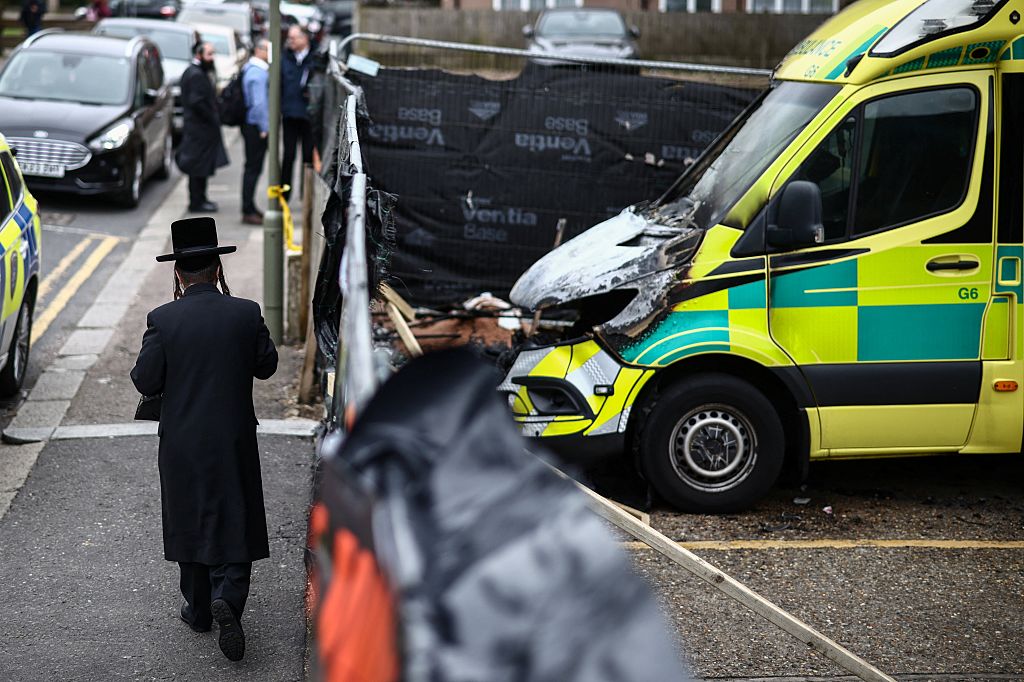
It is impossible to disconnect these developments from the ongoing conflicts in the Middle East and the culture-war ideological narratives through which they are digested in the West — the “clash of civilisations”, or narratives about Israel being the mothership of world evil. The Manchester synagogue attack last year was a potent reminder that antisemitism is far from an abstract threat, while the torching of Jewish ambulances in north London was reportedly motivated by Islamist grievances.
Britain’s current moment, then, is notably racialist and sectarian, or perhaps communalist. People are imagined less as autonomous individuals and more as avatars for distinct, antagonistic “communities”. Society frequently treats discussions around race as taboo, yet we talk about it constantly. Sections of both the Left and the Right, whether in the name of “anti-racism” or ethnonationalism respectively, have contributed to the recrudescence of racial essentialism in British life.
Both Jews and Muslims are racialised minorities, with race assimilated into religion — something which is even stranger in the latter case as Islam, like Christianity, proclaims to be a universalist religion. These groups are seen by their enemies to signify foreign or “alien” interests. A major cri de coeur for the radical Right is demographic change and the fear of a growing Muslim minority changing the very character of the nation and its culture.
One sees this with the recent quarrels over the racial and civic boundaries of “Englishness”. Can someone of third-generation Pakistani and Muslim background who is born, raised and encultured in England be part of the English nation? According to Reform UK’s Suella Braverman, herself the daughter of Indian immigrants, they can be British but they absolutely cannot be English, as that would require Anglo-Saxon heritage. The fact that this question is so contentious and loaded at present points to a country that is trapped in an identity crisis, unsure of how to define itself in a simple sense after decades of sweeping social and demographic change.
Contemporary England is not yet Lebanon or, for that matter, Northern Ireland. But sectarian antagonisms are beginning to harden into real and substantial political differences, as evidenced by the rise of “Gaza independents” at local and national elections. We cannot afford to be complacent, and things can get much worse. Sectarianism should be nipped in the bud: once it establishes itself as a social force, it is extremely hard to reverse. Then Britons won’t be left with a civil society or even a nation, but instead a collection of fragmented and fractious tribal solitudes.
Ralph Leonard is a British-Nigerian writer on international politics, religion, culture and humanism.
 buffsoldier_96