









24 September 2026 - 10:00am
The latest 11% hike in Scottish drug deaths is a huge embarrassment for the SNP government and its legions of “expert” advisers. For most of the last decade, the party has adopted what it calls a “caring, compassionate and human rights informed” drug policy. This approach has received criticism for merely managing the problem, rather than focusing on abstinence — that is, actually getting people off drugs.
In 2021, then-Lord Advocate Dorothy Bain advised Police Scotland that it no longer needed to prosecute users of Class A drugs, at least for personal consumption. This was seen as an enlightened approach which aimed to lift the “stigma” of drug-taking.
It certainly did that. Turning Scotland into what was effectively a hard-drug tolerance zone did not lead to a significant reduction in deaths. The rate of drug deaths in 2025 was four times as high as in 2000. Scotland’s mortality rate is the highest in Europe, and two and a half times the level south of the border.
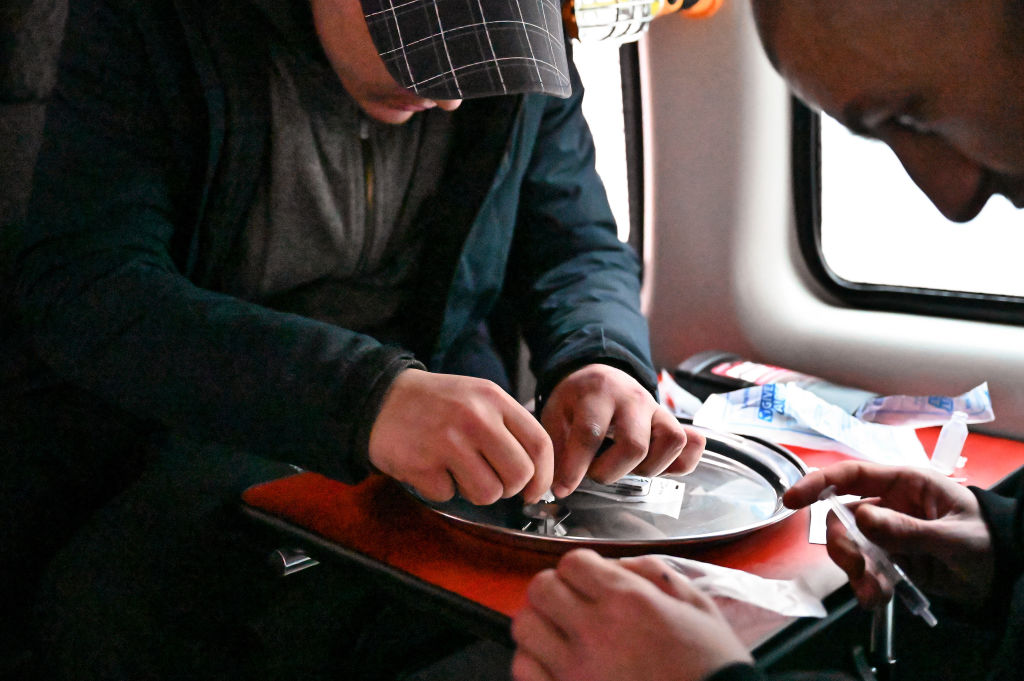
The Scottish Government is now backing consumption rooms where addicts can shoot up in “safety”, both from the police and from the diseases associated with needle use. That doesn’t appear to have halted the increase in deaths in Glasgow, where the first so-called “shooting gallery” was opened in 2025.
Maree Todd, the SNP Minister for Drugs and Alcohol Policy, blames the proliferation of new drugs such as nitazenes and what is called “poly-drug consumption”, mostly of “street” benzodiazepines. These provide a significantly cheaper high than opioids and alcohol, now that minimum unit pricing has driven high-strength ciders off the supermarket shelves. However, most of the deaths are among older users of opioids, now known as the Trainspotting generation.
The SNP continues to blame Westminster for failing to permit the formal legalisation of drugs and consumption rooms. It is hard to see what difference a new law would make, since Scotland has effectively decriminalised hard drugs for personal use. Users can be confident that, so long as they are relatively sensible, they will not be prosecuted. Scottish Government-funded charities such as the Scottish Drugs Forum blame rising death rates on austerity, spending cuts and inequality. There is some truth to this: Eighties industrial policies certainly hit working-class communities, and there have been cuts to rehabilitation services.
But the Scottish Government can hardly blame Westminster austerity for that. Under the Barnett formula, Scotland receives £2,669 more spending per head than England. Spending is not the issue, and blaming inequality is really just a cop-out. Inequality is never going to be eradicated, and there are lots of poor people in England.
The Scottish Tories argue that drug consumption rooms have failed and shooting galleries such as the Thistle facility in Glasgow should be shut down. The Scottish Greens and the Liberal Democrats want the opposite: more shooting galleries and no resumption of the failed “war on drugs”. While the war on drugs was not a success, it also didn’t exactly end. The Government instead signalled a unilateral armistice, with the tolerant “human rights” approach rewarding the drug lords who benefit from human misery.
Really, what Scotland needs is a tough-love approach that gets addicts to stop taking these substances in the first place. Abstinence is not fashionable in drug charity circles, but Annemarie Ward of Faces and Voices of Recovery, which is not part of the Government-funded networks, suggests that the whole panoply of decriminalisation and consumption rooms only manages addiction rather than helping people get off drugs. She has a point.
Iain Macwhirter was political commentator for The Herald between 1999 and 2022, and is the author of Disunited Kingdom: How Westminster Won a Referendum But Lost Scotland. He was Rector of the University of Edinburgh from 2009-12.
 iainmacwhirter