









6 April 2026 - 8:00am
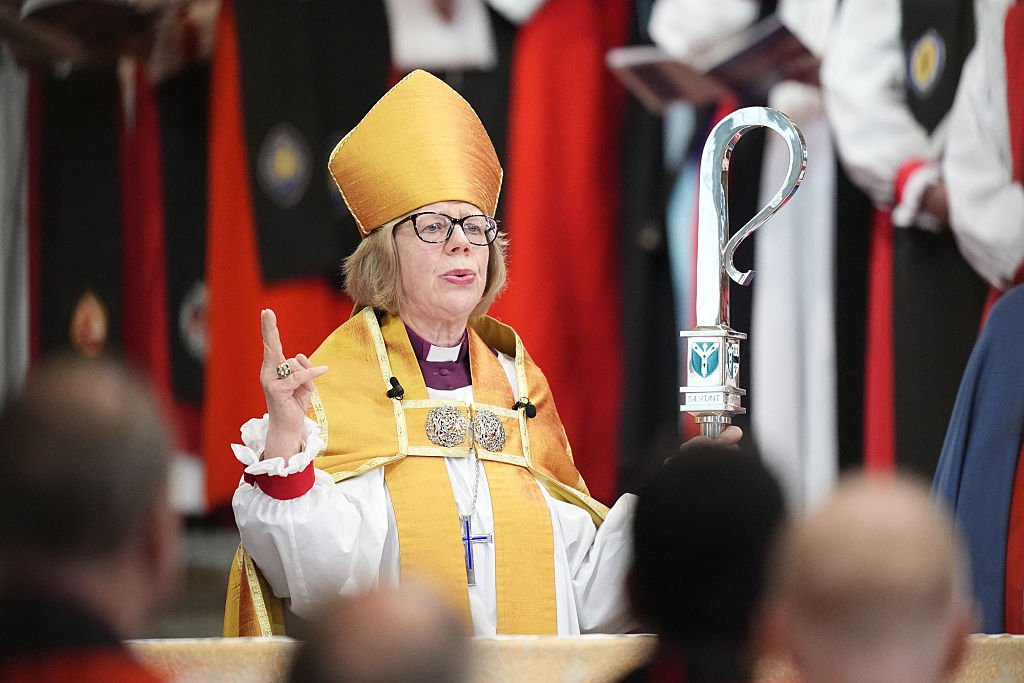
For a new archbishop of Canterbury, the first big set-piece sermon is always a tricky moment. Millions of people are waiting to see what priorities the new primate has and how they think about theology and ecclesiology. Sarah Mullally faces the additional challenge of being the first woman to occupy the role; she is also widely suspected of harbouring progressive political sympathies. She could be forgiven for feeling a little nervous before mounting the pulpit in the main Easter Sunday service at Canterbury Cathedral.
But she need not have worried. As someone predisposed to scepticism about her suitability for the role, I thought she struck largely the right note: orthodox and challenging without becoming overly complex or obscure. She focused on how God can bring goodness out of the dark, and how growth can come from the most unlikely of circumstances, noting that the account of the Resurrection in John’s Gospel begins when it is still dark. “God does not wait for the sun to rise to begin the work of saving the world,” she said. “The life-giving work is already at full strength in the darkness.”
Emphasising the work of God in times of trial, difficulty and uncertainty seems very apt. British people face many intersecting concerns at present. We have a near-stagnant economy, which never really recovered its old strength after the financial crisis. The Iran war is already forcing fuel prices to rise sharply; if the conflict continues for much longer, a serious recession looms. As well as these material concerns, the country faces political fragmentation, and existential questions about identity and belonging.
How encouraging and consoling for a senior Church of England leader to remind us that there is hope amid turmoil and unhappiness, and that Christian congregations can be places of healing and restoration. Pope Francis popularised the idea of the church as a “field hospital for sinners” rather than a museum of saints, and Mullally is meditating on the same thought.
Towards the end of Lord Of the Rings, amid the horrors and miseries of Mordor, Sam Gamgee comforts Frodo by pointing to the beauty of the stars, above the reach of Sauron’s evil. That has always seemed to me a powerful metaphor for the endurance of goodness and beauty even when it appears beset on all sides by chaos and decay.
That is not to say this was a perfect message for the time of year: the words “sin”, “redemption” and “salvation” do not appear. There is no explicit call to repentance and reformation of our lives. Christian hope is not merely some vague sense that things will be better one day. Rather, it is a specific desire for a time when we are freed from the slavery of our sins and faults. But notwithstanding these omissions, for many people both within and outside the church, the Archbishop has offered a glimpse of a world more enduring and more just than this present vale of tears.
