




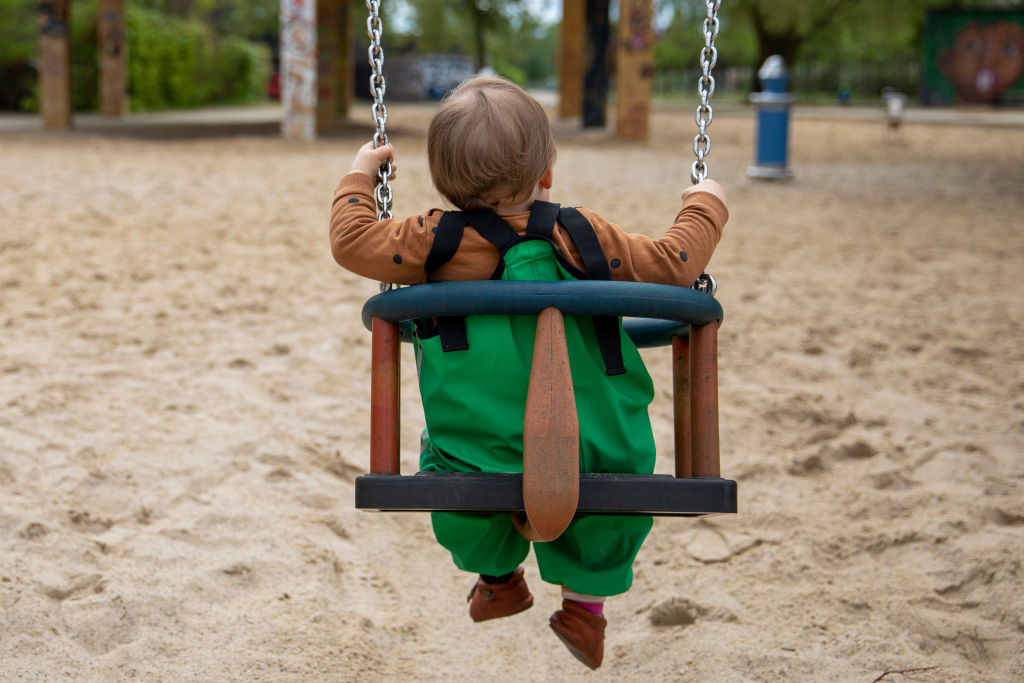





7 September 2026 - 6:00pm
Karyann Parkinson, a mother of five from Virginia, was convicted last month of contributing to the delinquency of a minor, after allowing her five-year-old son Sam to walk alone to a pond. After taking Sam for a walk through their gated neighbourhood in Williamsburg in June, when they visited multiple ponds to collect goose feathers, the child asked to head back out himself and look for more. Having just walked the route with him, Parkinson agreed.
Around half an hour later, Sam returned, accompanied by a security guard. Two weeks after that, the police issued his mother with an arrest warrant, a week before she was due to give birth.
Parkinson has now received a six-month suspended prison sentence, which she is appealing, and says that social services placed both her and Sam on Virginia’s Abuse and Neglect Registry for seven years. The punishment imposed by the authorities is a good deal more damaging to this family than the parenting decision that supposedly justified it.
Five is a young age, and a pond presents a real risk, but Parkinson knew her son. According to family members, he is a competitive swimmer, knew the route, had been taught to cross the road and had visited the pond hundreds of times. A questionable decision isn’t necessarily a criminal one, still less proof of child abuse.
However, this is where a culture of safetyism leads. Once every unsupervised activity is viewed as dangerous, allowing a child any independence at all looks like neglect. Yet the choice is seldom between safety and danger; instead, it is between reasonable safety and safety at any cost. Keep children locked up at home and they may avoid immediate physical danger, but they face the slower risks of anxiety, joylessness and dependence. Without freedom and minor risks, we may raise bored, listless children whose independent spirit and vitality have been knocked out of them.
When I wrote my book Cotton Wool Kids in 2015, I described how children’s “radius of activity”, the area around their home in which they are allowed to roam unsupervised, has declined by almost 90% since the Seventies. In 1971, 80% of seven- and eight-year-olds walked to school, frequently alone or with friends. Two decades later, fewer than 10% did so, and almost all were accompanied by parents.
The attitude is even worse now. Running errands was once a normal part of childhood yet today it is unusual. The radius hasn’t shrunk because children suddenly lost the ability to walk, cross roads or seek help. It shrank because, for a range of reasons, adults lost their nerve. Even though child mortality and serious accidents have declined, childhood is increasingly presented as filled with danger. Fewer children play outside, and the sight of a child alone has begun to look abnormal, as if something has gone wrong.
The “eyes on the street” — the friendly adults who kept a casual watch over children playing outside and stepped in if they needed help — are today more likely to call the police. Yet constant supervision robs children of the chance to assess risk. By doing small things alone, making mistakes and discovering that they can cope, children become competent, and competence begets confidence.
Overprotection carries less dramatic but arguably more likely risks. A child who is driven everywhere and kept indoors becomes more anxious, less active, and less confident. Driving children in the name of safety also increases traffic, which adults then cite as proof that walking to school is too dangerous.
Freedom should increase gradually — a five-year-old shouldn’t have the liberty of a 12-year-old. Parents must judge the particular child, route and danger. Parkinson did exactly that, yet she was treated like an abuser. Her son’s harmless expedition looking for goose feathers has ended with police, social workers, a criminal conviction and seven years on a state register.
Stella O’Malley is a psychotherapist and bestselling author. She is Founder-Director of Genspect, an international organisation that advocates for a healthy approach to sex and gender.
 stellaomalley3