









15 June 2026 - 7:00am
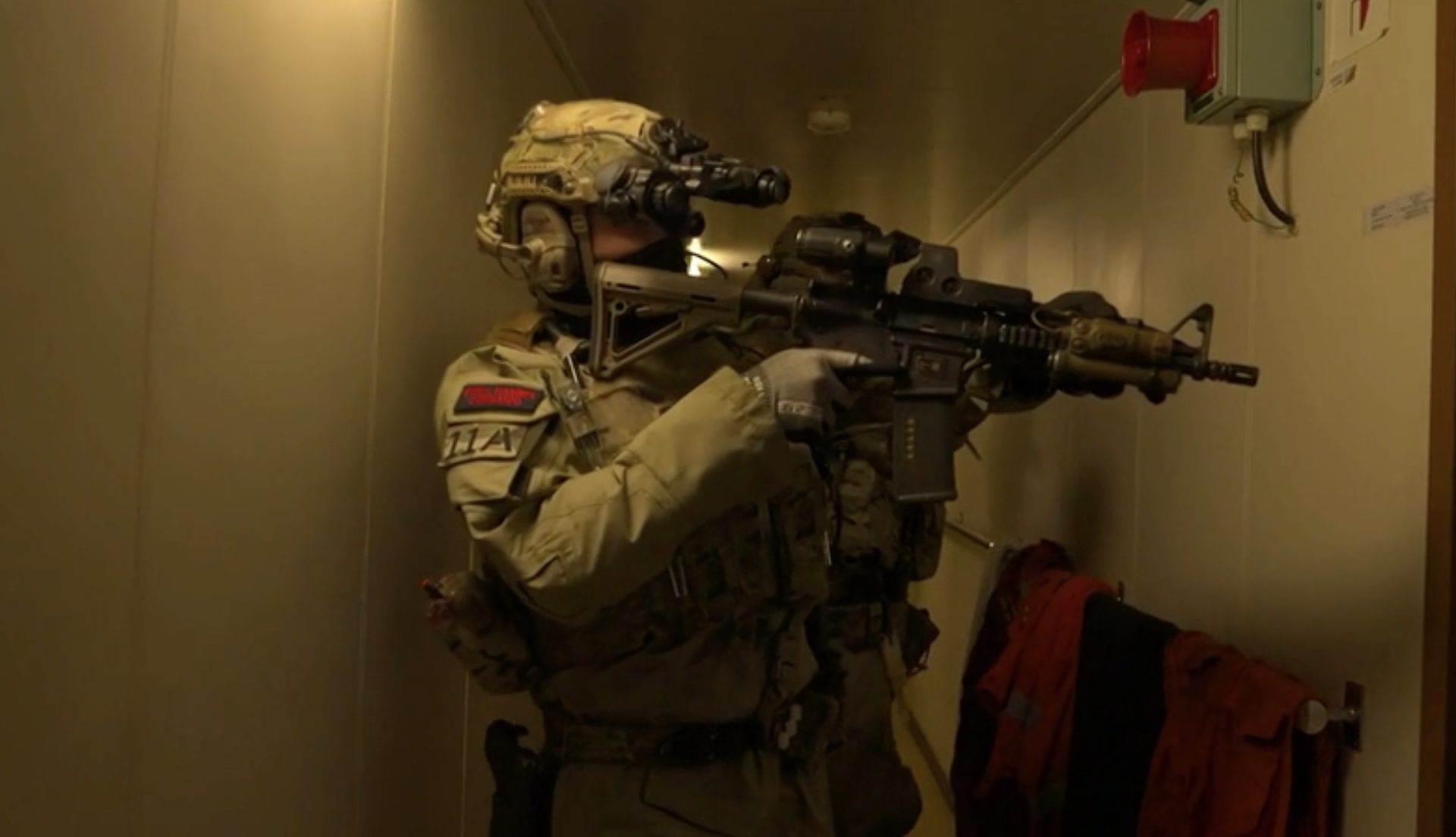
Yesterday, Royal Marine Commandos seized a Russian shadow fleet tanker sailing in the English Channel, the first time they had done so without American support. Keir Starmer heralded the move as an indication of the country’s military strength and resolve to increase pressure on Russia until it agrees to end its military campaign in Ukraine.
The military operation is already being praised by those who welcome any move that targets Russian assets, but the reality is more sobering. Seizing the Russian tanker imposes limited costs on Moscow and comes at a price to the rest of Europe in the form of uncontrolled escalation risks. Just as importantly, it cannot distract from Britain’s lack of a coherent and resourced defence strategy.
Back in March 2026, Starmer first announced that Britain had the legal authority to seize Russian shadow fleet tankers operating in its waters. Up until now, however, the country’s armed forces have only participated in search and seizure operations alongside the US military. The three-month lag between his statement of legal prerogative and any independent British action raises the question of why Starmer chose to act now.
The timing offers some clues. Coming just days after Defence Secretary John Healey resigned amid a row over military funding, the move appears less a strategic shift than a political gambit aimed at deflecting domestic and international criticism of the state of Britain’s armed forces. It seems hard to believe that there were no sanctioned vessels in and around UK waters at any point since March. After all, Britain has placed at least 600 Russian tankers on its sanctions list. Instead, it seems more probable that political factors were at play.
Unfortunately for Starmer, the seizure of the Russian tanker only serves to underscore the fact that Britain lacks a coherent defence strategy and a plan for financing it. As John Healey’s replacement admitted, the UK is still discussing how much to spend on defence, with fears that the much-vaunted Defence Investment Plan does not have enough funds to adequately protect the country.
Taking control of a single Russian vessel imposes minimal costs on the country’s economy. While this may complicate its oil exports, seizing ships happens too infrequently to affect Russia’s strategic calculus or Putin’s willingness to continue the war. In this sense, the British military operation seems largely performative.
That said, Moscow is unlikely to ignore the British move, which it will likely characterise as little more than state-sanctioned piracy. In turn, this will add to already elevated and intensifying escalatory pressures between Russia and Europe, heightening the risk of miscalculation that could spiral into a broader war.
This would not be so concerning if Britain — or the rest of Europe — had a plan to manage these tensions and a clear, coherent strategy for the continent’s defence — especially one that does not depend on the United States. At this point, however, neither exists.
Starmer may have hoped the raid on a Russian tanker would offer a reprieve from these problems, but it is likely to have the opposite effect. Questions over Britain’s defence posture will remain firmly in the spotlight. The Strategic Defence Review marked a step forward in articulating a clearer threat assessment and setting out the capabilities required to meet it. Yet without the funding to resource that strategy, it risks amounting to little more than rhetoric. In that context, the tanker seizure projects less strength than strain, reinforcing a sense of improvisation that may ultimately leave Britain — and Europe — more exposed than before.
 jekavanagh