




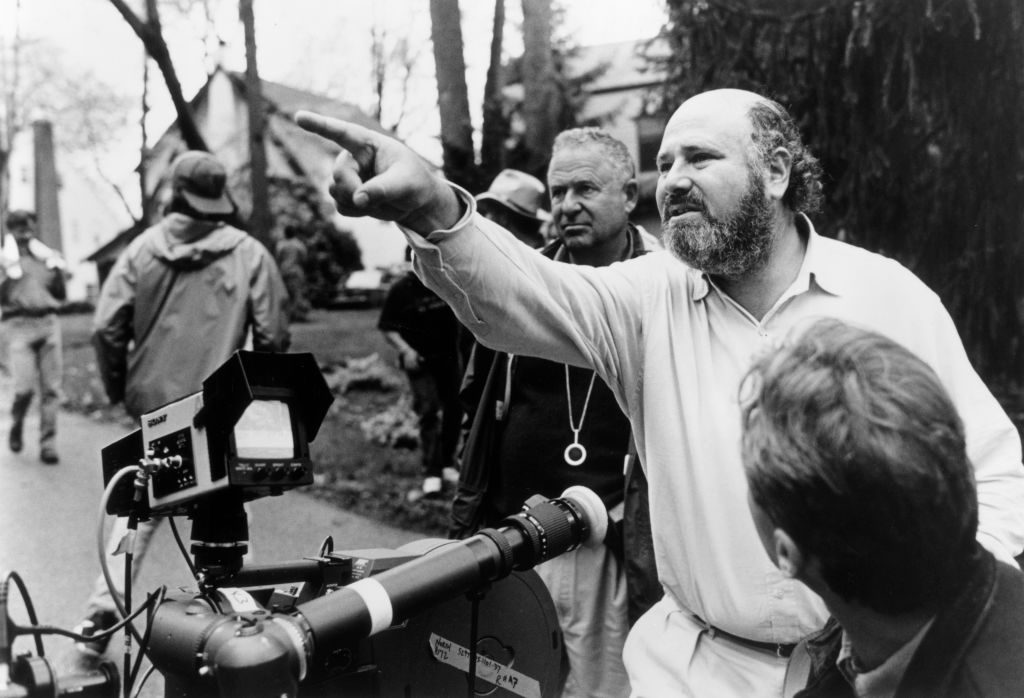





15 December 2025 - 6:30pm
With the notable exception of the US president, liberals and conservatives came together to express their condolences at the tragic death of Rob Reiner. No matter what they thought about his politics, Reiner’s films were influential for a generation who came of age in the Eighties and Nineties. But, more than that, he was a particular type of liberal film director who has nearly become an extinct species.
Before his death, he had earned the reputation of a “has-been”. Once a great filmmaker, he later tarnished his reputation with a string of flops and became better known for his frenzied “resistance lib” anti-Trumpism. Like many liberals, Reiner believed that Trump was an autocrat who posed a mortal threat to American democracy. For this, he lived rent-free in the heads of many conservatives.
But to dismiss him as a liberal hack would be underselling him and misunderstanding the America he was a product of. Between 1984 and 1992, he directed six bona fide classics, each in a different genre. Spinal Tap stands as one of the finest examples of the mockumentary; Misery is a classic of horror; Stand by Me is a definitive coming-of-age tale; The Princess Bride is a live-action fairy tale; When Harry Met Sally is the apogee of the rom-com; and A Few Good Men is a touchstone of modern courtroom drama.
Despite this catalogue, he was perhaps under-recognised because he wasn’t an auteur. Instead, he was a workman studio director in the vein of Billy Wilder, and one of the finest of his generation. This explains his chameleon-like versatility. He didn’t have a distinct “style”. There wasn’t a “Rob Reiner Film” in the way there is a Steven Spielberg or a James Cameron film. Casual filmgoers wouldn’t immediately get the impression that The Princess Bride and Misery were directed by the same person.
These films could not be made today. For one, the adult-oriented mid-budget film, which he specialised in, has been overtaken by large franchise series or small indie dramas. More crucially, Reiner could take the American monoculture for granted — a broad audience capable of engaging in cultural conversations across its many divides, and a liberal optimism that no longer exists. He fit seamlessly into that monoculture, which had grown organically out of Hollywood’s golden age. Older members of his audience would have known his father, Carl, the great comedian who passed away in 2020 at the age of 98.
Unlike liberal films in the 21st century, his works never bombarded the viewer with an ideological essay. He worked within mainstream Hollywood genres that were made for a mass audience, not a fragmented archipelago of niches. He made films at a time when they were still a shared cultural experience in which society partook. Today, they are more often than not a communication of consumer identity.
With Reiner, the story was always supreme, as were the ethical dilemmas that his characters went through. The moral idealism one finds in A Few Good Men and The American President is naive. But there is something charming about the belief that liberal institutions need good men to uphold them lest they be corrupted.
Modern films, like 2021’s Don’t Look Up, are symbolic of a contemporary progressive filmmaking that often foregrounds explicit propagandising, pseudo-structural critique and cheap identity framing. While he was a Hollywood insider, Reiner knew what made films fun and didn’t try to make them pretentious. If a movie could not be enjoyed on its own terms, even when ignoring its subtext, job done.
Just last month, Armond White wrote in The National Review that it was ironic that, despite his “hysterical liberalism”, Reiner’s filmmaking was “conservative, even Boomer friendly”. America’s coherent monoculture — where most people watched the same things and pop culture meant something — was the perfect soil for his oeuvre. That has faded, and White’s comment perfectly illustrates how art is judged through a political lens. Country club Republicans wouldn’t have thought twice about enjoying a Rob Reiner film, but Trump supporters who knew his allegiance might. And yet, the liberal idealist ethos based on the earnestness of ordinary people that ran through all his best films will endure.
Ralph Leonard is a British-Nigerian writer on international politics, religion, culture and humanism.
 buffsoldier_96