









24 April 2026 - 10:55am
Britons tend to be modest when it comes to patriotism. Incessant flag-waving — except for special occasions such as football tournaments and royal jubilees — is not our style. As George Orwell once noted, “the working man’s heart does not leap when he sees a Union Jack”. Yet, ever since Operation Raise the Colours last year, frontline politicians have engaged in a kind of patriotic arms race, jostling to be seen as the most loyal to the flag.
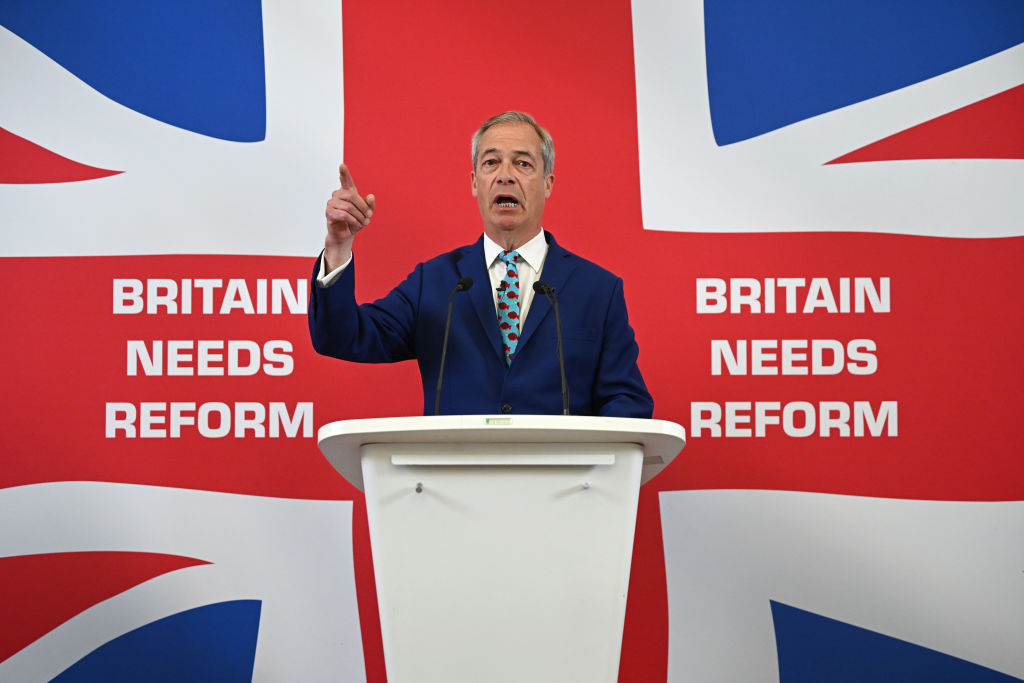
To win this culture war, Reform UK this week unveiled its plan for every school in England to fly the Union Jack, as well as a “patriotic curriculum” requiring at least 60% of assessed history to focus on Britain. If statistics are to be believed, then young people may be resistant to these changes. Last year, YouGov found that 50% of Generation Z believe the country is racist. Meanwhile, just 41% said they’re proud to be British — half the level among the same age bracket 20 years ago. Reform clearly sees this as a problem, one supposedly caused by teachers “poisoning” young minds with “woke” propaganda.
Much of the opposition to this will accuse Nigel Farage’s party of attempting to import American-style patriotism of a kind which is inappropriate to British sensibilities. It almost resembles, in fact, the state-engineered patriotism of young, postcolonial countries which seek to build national unity from the top down.
Calls for a more muscularly patriotic education in the UK are understandable at a time when nearly 40% of pupils come from an ethnic-minority background. Integration has become a more fraught topic and, to borrow from the sociologist Stuart Hall, “the routes by which the minorities have travelled to [British] identity are different in some crucial respects from that taken by native people.”
Patriotism should inspire citizens towards the belief that they’re not just a collection of isolated individuals or avatars for different “communities” — that they belong to something bigger than the sum of its parts. Nations thus need a unifying historical narrative to bind the past and present, helping their people understand that they are part of a legacy. England used to have one. It was a rather doe-eyed Whiggish story of liberty developing from the Anglo-Saxons through to Magna Carta, followed by the growth of common law and Parliament, which was later exported throughout the British Empire. But this narrative is increasingly viewed as an antique one. Few Britons really believe in it, and the void has yet to be filled convincingly.
There is nothing immediately objectionable about the idea that British schools should primarily teach British history. But if Reform’s vision is for a proudly nationalist rejoinder to progressive propaganda, then this will only mirror the politicised teaching it is trying to replace. One can only appreciate complicated national histories through critical engagement, neither blindly lionising it nor impulsively demonising it. Young people can see through performative patriotism. Authentic national feeling is not something which can be brought about by government decree.
There is much more to patriotism and national belonging than flags and hanging portraits of the King. If you want young people to take pride in Britain, then there needs to be a Britain worthy of that pride. Love of country isn’t a belief like any other, like the adoption of a philosophical system. Rather, it is a feeling, an instinct. Reform has yet to prove that it has a coherent and effective programme for solving Britain’s well-known problems. And if the heart of the country is rotting away, this top-down patriotism will be entirely hollow.
Ralph Leonard is a British-Nigerian writer on international politics, religion, culture and humanism.
 buffsoldier_96