







 Prefer us on Google

9 April 2026 - 7:00am
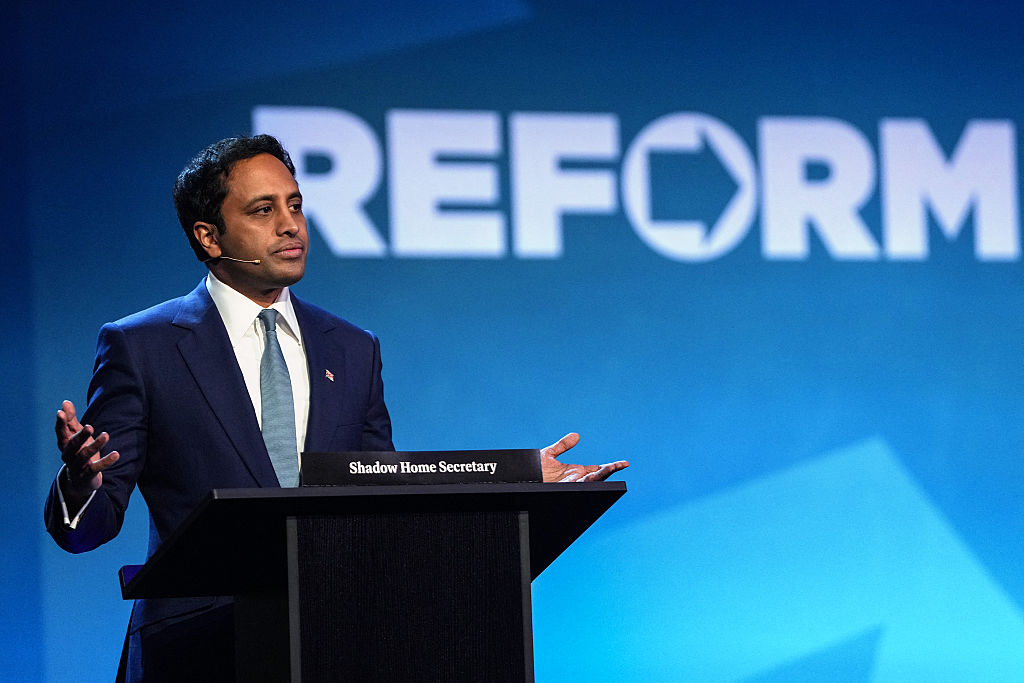
“The era of British self-flagellation ends here,” Zia Yusuf declared this week. The Reform UK home affairs spokesman’s comments come a fortnight after a motion was passed in the United Nations condemning the transatlantic slave trade as “the gravest crime against humanity”, as well as calling for former slaveholding nations to formally apologise and pay reparations for their role.
The vote, tabled by Ghana, was likely an attempt to strengthen the hand of countries demanding reparations ahead of the biennial Commonwealth Heads of Government Meeting (CHOGM) this November. While supposedly a forum for cooperation among a “family” of nations, this has in recent years become an opportunity for shakedown attempts that would make Tony Soprano blush. Yusuf said a Reform government would respond to any country demanding reparations — as he put it, treating the United Kingdom as an “ATM for ethnic grievances of the past” — by halting all new visas to its nationals.
This isn’t the first time the collection tin has been shaken. When Commonwealth nations made similar demands in 2015, David Cameron simply told them to “move on”. And Yusuf’s response is on its face a welcome corrective to the tepid declarations British diplomats have made on the country’s behalf, most recently by abstaining from the UN vote over a legal technicality on retroactive justice.
It is, however, an unnecessarily heavy-handed approach where British diplomacy would more than suffice. The UN resolution is an unenforceable PR stunt, endorsed by opportunistic governments which seek to harm Britain or pin their poor economic performance on a two-centuries-old injustice. Such is its naked cynicism that the resolution included a provision that UN members commit to “guarantees of non-repetition” of slavery, brushing over the fact that in Ghana, the resolution’s sponsor, almost 100,000 people live in conditions of modern slavery. For good measure, it was backed by North Korea and China.
Instead of threatening blanket visa bans and indiscriminately cutting off Britain’s access to growing labour markets, the Government should instead pull specific levers that make the subject less enticing for those seeking handouts. The most obvious would be instructing diplomats to walk from meetings in which reparations are raised, while highlighting Britain’s central role in ending the transatlantic slave trade. Ministers could threaten targeted visa bans on African and Caribbean elites, who are economically reliant on access to London. Most of these measures can be accomplished behind closed doors.
This whole tedious business raises a larger question: what, exactly, is the point in the Commonwealth? As it stands, the arrangement offers negligible economic benefits and imposes negligible cost. There is no immediate rush to disband the grouping. But if it is merely a vehicle for extortion attempts, it might be time to rethink Britain’s membership.
A better mandate for British diplomats would be clear-eyed promotion of the country’s economic and strategic interests. If Reform is serious about ending Britain’s “self-flagellation”, one place to start would be overhauling the Foreign Office, packed as it is with T.E. Lawrence enthusiasts who, like him, seem to derive obscure satisfaction from ritual humiliation. FCDO officials have long conducted diplomacy as if ill-defined “soft power” were an end in itself. Really, there is a vast array of opportunities to be grasped in the former Empire, territories with similar legal systems to Britain’s — some of which offer significant untapped commercial potential.
Africa holds 30% of the world’s mineral reserves, much of which is being harvested by Chinese firms that are less scrupulous about good governance than shoring up Beijing’s strategic positioning on the continent. Britain’s activities have been rather less ambitious. The British Geological Survey, in collaboration with the Geological Survey Department of Zambia, last year identified a raft of minerals which are crucial to the African country’s economic development, including copper, cobalt, nickel and lithium. While British institutions have helped to survey these treasures, there appears to be less appetite from the Government to help British businesses make use of them. If diplomats have the singularity of purpose to do so, the Commonwealth may yet be a useful forum of mutually beneficial trade and cooperation.
Reform’s threat to pull all visas from countries seeking reparations is a performative overcorrection, reminiscent of the party’s seemingly knee-jerk response to the Iran war. Sober consideration of which British interests support for the US-Israeli bombing campaign might serve seemed to come as an afterthought — a point the party tacitly acknowledged through its volte-face on the position days later. Reform seeks to present itself as a serious party for government. It might begin by resisting the temptation to make grand but impractical gestures, and focus on detail-oriented policies that unapologetically promote British interests.
Michael Murphy is a journalist and documentary filmmaker covering immigration and international affairs.
 michaelmurph_y